
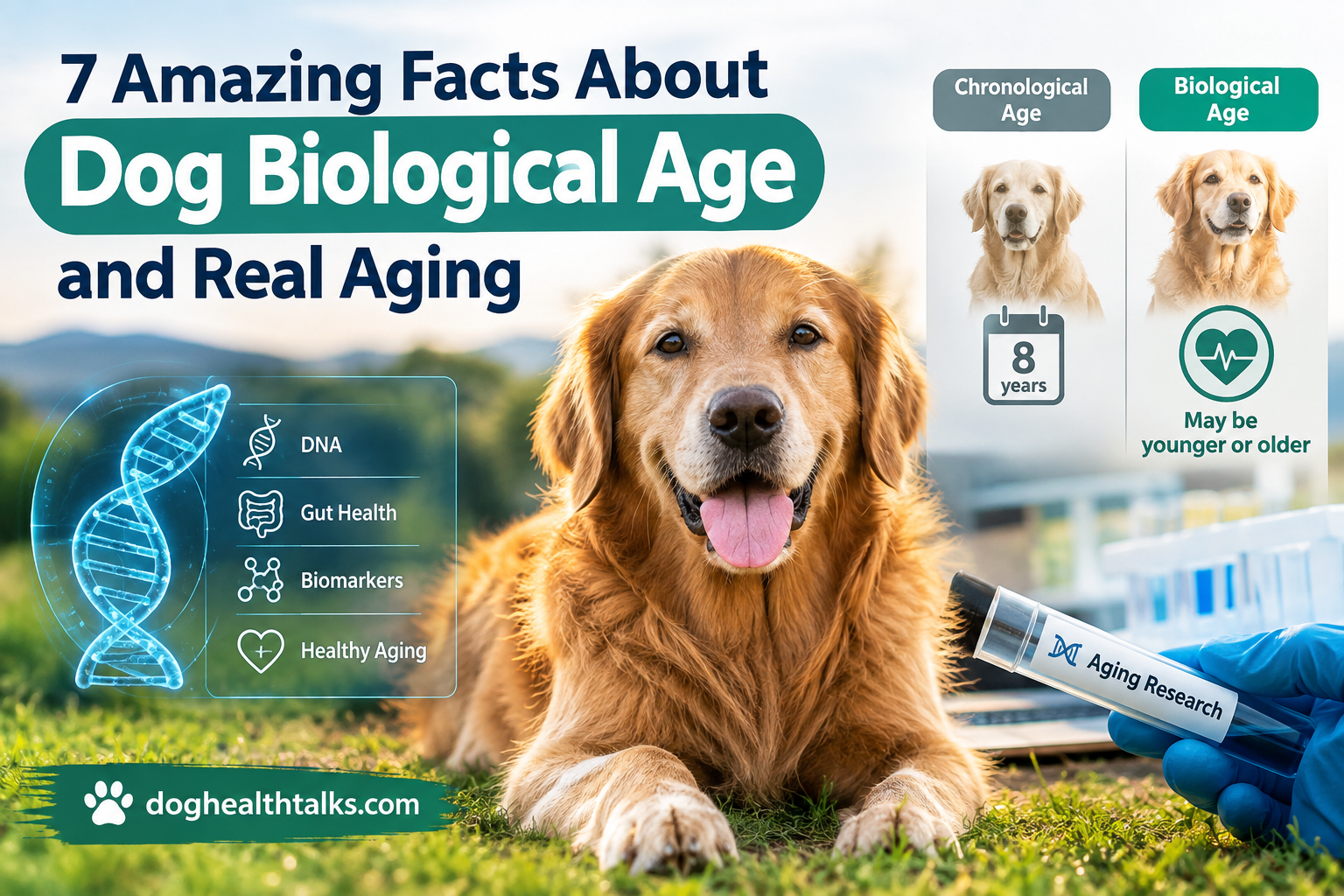
7 Amazing Facts About Dog Biological Age and Real Aging
Dogs are often described as becoming “older” simply because more years have passed. However, modern research suggests that aging may be more complicated than counting birthdays. Two dogs of the same chronological age may not experience aging in exactly the same way. Their genetics, body size, environment, lifestyle, nutrition, and overall health can influence how their bodies change over time.

This is where the idea of Dog Biological Age becomes interesting. Biological age refers to the condition of the body and the biological changes associated with aging, rather than simply the number of years a dog has lived.
Recent research has made this area especially exciting. Scientists have been studying DNA methylation, epigenetic clocks, gut microbes, and other biological signals to understand how dogs age. In one important study, DNA methylation was used to develop age-prediction tools for domestic dogs.
At the same time, research from the Dog Aging Project has shown that changes in the gut microbiome can be associated with age in dogs. A 2026 study involving more than 900 dogs found gradual age-related changes in gut microbial communities and explored a microbiome-based model for estimating canine age.
Table of Contents
- What Is Dog Biological Age?
- Chronological Age Is Not the Whole Story
- DNA May Provide Clues About Aging
- Breed and Body Size Can Matter
- The Gut Microbiome May Change With Age
- Lifestyle Could Influence Healthy Aging
- Why Biological Age Research Matters
- What Dog Owners Can Do
- Frequently Asked Questions
- Conclusion
1. What Is Dog Biological Age?
Dog Biological Age is a scientific concept used to describe how old a dog’s body appears to be from a biological perspective. It is different from chronological age, which simply tells us how many years or months the dog has lived.
For example, two dogs may both be eight years old, but their physical and biological conditions may be different. One may remain active and healthy, while another may have developed several age-related problems.
Dog Biological Age Therefore, chronological age should not always be treated as a complete measurement of aging.
Scientists are investigating whether biological markers can provide additional information about this difference. DNA methylation is one of the important areas being studied. It involves chemical changes that can influence how genes are regulated without changing the underlying DNA sequence.
Epigenetic clocks have been developed from these patterns. Research in domestic dogs has shown that DNA methylation can be used to estimate chronological age with useful accuracy.
2. Chronological Age Is Not the Whole Story
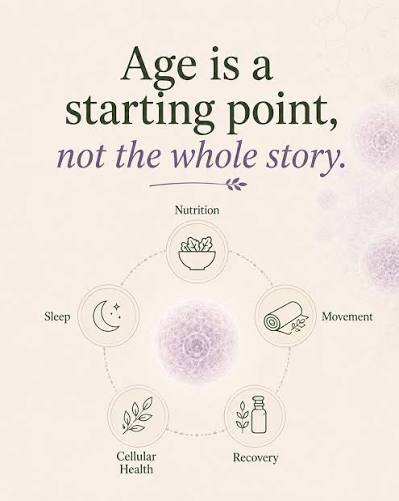
A birthday tells us how long a dog has been alive. However, it does not tell us everything about the condition of the body.
This distinction is important because aging can occur at different rates. Genetics, nutrition, exercise, disease history, stress, environment, and body size may all contribute to differences between individual dogs.
Consequently, the concept of Dog Biological Age could eventually help researchers understand why some dogs maintain good health for longer than others.
Dog Biological Age It is important to remember, however, that biological age should not currently be treated as a simple home test. A dog owner cannot determine a precise biological age simply by looking at the animal. Specialized laboratory measurements and research methods are required.
In addition, biological-age research is still developing. A biological marker may provide useful information without being able to explain every aspect of a dog’s health.
3. DNA May Provide Clues About Aging
One of the most fascinating developments in aging research involves epigenetics.
DNA methylation patterns can change as an organism ages. Because some of these changes are associated with age, researchers can use them to create what are known as epigenetic clocks.
Studies in dogs have demonstrated that DNA methylation can be used as an aging marker. A study of domestic dogs examined DNA methylation and chromatin accessibility and found that these epigenetic features could be used to predict chronological age.
Earlier research also developed epigenetic clocks that could be applied across dogs and humans, showing that some aging-related molecular patterns are conserved between species.
This makes Dog Biological Age more than a simple comparison between a dog’s age and a human age. Instead, it opens the door to studying measurable biological changes inside the body.
In the future, such research could potentially help scientists investigate why certain dogs age differently and which biological processes are connected with healthy aging.
4. Breed and Body Size Can Matter

Dogs come in an extraordinary range of sizes and breeds. A tiny companion dog and a giant breed can have very different lifespans and aging patterns.
Research from the Dog Aging Project has found differences in epigenetic aging associated with breed size. In one study, larger breeds showed faster epigenetic aging on average than smaller breeds.
This finding is important because it shows why a single aging formula may not perfectly represent every dog.
Therefore, Dog Biological Age should be considered within the wider context of breed, size, genetics, and health history.
Aging should also not be viewed as a straight line. Different body systems may change at different speeds. Muscles, joints, immune function, metabolism, and the brain can all experience age-related changes, but those changes may not happen simultaneously.
For this reason, researchers are increasingly interested in multiple biological measurements rather than relying on one number.
5. The Gut Microbiome May Change With Age
Another fascinating area of canine aging research is the gut microbiome.
The gut contains a huge community of microorganisms. These microbes interact with food, digestion, metabolism, and other biological processes. Because the microbiome can change with age, it has become an important subject in aging research.
A 2026 Nature Communications study examined gut microbiomes from 922 dogs in the Dog Aging Project Precision Cohort. The researchers found significant age-associated differences in microbial composition and diversity.
Dog Biological Age A machine-learning model was also developed to estimate dog age using microbiome features. In healthy dogs, the model showed a moderate relationship between predicted and actual age, but it was not accurate enough to be treated as a perfect biological clock.
This research adds another layer to the concept of Dog Biological Age.
It also shows why gut health may become increasingly important in discussions about healthy aging. However, owners should not assume that changing a dog’s microbiome will automatically make the dog biologically younger. More research is needed before such conclusions can be made.
6. Lifestyle Could Influence Healthy Aging
Although biological aging involves complex processes, everyday care still matters.
A balanced diet, appropriate exercise, healthy body weight, dental care, preventive veterinary visits, and suitable mental stimulation can support a dog’s overall health.
These habits should not be viewed as methods for “stopping” aging. Instead, they can help reduce preventable health problems and support quality of life.
The future study of Dog Biological Age may help researchers connect lifestyle factors with measurable biological changes. For example, scientists may eventually be able to investigate whether particular habits are associated with healthier aging patterns.
However, such research needs to be separated from marketing claims. A product should not be considered an anti-aging solution simply because it mentions biological age.
Veterinary advice should remain important, especially for senior dogs or dogs with existing medical conditions.
7. Why Biological Age Research Matters
The biggest value of Dog Biological Age research may be found in scientific discovery rather than in creating another number for owners to check.
If reliable biological markers can be developed, researchers could potentially identify differences in aging before major physical changes become obvious.
Dog Biological Age Such measurements could also be useful in clinical research. Scientists could study whether a treatment changes biological markers associated with aging, rather than waiting many years to observe differences in lifespan.
Dogs are particularly interesting for this type of research because they share many aspects of their environment with humans. They live in households, experience similar environmental exposures, and receive regular veterinary care.
The Dog Aging Project is collecting large amounts of genetic, clinical, environmental, and lifestyle information to investigate the biological and environmental factors connected with healthy aging.
As a result, canine aging research could eventually contribute to a better understanding of aging in both veterinary and comparative research.
What Dog Owners Can Do Today
Although advanced biological-age testing is still mainly a research area, ordinary preventive care remains valuable.
Dogs should be provided with a nutritionally appropriate diet and regular physical activity suited to their age, breed, and condition. Their weight should also be monitored because excessive body weight can place additional stress on joints and other body systems.
Dental health should not be ignored either. Regular dental care and veterinary examinations can help problems be identified earlier.
For older dogs, changes in appetite, thirst, movement, sleep, behavior, breathing, or energy should be discussed with a veterinarian.
Most importantly, owners should not wait for biological-age technology to become available before paying attention to their dog’s health.
Frequently Asked Questions
What does Dog Biological Age mean?
Dog Biological Age describes the biological condition and aging-related characteristics of a dog’s body. It is different from chronological age, which simply measures how long the dog has lived.
Can a dog’s biological age be tested?
Researchers can measure biological aging using techniques such as DNA methylation analysis. However, these methods are not the same as a simple routine test that every dog owner can perform at home.
Is biological age the same as a dog’s human-equivalent age?
No. Biological age is a scientific concept related to biological processes, while human-equivalent age is a simplified comparison between dog years and human years.
Can DNA predict how old a dog is?
DNA-related epigenetic patterns can provide age-related information. Studies have shown that DNA methylation can be used to build age-prediction models in dogs.
Does breed affect biological aging?
Research suggests that breed size and other characteristics can be associated with differences in aging patterns. However, individual variation remains important.
Can the gut microbiome reveal a dog’s age?
Research suggests that age-related patterns in the canine gut microbiome can provide information about age. A 2026 study developed a microbiome-based model for estimating canine age, although the model was not perfectly accurate.
Can owners make their dog’s biological age younger?
There is currently no simple, proven method for making a dog’s biological age younger. Healthy nutrition, appropriate exercise, preventive care, and veterinary monitoring can support overall health, but they should not be presented as guaranteed methods of reversing biological aging.
Conclusion
The science of Dog Biological Age is changing the way researchers think about canine aging. Instead of relying only on birthdays, scientists are examining molecular changes, DNA methylation, gut microbes, breed characteristics, and other biological signals.
Recent research has shown that both epigenetic patterns and microbiome changes can provide useful information about canine aging.
Nevertheless, the field is still developing. A biological-age measurement should not be treated as a complete description of a dog’s health. More research will be needed before these technologies become routine veterinary tools.
For dog owners, the most useful approach remains simple: provide good nutrition, appropriate activity, preventive veterinary care, dental care, and close attention to changes in behavior or health.
As research continues, the idea of Dog Biological Age may eventually help scientists understand not only how long dogs live, but also why some dogs experience healthier aging than others.