
8 Powerful Dog Sound Enrichment Ideas for Happier Indoor Dogs
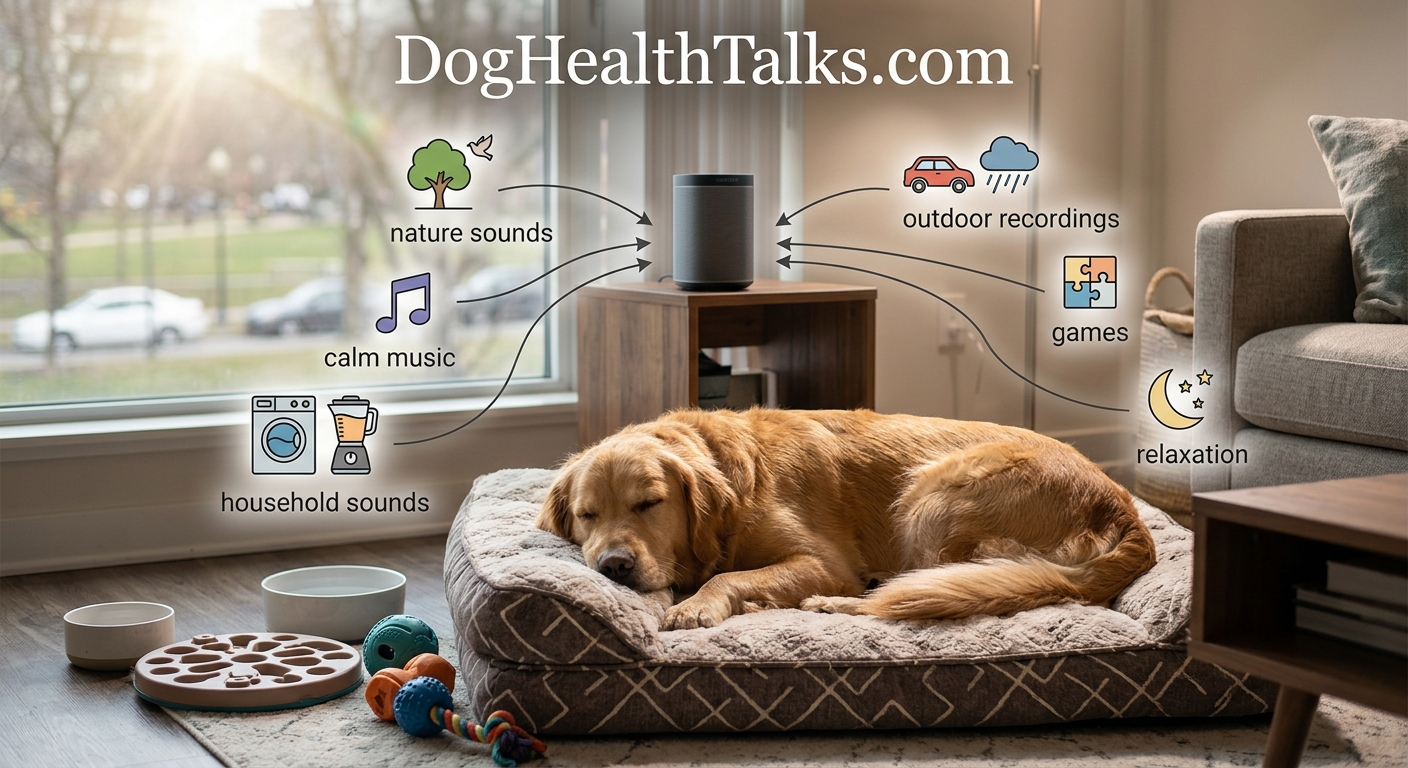
Dog Sound Enrichment is a simple and often overlooked way to make indoor life more interesting for dogs. When dogs spend many hours inside the home, they may have fewer opportunities to explore new sounds, smells, textures, and environments. Carefully chosen sounds can provide mental stimulation, support calm behavior, and create a more engaging indoor routine. Unlike complicated enrichment activities, can be introduced with everyday household sounds, nature recordings, gentle music, and controlled audio experiences.

For dog owners looking for low-cost ways to improve indoor enrichment, sound can be an especially useful option. The goal is not to make the environment noisy but to introduce appropriate sounds at a comfortable volume and observe how the dog responds. In this guide, we will explore eight practical ideas that can help create a calmer, more interesting, and mentally engaging indoor environment.
Table of Contents
- Dog Sound Enrichment With Nature Sounds
- Dog Sound Enrichment With Calm Music
- Dog Sound Enrichment With Household Sounds
- Dog Sound Enrichment With Outdoor Recordings
- Dog Sound Enrichment With Sound Matching Games
- Dog Sound Enrichment During Relaxation Time
- Dog Sound Enrichment With New Environmental Sounds
- Dog Sound Enrichment Through Controlled Sound Rotation
- How to Use Dog Sound Enrichment Safely
- Final Thoughts on Dog Sound Enrichment
1. Dog Sound Enrichment With Nature Sounds

One of the easiest forms of is introducing gentle nature sounds. Recordings of birds, light rain, flowing water, wind through trees, or other natural environments can give an indoor dog a different auditory experience. These sounds can make an otherwise predictable home environment feel more varied without requiring expensive toys or equipment.
Nature sounds should be introduced gradually. A dog that has never experienced certain recordings may react with curiosity, alertness, or even uncertainty. Start with a low volume and allow your dog to investigate naturally. If your dog appears relaxed, you can continue using the sound for short periods as part of an enrichment routine.
Dog Sound Enrichment With Gentle Nature Audio
Gentle nature audio is generally more suitable for enrichment than loud or sudden recordings. A short session can be used while your dog is resting, chewing an appropriate toy, or spending quiet time indoors. The sound should remain background enrichment rather than becoming the main source of stimulation.
2. Dog Sound Enrichment With Calm Music
Music can also become part of a structured Dog Sound Enrichment routine. Some dogs appear comfortable around soft, predictable music, particularly when the environment is otherwise quiet. Classical-style music, gentle instrumental tracks, or slow ambient sounds may provide auditory variety without creating excessive stimulation.
The response can vary significantly between individual dogs. One dog may ignore music completely while another may become interested in it. Because of this, owners should watch body language instead of assuming that a particular type of music will work for every dog.
Choosing Music for Dog Sound Enrichment
When using music, choose tracks without sudden dramatic changes, very loud sections, or intense effects. Keep the volume modest and give your dog the ability to move away from the sound. This makes the experience more controlled and gives your dog a choice about whether to remain nearby.
3. Dog Sound Enrichment With Household Sounds
Everyday household sounds can become an unexpected form of Dog Sound Enrichment. Sounds such as a washing machine, kitchen activity, opening drawers, running water, or gentle household movement expose dogs to different auditory patterns. These sounds can be particularly interesting for dogs that spend most of their time indoors.
However, household sounds should not be deliberately exaggerated just to get a reaction. The purpose is to create normal environmental variety, not to frighten or overwhelm the dog. If your dog becomes uncomfortable around a particular appliance or sound, reduce the intensity and provide additional distance.
Making Everyday Sounds More Interesting
Instead of creating artificial noise, owners can simply allow dogs to experience ordinary sounds from a safe distance. Over time, these sounds can become part of a predictable indoor environment. This approach makes Dog Sound Enrichment easy to include in everyday life without adding another complicated task to your routine.
4. Dog Sound Enrichment With Outdoor Recordings
Outdoor recordings can introduce sounds that your dog may not hear regularly inside the home. Distant traffic, birds, gentle park sounds, rainfall, waves, or forest environments can provide new auditory information.
This form of Dog Sound Enrichment can be particularly useful when outdoor opportunities are limited temporarily. Instead of trying to recreate an outdoor environment completely, use short recordings as a small addition to your dog’s normal indoor routine.
Outdoor Audio for Dog Sound Enrichment
The most important factor is volume. Outdoor recordings can contain sudden barking, sirens, thunder, or other intense sounds. These may cause an unwanted reaction. For that reason, choose recordings carefully and keep the volume low enough that your dog can remain comfortable.
5. Dog Sound Enrichment With Sound Matching Games
A more interactive approach to Dog Sound Enrichment involves connecting sounds with simple activities. For example, an owner might play a gentle sound and then provide an appropriate enrichment activity. Over time, the dog may begin to associate certain sounds with an interesting but calm indoor experience.
The activity does not need to become a complicated training exercise. The goal is simply to encourage curiosity and engagement. You can change the sound occasionally while keeping the overall experience predictable.
Building a Simple Dog Sound Enrichment Game
Begin with one familiar, gentle sound. Allow your dog to hear it for a short period and observe the response. If your dog remains relaxed and curious, you can pair the experience with a favorite appropriate activity. Gradually introducing different sounds can create variety without overwhelming the dog.
6. Dog Sound Enrichment During Relaxation Time
Not all enrichment needs to be energetic. Dog Sound Enrichment can also be used during quiet periods. Gentle background audio may help create a consistent environment while your dog rests, especially when the home becomes unusually quiet.
For example, soft ambient sounds can be used during an afternoon rest period. The purpose is not to keep your dog constantly stimulated but to provide controlled environmental variety.
Dog Sound Enrichment for Quiet Indoor Routines
A successful quiet routine should remain genuinely quiet. If your dog starts pacing, repeatedly looking toward the sound source, barking, hiding, or showing other signs of discomfort, stop the session and return to a familiar environment.
7. Dog Sound Enrichment With New Environmental Sounds
Dogs encounter many sounds throughout their lives, including elevators, doorbells, traffic, visitors, household appliances, and outdoor noises. Carefully introducing unfamiliar but harmless sounds can make Dog Sound Enrichment more varied.
The key is controlled exposure. A new sound should not suddenly become extremely loud or occur very close to the dog. Instead, it can be played quietly from a distance while the dog has access to a comfortable area.
Gradual Dog Sound Enrichment Exposure
Gradual exposure gives the dog an opportunity to process a sound without being forced into a stressful situation. If your dog shows relaxed curiosity, you can maintain the same level for a while. There is no need to increase the intensity quickly.
8. Dog Sound Enrichment Through Controlled Sound Rotation
Using the same sound every day can eventually become predictable. A simple solution is rotating different forms of Dog Sound Enrichment. One day could feature gentle rain, another could use calm instrumental audio, while another could involve normal household sounds.
Sound rotation can provide variety while keeping sessions short and manageable. The objective is not to fill the entire day with audio but to create occasional opportunities for auditory exploration.
The chart above is an illustrative routine, not scientific evidence that one sound category is superior to another. The best approach depends on the individual dog’s preferences and reactions.
How to Use Dog Sound Enrichment Safely
Safety should always come before novelty when introducing Dog Sound Enrichment. Dogs have sensitive hearing, so excessive volume can make an enrichment session uncomfortable. Sounds should remain at a reasonable background level rather than being played loudly.
It is also important to give your dog an escape option. Your dog should be able to move to another part of the room or home if the sound becomes uncomfortable. Never force a dog to remain close to a sound source simply because you want to observe its reaction.
Watch Your Dog’s Body Language
Your dog’s body language can provide useful information about whether a sound is comfortable. Relaxed posture, normal movement, resting, casual investigation, or calmly ignoring the sound may indicate that the experience is not causing obvious concern. In contrast, hiding, repeated barking, pacing, trembling, attempting to escape, or persistent avoidance suggests that the sound should be stopped or reduced.
If a particular sound consistently causes distress, there is no benefit in continuing it as enrichment. Dog Sound Enrichment should create opportunities for safe exploration rather than unnecessary stress.
Keep Dog Sound Enrichment Short
Long sessions are not automatically better. Short, controlled sessions can provide enough novelty without making the environment constantly stimulating. You can begin with several minutes and observe your dog’s response before deciding whether to continue.
Dogs differ in age, temperament, hearing sensitivity, previous experiences, and preferences. Because of these differences, there is no single perfect sound schedule for every dog.
Dog Sound Enrichment for Indoor Dogs
Indoor dogs can benefit from a varied environment that engages more than one sense. While physical exercise remains important, mental stimulation can also be incorporated into daily routines. Dog Sound Enrichment provides one simple way to introduce auditory variety without requiring a large amount of space.
This can be especially useful for owners who live in apartments or homes where outdoor activity is temporarily limited. Sound enrichment does not replace walks, play, training, social interaction, or veterinary care. Instead, it can work as a small addition to a broader enrichment routine.
Combining Dog Sound Enrichment With Other Activities
Sound can be combined with safe enrichment activities such as scent exploration, food puzzles, basic training, or quiet play. For example, gentle nature audio could play in the background while a dog works on an appropriate enrichment activity.
The important principle is balance. Dogs need opportunities to rest as well as opportunities to explore. A successful indoor environment should not be filled with constant stimulation.
Final Thoughts on Dog Sound Enrichment
Dog Sound Enrichment is an affordable and flexible way to add auditory variety to an indoor dog’s daily environment. Nature recordings, calm music, ordinary household sounds, outdoor audio, sound-based games, relaxation sessions, new environmental sounds, and controlled sound rotation can all provide different experiences.
The most important part is observing your individual dog. Start quietly, keep sessions short, introduce new sounds gradually, and stop whenever your dog appears uncomfortable. With a thoughtful approach, Dog Sound Enrichment can become a simple part of a balanced indoor enrichment routine that makes everyday life more interesting for dogs.
