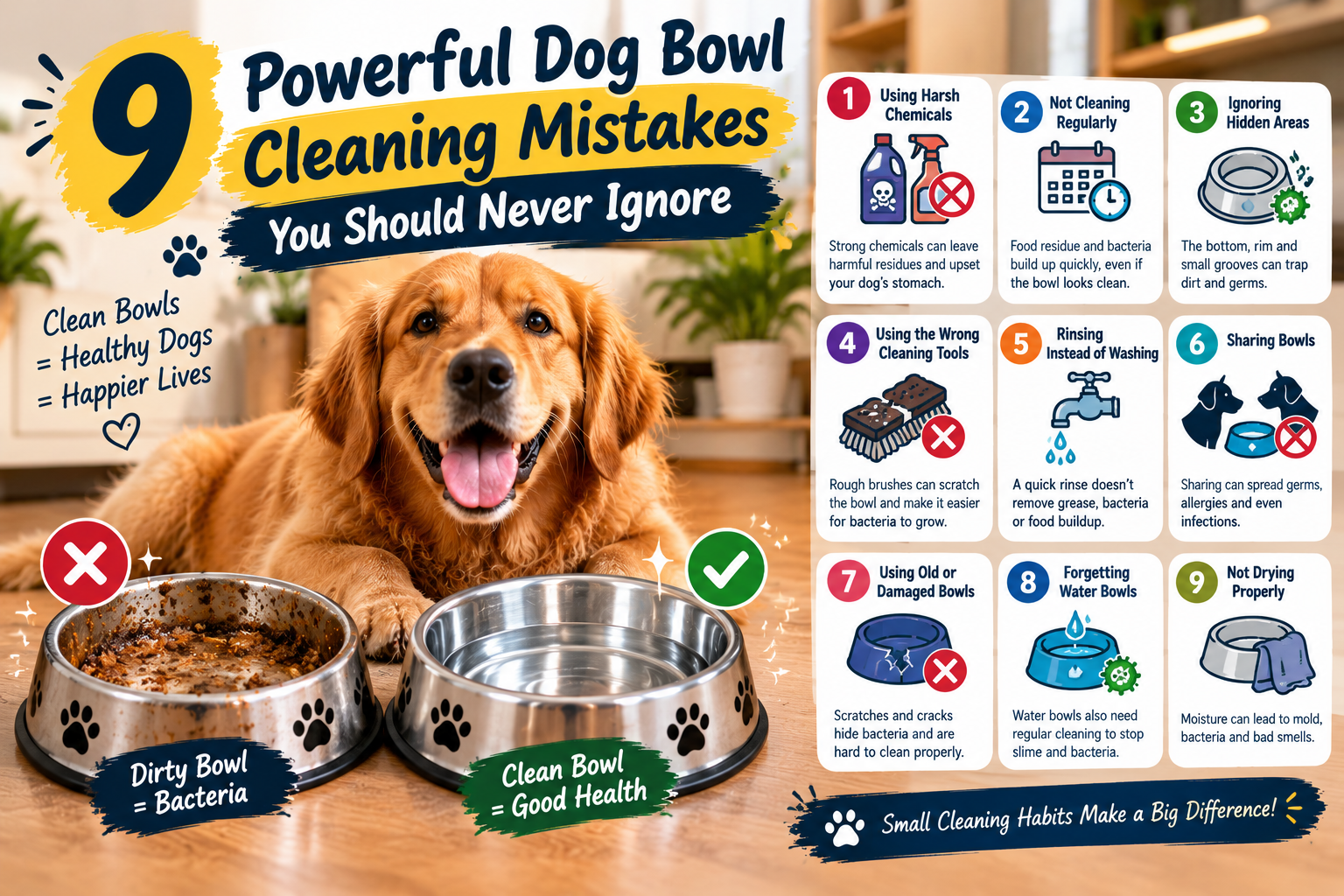
9 Powerful Dog Bowl Cleaning Mistakes You Should Never Ignore
Keeping your dog’s bowls clean may seem like a small part of pet care, but Dog Bowl Cleaning Mistakes can create unnecessary hygiene problems for both pets and people. Food residue, moisture, grease, and leftover water can remain on bowls when they are not cleaned properly. The FDA recommends washing pet food bowls with soap and hot water after each use and washing water bowls daily.
A clean bowl is not just about making your dog’s feeding area look better. Proper cleaning can help reduce leftover food and contaminants around your pet’s eating and drinking area. Below, we will explore nine common Dog Bowl Cleaning Mistakes, why they happen, and simple ways to build a cleaner feeding routine.
Table of Contents
- Understanding Dog Bowl Cleaning Mistakes
- Dog Bowl Cleaning Mistakes From Washing Too Rarely
- Dog Bowl Cleaning Mistakes From Using Only Water
- Dog Bowl Cleaning Mistakes From Ignoring Water Bowls
- Dog Bowl Cleaning Mistakes From Leaving Wet Food Residue
- Dog Bowl Cleaning Mistakes From Poor Drying
- Dog Bowl Cleaning Mistakes From Using the Wrong Sponge
- Dog Bowl Cleaning Mistakes With Raw Pet Food
- Dog Bowl Cleaning Mistakes From Ignoring Bowl Damage
- Dog Bowl Cleaning Mistakes and Kitchen Hygiene
- A Simple Routine to Avoid Dog Bowl Cleaning Mistakes
- Final Thoughts on Dog Bowl Cleaning Mistakes
Understanding Dog Bowl Cleaning Mistakes
Many owners remember to feed their dogs on time but forget that the bowl itself needs regular attention. One of the biggest Dog Bowl Cleaning Mistakes is treating a pet bowl as though it does not need the same basic food hygiene that other feeding dishes require.
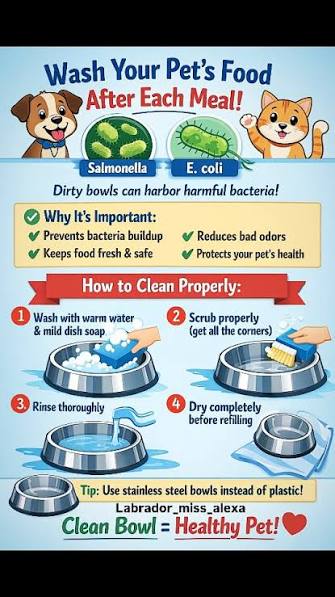
Pet food can contain bacteria, and contaminated pet food or feeding equipment can potentially contribute to foodborne illness. The FDA specifically recommends washing pet food bowls and feeding utensils with soap and hot water after each use.
This does not mean that every dirty-looking bowl will make a dog sick. Instead, consistent cleaning is a simple preventive habit that helps remove food residue and reduces the opportunity for contamination to build up.
Dog Bowl Cleaning Mistakes and Everyday Hygiene
A bowl can look clean while still having a thin layer of food residue around the bottom or edges. Greasy foods can leave an especially noticeable film, while wet food may stick to corners and scratches.
For that reason, quickly rinsing a bowl and putting it back on the floor may not be enough. A proper wash with soap and hot water is a much more reliable routine.
Dog Bowl Cleaning Mistakes From Washing Too Rarely
One of the most common Dog Bowl Cleaning Mistakes is allowing the same food bowl to sit for several meals without washing it. This is particularly important when your dog eats wet or moist food because leftover material can remain on the surface after the meal.
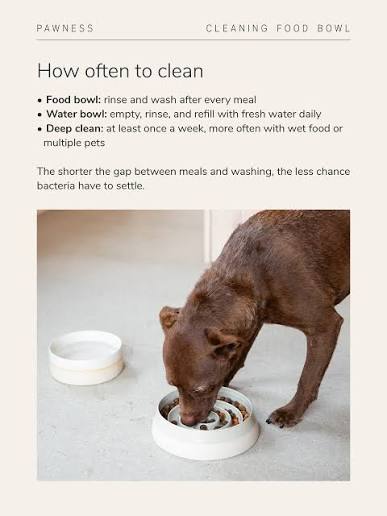
The FDA advises washing and drying pet food bowls after each use. It also recommends washing water bowls daily.
If your dog eats several times a day, having an extra bowl can make this routine easier. Instead of reusing the same bowl immediately, you can wash the used bowl while your dog eats from the clean one.
Dog Bowl Cleaning Mistakes After Meals
Leaving a bowl on the floor for hours after your dog has finished eating is another habit worth changing. Removing leftover food promptly makes cleaning easier and prevents old food from sitting inside the bowl unnecessarily.
If your dog regularly leaves food behind, consider whether the portion size, feeding schedule, or food type needs to be discussed with your veterinarian rather than simply leaving the leftovers in the bowl.
Dog Bowl Cleaning Mistakes From Using Only Water
Another common Dog Bowl Cleaning Mistake is assuming that water alone is enough. A quick rinse can remove visible crumbs, but it may not remove greasy residue or food particles that stick to the bowl.
Soap and hot water provide a more thorough cleaning method. After washing, the bowl should be rinsed properly and dried before it is filled again.
The goal is not to make cleaning complicated. A simple wash after meals can become part of your normal feeding routine.
Dog Bowl Cleaning Mistakes From Ignoring Water Bowls
Some owners wash food bowls regularly but forget about water bowls. This is another important Dog Bowl Cleaning Mistake because water bowls are used throughout the day.
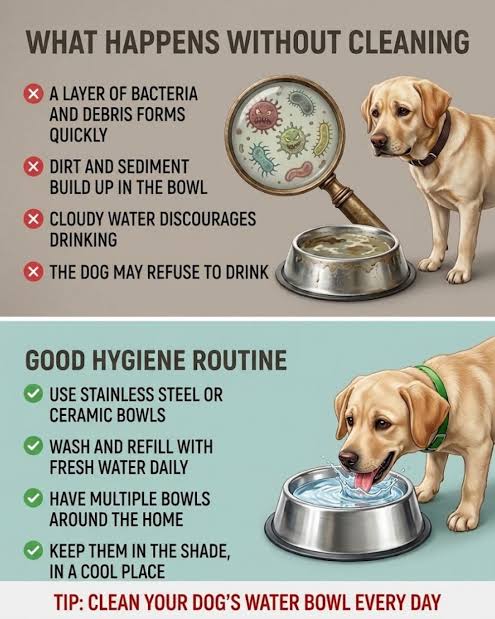
The FDA recommends washing and drying water bowls daily.
Water bowls can collect saliva, dust, hair, food particles, and other debris. Even if the water still looks clear, the bowl itself should not be treated as permanently clean.
Dog Bowl Cleaning Mistakes and Fresh Water
Fresh water should be provided regularly, while the bowl should also receive proper cleaning. If you notice slime, unusual odor, floating particles, or visible buildup, clean the bowl rather than simply adding more water.
A second water bowl can also be useful in homes with multiple dogs or during hot weather because it allows you to rotate bowls while keeping fresh ones available.
Dog Bowl Cleaning Mistakes From Leaving Wet Food Residue
Wet food can be more challenging to clean because it may stick to the bottom and sides of a bowl. Leaving this residue is one of the Dog Bowl Cleaning Mistakes that can make routine hygiene harder.
After your dog finishes eating, remove remaining food and wash the bowl instead of allowing residue to dry completely. Dried food can become harder to remove and may require more scrubbing.
The FDA also advises safely refrigerating or discarding unused canned or pouched pet food rather than leaving it out indefinitely.
Dog Bowl Cleaning Mistakes From Poor Drying
Washing a bowl but putting it away while it is still wet is another Dog Bowl Cleaning Mistake worth avoiding. After cleaning, allow the bowl to dry thoroughly before storing it or refilling it.
Moisture can remain in tiny areas around the bottom, edges, or underneath a bowl. Thorough drying is therefore a simple final step in your cleaning routine.
Dog Bowl Cleaning Mistakes With Bowl Storage
If you keep spare bowls in a cupboard, make sure they are clean and completely dry before storing them. Avoid stacking wet bowls together because trapped moisture can make them harder to keep fresh.
A clean towel, drying rack, or air-drying area can make this part of the routine easier.
Dog Bowl Cleaning Mistakes From Using the Wrong Sponge
Using the same dirty sponge for pet bowls and other kitchen tasks can create unnecessary cross-contamination concerns. This is another practical Dog Bowl Cleaning Mistake that is easy to overlook.
Consider keeping a separate sponge or brush specifically for pet feeding equipment. Wash it regularly and replace it when it becomes worn, smells unpleasant, or remains visibly dirty.
You should also wash your hands after handling pet food and feeding dishes. FDA guidance recommends washing hands with soap and hot water after handling pet food and treats.
Dog Bowl Cleaning Mistakes With Raw Pet Food
If you feed your dog raw pet food, cleaning requires extra care. One of the more serious Dog Bowl Cleaning Mistakes is treating a raw-food bowl exactly like a bowl that held dry kibble.
The FDA states that raw pet food has a greater potential to contain harmful bacteria such as Salmonella and Listeria monocytogenes. It recommends thoroughly cleaning and disinfecting objects and surfaces that come into contact with raw pet food.
Dog Bowl Cleaning Mistakes After Raw Food
When raw food has been served, wash the bowl thoroughly with hot soapy water. FDA guidance also distinguishes cleaning from disinfecting: cleaning physically removes dirt and germs, while disinfecting uses an appropriate method to kill germs after cleaning.
If your dog eats a raw diet, follow your veterinarian’s advice and current food-safety guidance rather than relying on a quick rinse.
Dog Bowl Cleaning Mistakes From Ignoring Bowl Damage
Cracks, deep scratches, chipped areas, and damaged surfaces can make bowls harder to clean properly. Ignoring this damage is another Dog Bowl Cleaning Mistake because food residue may become trapped in difficult-to-clean areas.
Inspect your dog’s bowls regularly. If a bowl is badly damaged, replacing it can make cleaning easier and give your pet a more hygienic feeding surface.
Stainless steel bowls are often practical because they are durable and easy to wash, although the most important factor is still maintaining a consistent cleaning routine.
Dog Bowl Cleaning Mistakes and Kitchen Hygiene
Another important group of Dog Bowl Cleaning Mistakes involves where and how pet bowls are washed. Pet feeding equipment should be handled carefully to reduce unnecessary contact between pet food residue and human food preparation areas.
The FDA advises pet owners to pay attention to cross-contamination when handling pet food.
If a bowl has contained raw pet food, extra care is especially important. Wash your hands after handling the bowl and clean surfaces that may have come into contact with the food.
Dog Bowl Cleaning Mistakes Around Children
Pet feeding areas should also be managed carefully in households with young children. Children should not be encouraged to play with dirty food bowls or handle leftover pet food.
Good household hygiene is especially important when people in the home may be more vulnerable to foodborne infections.
Dog Bowl Cleaning Mistakes: A Simple Cleaning Routine
A simple routine can prevent many Dog Bowl Cleaning Mistakes without taking much time. After your dog finishes a meal, remove leftover food, wash the bowl with soap and hot water, rinse it thoroughly, and allow it to dry.
For water bowls, daily washing is recommended by the FDA.
The basic routine can be summarized in this table:
| Pet Bowl Type | Recommended Cleaning Habit | Key Reason |
|---|---|---|
| Food bowl | Wash after each use | Removes food residue |
| Wet-food bowl | Wash after each use | Helps remove sticky residue |
| Water bowl | Wash daily | Removes buildup and debris |
| Raw-food bowl | Thorough cleaning after use | Helps reduce contamination risk |
| Damaged bowl | Inspect and replace when needed | Easier to keep clean |
Dog Bowl Cleaning Mistakes to Avoid Every Day
The most useful approach is consistency. You do not need an elaborate cleaning system. You simply need to avoid letting old food remain in bowls, use soap and hot water, rinse properly, dry the bowl, and keep water bowls clean.
Here is a simple visual comparison of the main cleaning areas to help you remember which parts of the routine deserve regular attention:
The chart is an educational guide rather than a scientific measurement. The key message is that food bowls and bowls used for raw pet food require particularly consistent cleaning, while water bowls also need regular daily attention.
Final Thoughts on Dog Bowl Cleaning Mistakes
Avoiding Dog Bowl Cleaning Mistakes does not require expensive products or a complicated schedule. The most important habit is to treat your dog’s feeding equipment as food-contact equipment that deserves regular cleaning.
The FDA recommends washing pet food bowls with soap and hot water after each use and washing water bowls daily. If raw pet food is involved, additional cleaning and disinfection precautions may be appropriate because of the higher potential for harmful bacterial contamination.
A clean bowl, fresh water, proper drying, and good hand hygiene can become simple parts of everyday dog care. By avoiding these nine Dog Bowl Cleaning Mistakes, owners can create a cleaner and more consistent feeding routine for their pets and household.