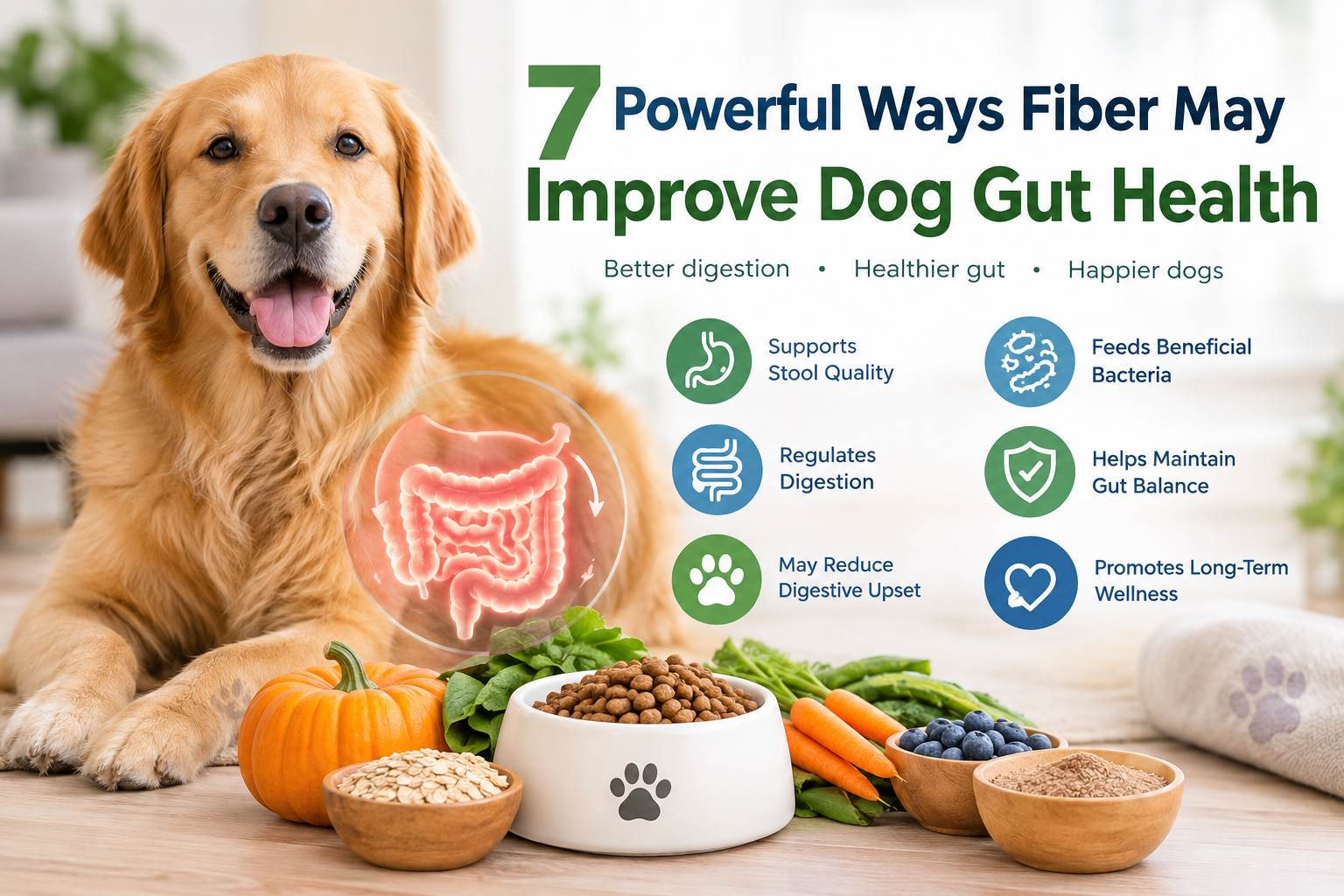
7 Powerful Ways Fiber May Improve Dog Gut Health
Dog Gut Health A healthy digestive system is an important part of a happy and active dog. Although protein and other nutrients often receive most of the attention, dietary fiber also plays an important role in maintaining normal digestion. In recent research, fiber-based nutritional approaches have been associated with improvements in stool quality and changes in the gut microbiome of dogs. Therefore, more attention is now being given to how the right amount and type of fiber may support Dog Gut Health. Research presented at the 2026 ACVIM Forum found that a multifermentable fiber blend was associated with improved stool consistency and positive changes in the gut microbial community of dogs.
What Is Fiber and Why Does It Matter for Dogs?

Dietary fiber consists of carbohydrate components that are not completely digested in the small intestine. Instead, some types reach the large intestine, where they can interact with intestinal bacteria. Because of this process, fiber can influence stool formation, fermentation, and the microbial environment inside the digestive tract. When an appropriate fiber source is included in a balanced diet, Dog Gut Health may be supported through better stool regulation and a healthier intestinal environment.
Importantly, not all fiber works in exactly the same way. Some fibers are fermented quickly, while others are fermented more slowly. This difference can affect where and how the fiber interacts with the gut microbiome. In a recent study, a blend containing different fermentable fibers was evaluated because multiple types of fermentation may provide broader support throughout the gastrointestinal tract.
1. Fiber May Help Improve Stool Consistency
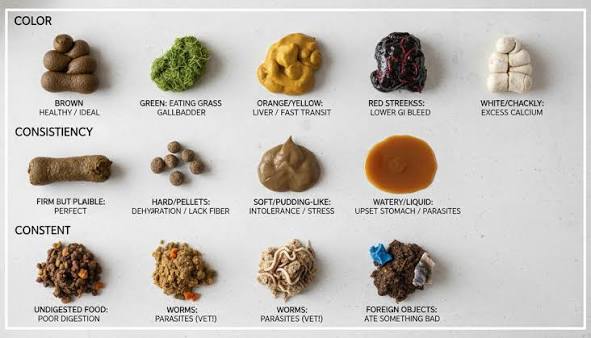
One of the most noticeable benefits of appropriate fiber intake can be better stool consistency. Dogs experiencing soft stools, diarrhea, or constipation may sometimes benefit from carefully selected dietary fiber. In the recent 2026 study, improved fecal consistency was reported in dogs with soft stools or diarrhea as well as dogs experiencing constipation after supplementation with a multifermentable fiber blend.
Dog Gut Health This effect is important because stool consistency is often viewed as a practical indicator of digestive function. When stool becomes excessively soft or unusually hard, an underlying dietary or health issue may be present. Therefore, fiber can be considered one nutritional factor that may contribute to better Dog Gut Health when it is used appropriately. However, persistent diarrhea, constipation, blood in stool, vomiting, or other concerning symptoms should be evaluated by a veterinarian rather than being managed with fiber alone.
Earlier research has also provided encouraging findings. A study involving senior dogs found that a prebiotic fiber blend containing sugar beet pulp, galacto-oligosaccharides, and cellulose improved fecal quality and produced measurable changes in the gut microbiome.
2. Fiber May Support Beneficial Gut Bacteria

The digestive tract contains a complex community of microorganisms known as the gut microbiome. These microorganisms can interact with dietary components and influence the intestinal environment. Certain fibers can be fermented by beneficial bacteria, which is one reason they are often described as prebiotic ingredients.
When suitable fiber reaches the colon, it can be used by specific microorganisms as a food source. As a result, changes in the microbial community may be produced. This process is particularly relevant to Dog Gut Health, because the balance of intestinal microorganisms is connected with digestion and normal gastrointestinal function.
Recent research has shown that fiber supplementation can be associated with microbial changes in dogs. In the 2026 fiber-blend study, increases in Peptacetobacter hiranonis and decreases in certain bacterial groups, including Escherichia coli and Streptococcus, were observed.
Dog Gut Health Nevertheless, these findings should not be interpreted as proof that every fiber supplement will produce the same microbiome changes. Different fiber sources, doses, diets, health conditions, and individual dogs can produce different outcomes.
3. Fiber May Help Regulate Digestive Function
A well-functioning digestive system depends on several processes working together. Food must be digested, nutrients must be absorbed, water must be regulated, and waste must eventually be eliminated. Fiber can influence some of these processes, particularly in the large intestine.
Soluble and fermentable fibers can hold water and be fermented by intestinal microorganisms, while certain less-fermentable fibers can contribute bulk to stool. Because different fibers perform different functions, the right combination may be more useful than simply adding a large quantity of fiber.
This is another reason why Dog Gut Health should be approached as part of an overall nutrition plan rather than through a single ingredient. In research on senior dogs, a prebiotic fiber blend was associated with improved fecal quality and changes in microbial composition after supplementation.
Dog Gut Health Furthermore, research involving dogs with chronic large-bowel diarrhea has shown that a fiber-containing therapeutic diet can improve clinical signs and stool consistency. In one prospective study, 68% of dogs had complete resolution of clinical signs by day 56, while the remaining dogs were reported to have improved.
4. Fiber May Support a Healthier Gut Microbiome
The gut microbiome is not simply a collection of bacteria. It is a dynamic ecosystem that can be influenced by diet, medications, age, environment, and health status. Therefore, dietary changes can sometimes result in noticeable changes in the microbial community.
Fiber is especially interesting because it can provide fermentable material for gut microorganisms. During fermentation, microbial metabolites can be produced, including short-chain fatty acids. These compounds are being studied for their potential roles in maintaining the intestinal environment.
For this reason, fiber has become an important nutritional consideration in discussions about Dog Gut Health. However, microbiome research is still developing, and a change in bacterial composition should not automatically be considered beneficial or harmful without understanding the specific organisms and their functions.
A 2026 study published in Frontiers in Veterinary Science also reported promising digestive effects from a combination of prebiotics and postbiotics in dogs and cats with mild gastrointestinal imbalances. Improvements in stool consistency and other digestive signs were reported after 28 days of supplementation.
5. Fiber May Help Dogs With Mild Digestive Imbalances
Dog Gut Health Some dogs occasionally develop soft stools, excessive stool quantity, flatulence, or other mild digestive changes. These symptoms can be caused by many factors, including dietary changes, stress, food intolerance, medications, or underlying health problems.
Dog Gut Health When a mild nutritional imbalance is involved, dietary management may be helpful. Fiber may be included in a carefully formulated diet to help regulate stool and provide fermentable material for intestinal microorganisms. Consequently, Dog Gut Health may be supported when fiber is incorporated into an appropriate overall feeding strategy.
However, fiber should not be viewed as a universal treatment. If a dog develops severe or persistent gastrointestinal symptoms, professional veterinary assessment should be obtained. A digestive problem can sometimes be caused by parasites, infections, inflammatory disease, foreign objects, or other conditions that require specific treatment.
6. Different Fiber Sources May Provide Different Benefits
Not every fiber source behaves identically inside the digestive tract. Sugar beet pulp, cellulose, certain oligosaccharides, plant fibers, and other ingredients can differ in fermentability and physiological effects. Therefore, the source of fiber matters just as much as the amount.
Dog Gut Health Research in adult dogs has demonstrated that different fiber sources can influence fecal microbiota and short-chain fatty acid production differently. In one study, a cereal-fiber and beet-pulp diet was associated with increased total short-chain fatty acids and changes in microbial diversity and certain beneficial bacterial genera.
As a result, Dog Gut Health should not be improved simply by adding the highest possible amount of fiber. Instead, the type, quantity, digestibility, and overall nutritional balance should be considered.
Dog Gut Health A balanced commercial dog food may already contain an appropriate amount of dietary fiber. For healthy dogs, additional supplementation may not always be necessary. If a supplement is being considered, the dog’s diet and individual health needs should first be discussed with a veterinarian.
7. Fiber May Support Long-Term Digestive Wellness
Good digestive health is not only about solving an occasional episode of loose stool. A consistent feeding routine, appropriate nutrition, hydration, exercise, and veterinary care all contribute to long-term wellness. Fiber can be one part of this larger picture.
When suitable fiber is provided as part of a balanced diet, digestive function may be supported through stool regulation and interaction with the gut microbiome. In this way, Dog Gut Health may benefit from a nutrition strategy that provides the right balance of fermentable and non-fermentable components.
Dog Gut Health Research involving senior dogs is particularly interesting because digestive changes can become more important with age. In the prebiotic fiber study, improvements in fecal quality and microbial characteristics were observed in dogs over eight years old.
Nevertheless, long-term supplementation should not be started simply because a product claims to support gut health. The quality of the evidence, the ingredients, the dog’s existing diet, and the reason for supplementation should all be considered first.
How Much Fiber Does a Dog Need?
There is no single fiber amount that is ideal for every dog. Requirements can vary according to age, size, activity level, diet, digestive health, and individual tolerance. Therefore, a fiber recommendation should not be based on a one-size-fits-all formula.
Dog Gut Health For healthy dogs eating a complete and balanced commercial diet, additional fiber may not be required. In contrast, a veterinarian may recommend a specific fiber source or therapeutic diet when a dog has a particular digestive concern.
Most importantly, sudden increases in dietary fiber should be avoided. A rapid change may lead to gas, bloating, loose stool, or other digestive discomfort. Instead, dietary changes should generally be introduced gradually and monitored carefully.
What Are Some Natural Sources of Fiber for Dogs?
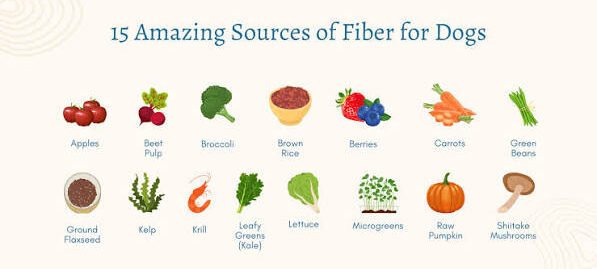
Several dog-safe foods contain dietary fiber, including pumpkin, certain vegetables, and some fruits. However, safety and portion size are important. Foods should be offered in moderation and should never replace a nutritionally complete diet.
Commercial diets can also contain fiber from ingredients such as beet pulp, cellulose, grains, and specialized prebiotic fibers. In fact, research has shown that different fiber sources can produce different effects on the canine microbiome and digestive system.
Dog Gut Health Therefore, when choosing food for Dog Gut Health, the entire nutritional profile should be considered rather than focusing on one ingredient on the label.
Can Too Much Fiber Be Harmful?
Yes. Although fiber can provide important nutritional benefits, excessive amounts may cause digestive problems. Gas, abdominal discomfort, loose stool, reduced nutrient absorption, or changes in stool volume may occur when inappropriate amounts are provided.
Furthermore, the effect of fiber depends on its type. A highly fermentable fiber may behave differently from a less-fermentable source. Because of this, simply increasing fiber is not always the best approach to improving Dog Gut Health.
If a dog has an existing medical condition, dietary changes should be discussed with a veterinarian before supplementation is started. This is particularly important when gastrointestinal symptoms are persistent or severe.
The Bottom Line
Dog Gut Health Current evidence suggests that appropriately selected dietary fiber can play a useful role in canine digestive nutrition. Improvements in stool consistency and changes in the gut microbiome have been observed in several studies, including recent research presented in 2026.
However, fiber should be viewed as one component of a complete nutritional strategy rather than a cure for every digestive problem. The best approach to Dog Gut Health is based on a balanced diet, appropriate hydration, regular exercise, careful dietary changes, and veterinary guidance when symptoms persist.
As research continues, a clearer understanding of individual fiber types and their effects on the canine microbiome may allow more personalized nutritional strategies to be developed. For dog owners, this means that future approaches to Dog Gut Health could become increasingly targeted and evidence-based.
Frequently Asked Questions
Is fiber good for dogs?
Yes, appropriate amounts of dietary fiber can support normal digestion and stool regulation. However, the ideal type and amount depend on the individual dog and its overall diet. Therefore, fiber should be provided as part of a balanced nutritional plan.
Can fiber help a dog with diarrhea?
Certain fiber-containing diets have been associated with improved stool consistency in dogs with diarrhea. Research has shown promising results, but diarrhea can have many causes. If diarrhea is persistent, severe, or accompanied by other concerning symptoms, veterinary care should be sought.
Does fiber improve the gut microbiome?
Certain fermentable fibers can be used by intestinal microorganisms and may influence the gut microbiome. Studies in dogs have reported changes in microbial composition following fiber supplementation. However, the effects depend on the specific fiber, diet, and individual dog.
Can I give my dog a fiber supplement every day?
A daily fiber supplement may be appropriate for some dogs, but it is not necessary for every dog. The correct product and dosage should be selected according to the dog’s nutritional needs and health status. Veterinary advice is especially important when a supplement is being used to address an ongoing digestive problem.
What happens if a dog eats too much fiber?
Too much fiber may cause gas, bloating, changes in stool consistency, or digestive discomfort. Therefore, fiber should not be increased rapidly or excessively. A gradual dietary transition is generally preferable.
Is pumpkin a good source of fiber for dogs?
Plain pumpkin can provide dietary fiber and may be included in some dogs’ diets in appropriate portions. However, pumpkin should not be treated as a replacement for veterinary care or a complete and balanced diet, especially when a dog has ongoing gastrointestinal symptoms.
Should puppies and senior dogs get the same amount of fiber?
Not necessarily. Nutritional requirements can change with age, size, activity, and health status. Senior dogs may have different digestive needs than puppies, so their diets should be selected accordingly. Research has specifically investigated prebiotic fiber blends in senior dogs and found improvements in fecal quality.
When should I contact a veterinarian about my dog’s digestion?
Veterinary advice should be obtained when digestive problems are persistent, severe, recurring, or accompanied by symptoms such as blood in stool, repeated vomiting, weakness, dehydration, weight loss, or significant changes in appetite. Fiber may support digestion, but it should not be used to delay diagnosis or treatment of an underlying condition.