

5 Chronic Diseases in Dogs May Cut Lifespan: Powerful New Research Reveals Why
A Dog’s health can be affected by many conditions over the course of life, and the impact can become more serious when several chronic problems are experienced together. 5 Chronic Diseases in Dogs May Cut Lifespan New research involving a large population of dogs has highlighted how multiple long-term health conditions may be linked with a shorter lifespan. In particular, dogs living with five or more diagnosed chronic conditions were found to face a substantially higher risk of death than dogs with only one diagnosed condition. Therefore, better monitoring, earlier veterinary care, and coordinated management may be important for helping dogs live healthier and longer lives.
Table of Contents
- What the New Study Found
- What “5 Chronic Diseases” Really Means
- Why Multiple Conditions Can Become Dangerous
- Why Early Detection Matters
- How Owners Can Support Long-Term Dog Health
- What Veterinarians May Focus On
- Understanding the Research Without Panic
- FAQ
- Conclusion
As dogs grow older, several health problems can develop at the same time. Because of that, a new study involving more than 50,000 dogs has drawn attention to a major issue in canine aging. Researchers found that dogs living with five or more chronic diseases were more than twice as likely to die as dogs with only one diagnosed condition, even after age and body size were considered. The finding does not mean that every dog with several illnesses will have a short life. Instead, it shows why combined disease management deserves greater attention. For dog owners, 5 Chronic Diseases in Dogs May Cut Lifespan is therefore an important reminder that health problems should not always be viewed separately.
What the New Study Found
The research was carried out by investigators connected with the Dog Aging Project and Texas A&M University. Health information from more than 50,000 dogs was analyzed to understand how multiple chronic conditions were associated with survival. According to the researchers, the number of diseases a dog develops has a substantial relationship with survival, even when factors such as age and size are taken into account.
Most importantly, dogs with five or more chronic diseases were found to be more than twice as likely to die as dogs with only one diagnosed condition. This result was described as being independent of the dogs’ age and size. Therefore, 5 Chronic Diseases in Dogs May Cut Lifespan should not be interpreted as a claim that five specific diseases always cause death. Rather, it refers to the accumulation of five or more chronic health conditions in the same dog.
The finding behind 5 Chronic Diseases in Dogs May Cut Lifespan is important because chronic diseases can interact. For example, a dog with osteoarthritis may become less active and gain excess weight, while additional weight can place greater stress on painful joints. In this way, one condition may make another condition harder to manage.
What “5 Chronic Diseases” Really Means
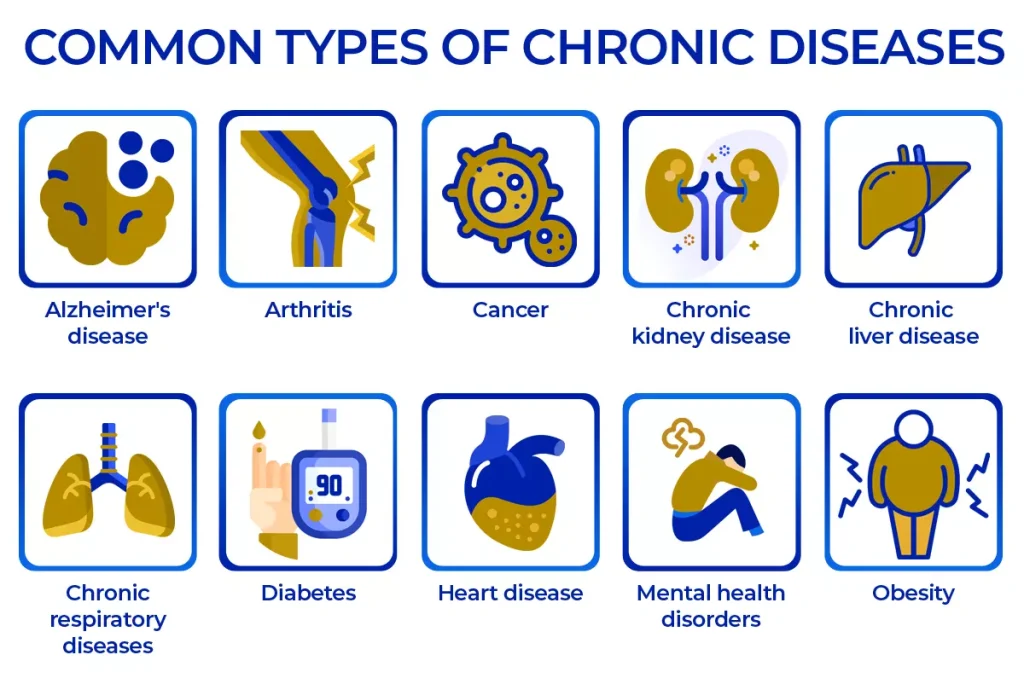
The phrase “five chronic diseases” in 5 Chronic Diseases in Dogs May Cut Lifespan refers to the number of ongoing health conditions, not five particular diseases that were identified as a fixed group. This distinction makes 5 Chronic Diseases in Dogs May Cut Lifespan important for responsible pet-health writing.
A chronic disease is generally a health problem that persists for a long period and requires continuing observation or management. Arthritis, diabetes, chronic kidney disease, obesity-related problems, heart disease, and some long-term skin disorders can become part of a dog’s continuing medical history. However, the new study focused on multimorbidity—the presence of multiple chronic conditions—rather than declaring five named diseases to be the universal cause of shorter lifespan.
That is why 5 Chronic Diseases in Dogs May Cut Lifespan is best understood as a warning about disease accumulation. A dog with two manageable conditions may do well for years, while another dog with several interacting conditions may require much closer veterinary supervision.
Earlier research has also shown that dogs develop increasing numbers of diagnoses with age. Large canine datasets have been used to study how diseases occur together, and newer work has mapped disease relationships across thousands of dogs.
Why Multiple Conditions Can Become Dangerous
When several chronic problems are present, the body may be placed under pressure from different directions. Movement can be reduced, appetite can change, sleep can be disturbed, and medication schedules can become more complicated. Consequently, daily health management may become harder.
For example, the pattern described by 5 Chronic Diseases in Dogs May Cut Lifespan can be seen when arthritis reduces exercise. If activity is reduced for a long period, weight gain may occur. Increased body weight can then place additional stress on painful joints. Similarly, diabetes can be associated with other complications, meaning that monitoring may need to be coordinated rather than performed in isolation.
The study therefore supports a broader approach to veterinary care, and 5 Chronic Diseases in Dogs May Cut Lifespan should be considered when several diagnoses are present. Instead of asking only whether one disease is controlled, the overall health picture should be reviewed.
Importantly, the research does not prove that every individual chronic disease directly causes death. It shows an association between the accumulation of multiple conditions and mortality risk. Therefore, treatment decisions should still be based on a veterinarian’s examination, medical history, laboratory results, and the individual dog’s needs.
Why Early Detection Matters
Early detection can be especially valuable because chronic problems are often easier to manage when changes are noticed before they become severe. Regular veterinary examinations can be used to monitor weight, an important lesson from 5 Chronic Diseases in Dogs May Cut Lifespan, mobility, appetite, dental health, heart function, and other important indicators.
Because 5 Chronic Diseases in Dogs May Cut Lifespan involves accumulating conditions, owners can also watch for changes at home. Increased thirst, frequent urination, unexplained weight loss or gain, persistent coughing, difficulty climbing stairs, reduced activity, repeated vomiting, changes in appetite, or unusual tiredness should be discussed with a veterinarian.
Although these signs can have many causes, they should not be ignored when they persist. In the context of 5 Chronic Diseases in Dogs May Cut Lifespan, early recognition becomes especially important because one untreated problem may complicate another.
How Owners Can Support Long-Term Dog Health
A long-term health plan should be individualized. First, routine veterinary examinations should be maintained according to the dog’s age, medical history, and risk factors. Second, medications should be given exactly as prescribed, and changes should not be made without veterinary guidance.
Nutrition should also be managed carefully. A balanced diet and appropriate portion control can help maintain a healthy body condition. Exercise should be adjusted to the dog’s abilities, especially when arthritis, heart disease, or another condition is present.
Dental care, parasite prevention, vaccinations, grooming, and weight monitoring can also be incorporated into preventive care. Furthermore, keeping a simple record of symptoms, medications, appetite, weight, and activity may make changes easier to explain during veterinary visits.
These steps cannot guarantee a longer life. Nevertheless, they can support comfort and help chronic conditions be identified and managed earlier. This is particularly relevant when 5 Chronic Diseases in Dogs May Cut Lifespan is considered from a preventive-care perspective.
What Veterinarians May Focus On
The findings behind 5 Chronic Diseases in Dogs May Cut Lifespan suggest that veterinary care may increasingly need to be organized around the whole dog rather than one diagnosis at a time. When several chronic conditions are present, medication interactions, diet requirements, exercise limits, and monitoring schedules may all need to be considered together.
The Dog Aging Project has already been used to study disease networks in companion dogs. In one large analysis of more than 26,000 dogs with recorded health conditions, disease relationships were mapped to identify conditions that tended to occur together or precede one another.
This growing body of research may eventually help veterinarians identify higher-risk patterns earlier, which gives 5 Chronic Diseases in Dogs May Cut Lifespan broader significance.
Understanding the Research Without Panic
Headlines about lifespan can easily cause concern, but the study should not be read as a prediction for one individual dog. “More than twice as likely to die” describes a population-level association. It does not tell an owner exactly how long a particular dog will live.
In addition, the presence of several chronic diseases does not mean that treatment is hopeless. Many chronic conditions can be managed for long periods, and quality of life can remain good when appropriate care is provided. Therefore, 5 Chronic Diseases in Dogs May Cut Lifespan should be used to encourage better care rather than panic.
FAQ
Does having five chronic diseases mean a dog will die soon?
No. The study found a higher mortality risk at the population level. It does not provide an exact lifespan prediction for an individual dog.
What does “five chronic diseases” mean?
It means five or more ongoing health conditions occurring in the same dog. It does not refer to one fixed list of five diseases.
Which dogs are most likely to develop multiple conditions?
The accumulation of health problems generally becomes more common with aging. However, individual risk can vary according to many factors, including genetics, environment, body condition, and existing medical problems.
Can chronic diseases in dogs be managed?
Many chronic diseases can be managed with veterinary care, appropriate medication, nutrition, monitoring, and lifestyle adjustments. The exact plan depends on the condition and the individual dog.
What should owners do after noticing several health problems?
A veterinary appointment should be arranged so the conditions can be evaluated together, especially when 5 Chronic Diseases in Dogs May Cut Lifespan is a concern. A list of symptoms, medications, diet, and recent changes can be useful during the visit.
Why is this research important?
The study highlights that diseases may have combined effects. 5 Chronic Diseases in Dogs May Cut Lifespan is therefore a useful concept for explaining why whole-dog health management can matter as dogs age.
Conclusion
The latest canine aging research provides an important message: multiple chronic diseases should not always be treated as unrelated problems. In a study of more than 50,000 dogs, those with five or more chronic diseases were more than twice as likely to die as dogs with one diagnosed condition, even after age and size were considered.
Still, the finding should be used to encourage better care rather than panic. Regular checkups, early detection, appropriate nutrition, safe activity, medication management, and close monitoring can all be valuable parts of a long-term health plan. Ultimately, 5 Chronic Diseases in Dogs May Cut Lifespan highlights the importance of looking at the complete health picture. With careful veterinary support, chronic conditions can often be managed, and a dog’s comfort and quality of life can be protected.