
Puppy Vaccination Schedule: Essential Vaccines by Age
A puppy vaccination schedule is one of the most important parts of keeping a puppy healthy. Young puppies have developing immune systems and can be vulnerable to serious infectious diseases, including parvovirus, distemper, and canine adenovirus. Some of these illnesses can cause severe complications and may even be life-threatening.
A proper puppy vaccination schedule helps protect dogs during their early development and reduces the risk of preventable diseases. However, puppies do not usually receive all their protection through a single injection. They need a series of vaccinations at specific intervals because antibodies passed from their mother can interfere with the effectiveness of early vaccines.
Most puppies begin their core vaccination series at approximately 6–8 weeks of age. Additional doses are generally given every 3–4 weeks until at least 16 weeks of age. Depending on the puppy’s health, location, exposure risk, and vaccine products, a veterinarian may recommend a different schedule.
This guide explains the essential vaccines for puppies, the recommended vaccination timeline, booster shots, possible side effects, and important precautions owners should follow.
Why Are Vaccinations Important for Puppies?
Vaccines help a puppy’s immune system recognize and defend against specific infectious diseases. They prepare the body to respond more effectively if the puppy encounters a disease-causing organism in the future.
Without appropriate vaccination, puppies may be at greater risk of infections that spread through contaminated environments, infected animals, bodily fluids, or other routes.
Benefits of Puppy Vaccination
Vaccinating your puppy provides several important benefits:
- Protection against serious diseases: Core vaccines help protect against infections such as parvovirus, distemper, and adenovirus.
- Reduced risk of severe illness: Vaccinated dogs are generally less likely to develop severe disease from infections covered by effective vaccines.
- Protection during early development: A properly timed vaccination series helps puppies develop their own immune protection.
- Reduced disease transmission: Vaccination can help reduce the spread of certain infectious diseases among dogs.
- Long-term health support: Completing the recommended puppy vaccination schedule helps establish a foundation for preventive healthcare.
- Protection for other animals and people: Some canine infections, particularly rabies and leptospirosis, can also affect humans.
Vaccination does not guarantee that a dog will never become infected. However, appropriate vaccines significantly reduce the risk of several important diseases and their complications.
Puppy Vaccination Schedule by Age
The puppy vaccination schedule depends on their age, health, vaccination history, local disease risks, and the products available in their region.
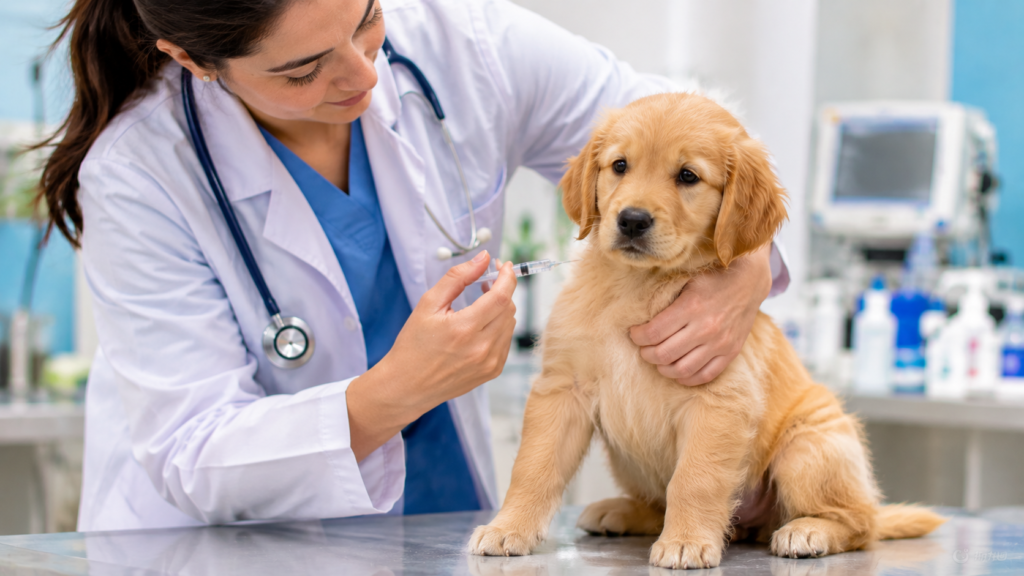
The following table provides a general example of a vaccination timeline for a healthy puppy. It is not a replacement for an individual veterinary vaccination plan.
Puppy Vaccination Chart
| Puppy Age | Common Vaccinations | Purpose |
|---|---|---|
| 6–8 weeks | First core combination vaccine (DHP or equivalent) | Begins protection against distemper, adenovirus, and parvovirus |
| 9–12 weeks | Second core combination vaccine | Continues the primary vaccination series |
| 12–16 weeks | Additional core combination dose as scheduled | Strengthens the immune response |
| 16 weeks or older | Final puppy core dose, with timing determined by the veterinarian | Helps overcome interference from maternal antibodies |
| Around 6 months or at 26 weeks or later | Additional core revaccination or antibody testing, depending on veterinary guidance | Helps identify or protect puppies that may not have responded adequately |
| Around 12 months | Review vaccination history and administer vaccines due under the chosen protocol | Maintains appropriate protection and checks future booster needs |
Important: The number of puppy combination vaccine doses can vary. The essential point is that the core vaccination series should include a final dose at 16 weeks of age or older under commonly recommended international guidelines. Puppies at particularly high risk may need additional doses through approximately 18–20 weeks.
First Vaccination: 6–8 Weeks
The first core vaccination is commonly given when a puppy is between 6 and 8 weeks old.
This vaccination generally targets:
- Canine distemper virus.
- Canine adenovirus.
- Canine parvovirus.
The vaccine may be provided as a combination product, often identified by labels such as DHP or DHPP, depending on the antigens included.
Some puppies may need earlier vaccination in special circumstances, such as shelter environments or high-risk situations. These schedules should be managed by a veterinarian.
Second Vaccination: 9–12 Weeks
The next core vaccine dose is usually administered approximately 3–4 weeks after the first dose.
This repeated vaccination is important because maternal antibodies may still interfere with the puppy’s immune response.
The veterinarian may also assess whether the puppy needs additional protection against diseases such as leptospirosis, Bordetella, or other infections based on local risk.
Third Vaccination: 12–16 Weeks
Another core vaccination is generally given during this period.
The exact timing depends on the age of the puppy when vaccination started and the interval between doses.
Some puppies may receive their third dose at 12 weeks, while others need additional doses at 15 or 16 weeks.
Final Core Vaccination: 16 Weeks or Older
The final dose in the initial puppy core vaccination series is particularly important.
Maternal antibodies gradually decrease as puppies grow. These antibodies protect young puppies during early life, but they can also interfere with the immune response to vaccines.
By 16 weeks of age or later, maternal antibody interference is expected to have decreased substantially in most puppies.
In areas with high disease risk, a veterinarian may recommend continuing core vaccinations until approximately 18–20 weeks.
Additional Vaccination or Testing Around 6 Months
Some current vaccination guidelines recommend an additional core vaccination at or shortly after 26 weeks of age, while antibody testing may be considered as an alternative in appropriate cases.
This step helps address the small number of puppies that may not have developed sufficient protection after their earlier vaccinations.
Your veterinarian can decide which approach is appropriate based on the puppy’s previous doses, available testing, and local recommendations.
Essential Core Vaccines for Puppies in the Puppy Vaccination Schedule
Core vaccines protect against diseases considered especially important because they are widespread, serious, or pose significant health risks.
The exact classification of some vaccines can vary by country and disease prevalence.
Canine Distemper Vaccine
Canine distemper is a serious viral disease that can affect a dog’s respiratory, digestive, and nervous systems.
It spreads mainly through respiratory droplets and contact with infected animals or contaminated secretions.
Symptoms of Canine Distemper
Common signs include:
- Fever.
- Coughing.
- Nasal discharge.
- Eye discharge.
- Vomiting.
- Diarrhea.
- Loss of appetite.
- Weakness.
- Muscle twitching or seizures in advanced cases.
Distemper can cause long-term neurological problems and may be fatal, particularly in young or unvaccinated dogs.
Vaccination is one of the most important ways to protect puppies against this disease.
Canine Parvovirus Vaccine
Canine parvovirus is a highly contagious virus that mainly affects the digestive system.
Puppies are especially vulnerable, and the infection can spread through contaminated feces, surfaces, shoes, equipment, and other objects.
Symptoms of Parvovirus
Signs may include:
- Severe vomiting.
- Bloody diarrhea.
- Loss of appetite.
- Severe dehydration.
- Weakness.
- Abdominal discomfort.
- Fever or low body temperature.
Parvovirus can progress quickly and requires urgent veterinary treatment.
The parvovirus vaccine is an essential part of the puppy vaccination series.
Canine Adenovirus Vaccine
Canine adenovirus vaccination helps protect against infectious canine hepatitis and related disease caused by adenovirus.
The commonly used CAV-2 vaccine provides protection against canine adenovirus type 1, which causes infectious hepatitis. It also helps protect against respiratory disease associated with adenovirus type 2.
Possible Symptoms of Canine Adenovirus Infection
Depending on the infection, symptoms may include:
- Fever.
- Vomiting.
- Diarrhea.
- Loss of appetite.
- Abdominal discomfort.
- Weakness.
- Liver-related complications.
- Eye changes in some cases.
Vaccination helps reduce the risk of serious adenovirus-related illness.
Rabies Vaccine
Rabies is a serious viral disease that affects the nervous system and can spread to humans through bites or exposure to infected saliva.
It is almost always fatal once clinical signs develop.
In regions where rabies is present, vaccination is essential for protecting dogs and reducing the risk to people.
When Should Puppies Receive the Rabies Vaccine?
The timing of the first rabies vaccination depends on local laws, the vaccine product, and veterinary recommendations.
In many places, the first dose is given at approximately 12 weeks of age or later. Some local rules may specify a minimum age and require particular documentation.
After the initial vaccination, the timing of booster doses depends on the licensed vaccine duration and applicable regulations.
Owners should keep vaccination records and follow local rabies requirements.
Leptospirosis Vaccine
Leptospirosis is a bacterial infection that can affect dogs and humans.
Dogs may become infected through contact with water, soil, or surfaces contaminated by the urine of infected animals, including rodents and wildlife.
Symptoms of Leptospirosis
Possible signs include:
- Fever.
- Vomiting.
- Loss of appetite.
- Weakness.
- Increased thirst.
- Changes in urination.
- Kidney problems.
- Liver damage.
Leptospirosis can cause serious organ complications.
The vaccine is recommended for dogs in regions where the disease is common and suitable vaccines are available. Some veterinary guidelines classify it as a core vaccine in relevant regions.
The initial series usually involves two doses given approximately 2–4 weeks apart, with the starting age determined by the product and veterinarian.
Non-Core Vaccines for Puppies
Non-core vaccines are recommended according to a dog’s lifestyle, geographic location, health risks, and likelihood of exposure.
Not every puppy needs every available vaccine.
Bordetella Vaccine
Bordetella bronchiseptica is one of the organisms associated with kennel cough, a contagious respiratory illness in dogs.
The risk may be higher for puppies that:
- Attend dog daycare.
- Visit boarding facilities.
- Attend training classes.
- Spend time in shelters.
- Frequently interact with unfamiliar dogs.
- Visit dog parks or group activities.
Common Signs of Kennel Cough
- Persistent dry coughing.
- Gagging after coughing.
- Sneezing.
- Mild nasal discharge.
- Reduced energy.
The Bordetella vaccine may be given orally, intranasally, or by injection, depending on the product.
The appropriate puppy vaccination schedule depends on the vaccine type and the puppy’s exposure risk.
Canine Influenza Vaccine
Canine influenza is a contagious respiratory infection caused by influenza viruses that affect dogs.
Some dogs develop mild symptoms, while others may experience more serious respiratory illness.
Possible symptoms include:
- Coughing.
- Sneezing.
- Nasal discharge.
- Fever.
- Reduced appetite.
- Lethargy.
The canine influenza vaccine may be considered for puppies that are likely to encounter other dogs in boarding facilities, shelters, daycare centers, or other group environments.
The initial vaccination commonly requires two doses separated by approximately 2–4 weeks, followed by boosters according to the product and veterinarian’s advice.
Lyme Disease Vaccine
Lyme disease is caused by bacteria transmitted through infected ticks.
It can affect dogs in regions where infected ticks are present.
Possible symptoms include:
- Fever.
- Lameness.
- Joint discomfort.
- Reduced appetite.
- Lethargy.
- Swollen joints.
The vaccine may be recommended for dogs with significant tick exposure in areas where Lyme disease is common.
Tick prevention remains important even when a dog receives the Lyme disease vaccine.
Canine Parainfluenza Vaccine
Canine parainfluenza is a respiratory virus that can contribute to kennel cough and other respiratory infections.
The risk may be greater for puppies that spend time around many unfamiliar dogs.
Depending on the product, parainfluenza protection may be included in a combination vaccine or provided through a separate or combined respiratory vaccine.
Your veterinarian can determine whether additional protection is needed.
Understanding Puppy Combination Vaccines: DHPP, DAPP, and DHP
Puppy vaccination records often contain abbreviations that can be confusing for first-time dog owners.
These abbreviations describe combination vaccines that protect against several diseases.
| Vaccine Label | Common Protection |
|---|---|
| DHP | Distemper, hepatitis protection through adenovirus, and parvovirus |
| DHPP | Distemper, adenovirus/hepatitis, parvovirus, and parainfluenza |
| DAPP | Distemper, adenovirus, parvovirus, and parainfluenza |
| DAPP-L | DAPP combination with leptospirosis, depending on the product |
The exact components can vary between manufacturers.
Always check the vaccine label or ask your veterinarian which diseases are covered. A vaccine abbreviation should not be treated as proof that every possible disease is included.
Why Do Puppies Need Multiple Vaccine Doses?
Many owners wonder why puppies need several vaccinations instead of receiving one injection.
The main reason is maternal antibodies.
What Are Maternal Antibodies?
Puppies receive protective antibodies from their mothers, mainly through the first milk, known as colostrum.
These antibodies help protect puppies during their first weeks of life.
However, maternal antibodies gradually decrease as puppies grow.
How Maternal Antibodies Affect Vaccination
While maternal antibodies are helpful, they can sometimes interfere with a vaccine before the puppy’s immune system has a chance to develop its own response.
This creates a period known as the window of susceptibility.
During this period:
- Maternal antibody levels may no longer provide reliable protection.
- The antibodies may still interfere with vaccination.
- The puppy can become vulnerable to infection.
Because the timing varies between puppies, repeated vaccinations are given at planned intervals.
Why the Final Puppy Vaccine Matters
The final core dose at 16 weeks of age or older is especially important because maternal antibody levels are usually much lower by this stage.
A small number of puppies may still fail to respond adequately. That is why some guidelines recommend an additional vaccination at or after approximately 26 weeks, or antibody testing where appropriate.
Puppy Vaccination Schedule After the First Year
Completing the initial puppy vaccination series does not mean that vaccinations are no longer necessary.
Dogs need ongoing preventive healthcare, including booster vaccinations when required.
First Booster After the Puppy Series
The timing of the next core vaccination depends on the guideline being followed, vaccine product, and whether an additional dose was given around 6 months.
Many vaccination plans include a review around 12 months of age.
Your veterinarian will check which vaccines are due and whether the puppy has completed the recommended primary series.
Adult Dog Booster Schedule
Different vaccines have different booster intervals.
| Vaccine | Common Booster Approach |
|---|---|
| Distemper, adenovirus, and parvovirus | After the primary series and follow-up dose, core boosters are generally given at intervals of 3 years or longer according to guidelines and product labeling |
| Rabies | According to local law and the licensed vaccine duration |
| Leptospirosis | Commonly annually after completion of the initial two-dose series |
| Bordetella | Commonly annually, although risk and product recommendations may vary |
| Canine influenza | Commonly annually after the initial series |
| Lyme disease | Commonly annually after the initial series, depending on regional risk and product instructions |
The table provides general guidance rather than a universal puppy vaccination schedule. A veterinarian should review the dog’s vaccination history and follow local regulations and product instructions.
Puppy Vaccination Schedule for Puppies With Unknown History
Sometimes owners adopt a puppy without receiving proper vaccination records.
In these situations, it may be unclear whether the puppy has received its first, second, or final vaccination.
What Should You Do?
If your puppy’s vaccination history is unknown:
- Arrange a veterinary appointment.
- Ask for a physical examination.
- Explain the puppy’s estimated age.
- Share any available adoption or medical documents.
- Discuss the appropriate catch-up vaccination plan.
- Keep a record of every vaccine administered.
A veterinarian may recommend starting or continuing an appropriate puppy vaccination schedule rather than assuming the puppy is protected.
Should an Unvaccinated Puppy Be Vaccinated Immediately?
The answer depends on the puppy’s age, health, previous vaccination history, and the vaccine being considered.
Many healthy puppies can begin an appropriate vaccination program promptly, but the veterinarian should decide the timing and products.
Do not delay veterinary advice simply because the puppy’s previous records are missing.
What Happens If a Puppy Misses a Vaccination?
Missing a scheduled vaccination does not automatically mean that the entire vaccination process must start again.
The appropriate response depends on:
- The puppy’s age.
- The vaccine previously administered.
- How long the puppy has been overdue.
- The type of vaccine.
- The manufacturer’s instructions.
- The puppy’s exposure risk.
Steps to Take After a Missed Vaccine
- Contact your veterinarian.
- Provide the date and type of the last vaccination.
- Ask when the next dose should be given.
- Follow the updated schedule.
- Avoid assuming that an overdue puppy is fully protected.
Do not administer extra doses without veterinary guidance.
Common Puppy Vaccine Side Effects
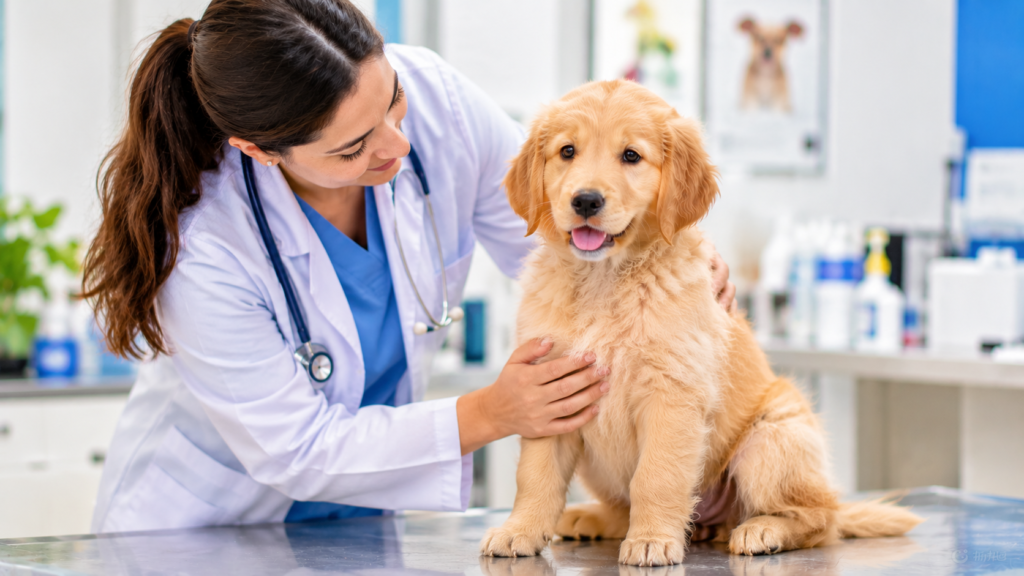
Most puppies tolerate vaccinations well, but mild side effects can occur as the immune system responds.
Owners should know which reactions are generally expected and which require urgent veterinary attention.
Mild Side Effects
Some puppies may experience:
- Slight tiredness.
- Mild soreness around the injection site.
- Temporary reduced appetite.
- Mild fever.
- Slight swelling at the injection site.
- Reduced activity for a short period.
These effects are often temporary and improve without special treatment.
More Serious Vaccine Reactions
Although uncommon, more serious reactions can occur.
Warning signs include:
- Repeated vomiting.
- Facial swelling.
- Swelling around the eyes or muzzle.
- Widespread itching or hives.
- Difficulty breathing.
- Sudden weakness.
- Collapse.
Seek emergency veterinary care if your puppy develops breathing difficulties, facial swelling, collapse, or other signs of a severe allergic reaction.
What Should You Do After Vaccination?
After your puppy receives a vaccine:
- Follow the veterinarian’s aftercare instructions.
- Allow your puppy to rest if it seems tired.
- Provide fresh drinking water.
- Monitor its behavior.
- Check the injection area for unusual swelling.
- Contact the veterinarian if symptoms worsen or do not improve.
Do not give human painkillers or other medication without veterinary advice.
Can Puppies Go Outside Before Completing Their Vaccinations?
Puppies need early socialization to develop confidence and learn how to interact with their environment.
However, puppies that have not completed their vaccination series may still be vulnerable to infectious diseases.
The goal is to balance safe socialization with protection against infection.
Safe Socialization Activities
Depending on local disease risk and veterinary advice, suitable activities may include:
- Meeting healthy, fully vaccinated dogs in a clean private home.
- Spending time with familiar people.
- Exploring safe areas inside the home.
- Hearing everyday household sounds.
- Practicing gentle handling.
- Learning basic commands.
- Attending appropriately managed puppy classes that follow vaccination and hygiene policies.
Activities to Avoid Until Protection Is Adequate
Until your veterinarian confirms that the puppy can safely participate, avoid unnecessary exposure to:
- Dog parks.
- Public areas with heavy dog traffic.
- Pet waste and contaminated surfaces.
- Unknown or unvaccinated dogs.
- Shared water bowls in public places.
- High-risk environments where infectious diseases may be present.
Parvovirus can survive in the environment for extended periods, so avoiding contaminated areas is especially important.
When Is It Safe to Walk a Puppy Outside?
There is no single date that applies to every puppy.
The timing depends on the puppy’s vaccination history, the final dose, local disease prevalence, and the veterinarian’s assessment.
Ask your veterinarian when normal public walks and dog-to-dog interactions are appropriate.
Puppy Vaccination Schedule and Deworming: What Is the Difference?
Vaccination and deworming are both important parts of puppy healthcare, but they protect against different problems.
Vaccination
Vaccines help the immune system develop protection against specific infectious diseases.
Examples include:
- Parvovirus.
- Distemper.
- Adenovirus.
- Rabies.
- Leptospirosis.
Deworming
Deworming involves medication used to treat or control intestinal worms and certain other parasites.
Common intestinal parasites in puppies include:
- Roundworms.
- Hookworms.
- Whipworms.
- Tapeworms.
The timing of deworming depends on the puppy’s age, parasite risk, test results, and veterinary recommendations.
Can Vaccination Replace Deworming?
No. Vaccines do not treat intestinal worms, and deworming medication does not protect against viral or bacterial infections.
Both should be included in an appropriate preventive healthcare plan.
How Much Do Puppy Vaccinations Cost?
The cost of puppy vaccinations varies considerably depending on the country, veterinary clinic, vaccine manufacturer, and number of injections required.
Additional charges may apply for:
- Veterinary consultations.
- Physical examinations.
- Rabies vaccination.
- Leptospirosis vaccination.
- Non-core vaccines.
- Health certificates.
- Follow-up appointments.
- Other preventive treatments.
Factors That Affect Vaccination Costs
Vaccine type: Combination vaccines and individual vaccines may have different prices.
Location: Veterinary costs vary between cities, regions, and countries.
Clinic fees: Some clinics include the consultation in the vaccination price, while others charge separately.
Number of doses: Puppies generally need multiple appointments during their initial vaccination series.
Additional protection: Dogs with higher exposure risks may need non-core vaccines.
How Can Owners Manage Vaccination Expenses?
- Ask the clinic for a complete vaccination plan.
- Request the cost of each scheduled appointment.
- Confirm which vaccines are included in combination products.
- Keep vaccination records to avoid unnecessary repeat appointments.
- Discuss suitable preventive care options with the veterinarian.
Do not choose a vaccine solely because it is cheaper. Proper storage, handling, product quality, and correct administration are essential.
How to Keep a Puppy Healthy During the Vaccination Period
Vaccinations are an important part of preventive care, but puppies also need a healthy environment and consistent daily care.
Provide a Balanced Puppy Diet
Feed your puppy a complete and balanced food designed for its age and growth needs.
Avoid sudden dietary changes unless recommended by a veterinarian.
Maintain Good Hygiene
Keep food bowls, bedding, toys, and sleeping areas clean.
Remove animal waste promptly and avoid allowing the puppy to explore contaminated environments.
Schedule Regular Veterinary Checkups
Veterinary visits help monitor your puppy’s growth, development, and overall health.
These appointments also provide opportunities to review vaccinations, parasite prevention, nutrition, and behavior.
Avoid Contact With Sick Dogs
Keep your puppy away from dogs showing symptoms such as coughing, vomiting, diarrhea, or unusual weakness.
Avoid sharing equipment and bowls with animals whose health and vaccination history are unknown.
Keep Vaccination Records
Maintain a vaccination record that includes:
- Vaccine name.
- Date administered.
- Puppy age at vaccination.
- Product or batch information, if provided.
- Next recommended vaccination date.
- Veterinary clinic details.
These records are useful for future booster appointments, boarding, travel, and other healthcare needs.
Frequently Asked Questions About Puppy Vaccination Schedules
At what age should a puppy get its first vaccine?
Most puppies begin their routine core vaccination series at approximately 6–8 weeks of age. The exact timing depends on the puppy’s health, risk factors, and the veterinarian’s recommendations.
How many vaccinations does a puppy need?
The number varies according to the puppy’s starting age and the intervals between doses. Core vaccines are generally repeated every 3–4 weeks until the puppy receives a final dose at 16 weeks of age or older. Some puppies need additional doses based on their risk and vaccination protocol.
Which vaccines are essential for puppies?
The main core vaccines protect against canine distemper, adenovirus, and parvovirus. Rabies is essential wherever the disease is endemic or local regulations require it. Leptospirosis is also considered a core vaccine in regions where the disease is prevalent and suitable vaccines are available.
Can a puppy receive multiple vaccines at one appointment?
Some combination vaccines protect against several diseases in a single injection. Other vaccines may be administered during the same appointment when appropriate. The veterinarian should decide which products can safely be given together based on the puppy’s age, health, and vaccination plan.
How long does it take for puppy vaccines to work?
Protection does not develop immediately after an injection. The immune response takes time, and some vaccines require multiple doses. Your veterinarian can explain when your puppy is expected to have adequate protection against each disease.
Is one puppy vaccination enough?
Usually not. Maternal antibodies can interfere with early vaccine responses, which is why puppies need repeated core vaccinations at planned intervals. A single dose may not provide reliable protection throughout early development.
What happens if my puppy is vaccinated late?
A late vaccination does not automatically mean the entire series must be repeated. The veterinarian will review the previous doses and create an appropriate catch-up schedule.
Can I take my puppy outside after the first vaccination?
A puppy may be able to experience controlled, low-risk socialization activities after the first vaccination, depending on local disease risk and veterinary advice. Avoid high-risk public areas and contact with unknown or unvaccinated dogs until the veterinarian confirms that normal outdoor activities are appropriate.
Do indoor puppies need vaccinations?
Yes. Indoor puppies still need core vaccines because infectious diseases can enter homes through people, animals, contaminated objects, and other routes. Their lifestyle may affect the need for additional non-core vaccines, but it does not remove the need for essential protection.
Do puppies need rabies vaccinations?
Rabies vaccination is essential in regions where the disease is endemic and wherever local laws require it. The first dose and booster schedule depend on local regulations and the licensed vaccine.
Can puppies have side effects after vaccination?
Yes. Mild tiredness, slight soreness, reduced appetite, or temporary swelling may occur. Serious reactions are uncommon, but facial swelling, difficulty breathing, repeated vomiting, or collapse require immediate veterinary attention.
Do vaccinated puppies still need booster shots?
Yes. Some vaccines require regular boosters to maintain protection. Core vaccine booster intervals may be longer than those for certain non-core vaccines. The schedule depends on the vaccine product, local rules, and veterinary guidelines.
Conclusion
Following a proper puppy vaccination schedule is essential for protecting young dogs against serious infectious diseases. Vaccines against distemper, adenovirus, and parvovirus form the foundation of the early vaccination program, while rabies, leptospirosis, Bordetella, canine influenza, and other vaccines may be recommended according to location and exposure risk.
Most puppies begin their core vaccination series at 6–8 weeks of age and receive additional doses every 3–4 weeks until at least 16 weeks of age. Some puppies need further vaccination or antibody testing as they grow, followed by appropriate booster doses later in life.
Owners should also understand vaccine side effects, maintain accurate vaccination records, practice safe socialization, and avoid exposing incompletely vaccinated puppies to high-risk environments.
Every puppy has different healthcare needs. Work with a qualified veterinarian to create a vaccination plan based on your puppy’s age, health, medical history, and local disease risks. Starting early and completing the recommended schedule gives your puppy a stronger foundation for a healthier life.