

Dog Dental Cleaning: How Often Should Your Dog’s Teeth Be Cleaned?
Dog dental cleaning is an important part of keeping your dog healthy and comfortable. Just like humans, dogs can develop plaque, tartar, gum inflammation, tooth decay, and other oral health problems. If these conditions are ignored, they can cause pain, infection, loose teeth, and difficulty eating.
Many dog owners understand that brushing their pet’s teeth is important, but they are often unsure how frequently professional dental cleaning is necessary. Some dogs may need veterinary dental cleaning more frequently than others because of their age, breed, size, diet, and existing dental problems.
Most dogs should have their teeth and gums examined by a veterinarian at least once a year. Professional dental cleaning is recommended when an examination identifies plaque, tartar, periodontal disease, or other problems that require treatment. Some dogs may need professional cleaning every 1–2 years, while others need it more frequently or less often depending on their individual oral health.
Regular brushing at home is also essential because plaque begins accumulating again soon after cleaning. Professional dental procedures and daily home care work together to protect your dog’s teeth and gums.
This guide explains how often dog teeth should be cleaned, when professional cleaning is necessary, how the procedure works, what it costs, and how to maintain good dental hygiene at home.
How Often Should Your Dog’s Teeth Be Cleaned?
The frequency of dog dental cleaning depends on the condition of the dog’s teeth and gums. There is no single schedule that is suitable for every dog.
A veterinarian should examine your dog’s mouth regularly and recommend professional cleaning when necessary.
General Dental Cleaning Recommendations
The following table provides a general guide:
| Dog Type or Dental Condition | General Dental Care Recommendation |
|---|---|
| Healthy adult dogs | Veterinary dental examination at least once a year |
| Dogs with minimal plaque buildup | Regular home brushing and professional assessment as recommended |
| Small-breed dogs | May need more frequent professional dental care |
| Dogs with crowded teeth | More frequent dental monitoring may be necessary |
| Dogs with existing gum disease | Professional treatment based on disease severity |
| Senior dogs | Regular veterinary dental examinations and individualized cleaning plans |
| Dogs with heavy tartar buildup | Veterinary assessment and professional cleaning when indicated |
Some veterinary guidance suggests that many pets may need professional dog dental cleaning approximately every 1–2 years. However, this is only a general estimate, not a fixed rule.
Why Do Some Dogs Need More Frequent Cleaning?
Several factors influence how quickly dental problems develop.
Breed and size: Small dogs often have crowded teeth and may be more vulnerable to periodontal disease.
Age: Dental disease becomes more common as dogs get older, particularly when preventive care has been inconsistent.
Oral structure: Dogs with unusually positioned, crowded, or misaligned teeth may develop plaque accumulation more easily.
Home dental care: Dogs that receive regular tooth brushing may accumulate less plaque than dogs that never have their teeth cleaned.
Existing dental problems: Dogs with gum disease, damaged teeth, or previous dental treatment may need more frequent professional examinations.
Does Every Dog Need Professional Cleaning Every Year?
No. Every dog needs regular dental examinations, but the timing of professional cleaning depends on what the veterinarian finds.
Some dogs develop significant tartar and gum disease despite regular home care. Others maintain relatively healthy teeth with consistent brushing and may not need professional cleaning as frequently.
The important distinction is that an annual dental examination is not the same as an annual cleaning. Your veterinarian should assess the mouth and recommend treatment based on the dog’s individual needs.
Why Is Regular Dental Cleaning Important for Dogs?
A dog’s mouth contains bacteria that naturally form plaque on the teeth. When plaque is not removed, it can combine with minerals in saliva and harden into tartar.
This buildup can irritate the gums and contribute to periodontal disease.
Regular dog dental cleaning helps remove harmful deposits and allows veterinarians to identify problems before they become more serious.
Prevents Plaque and Tartar Buildup
Plaque is a soft, sticky film containing bacteria and food debris.
If it remains on the teeth, it can harden into tartar, also called dental calculus.
Tartar is more difficult to remove than plaque and usually requires professional dental instruments.
Regular brushing helps control plaque before it hardens.
Reduces the Risk of Gum Disease
Gum disease is one of the most common dental problems in dogs.
It begins when plaque accumulates near the gumline and causes inflammation. Without appropriate care, the disease may progress and damage the structures supporting the teeth.
Professional dog dental cleaning helps remove deposits from above and below the gumline when performed as part of appropriate veterinary treatment.
Helps Prevent Tooth Loss
Advanced periodontal disease can damage the tissues and bone that hold teeth in place.
Affected teeth may become loose, painful, or infected. In severe cases, extraction may be necessary.
Regular dental examinations and appropriate treatment can help identify disease before extensive damage occurs.
Improves Eating Comfort
Dogs with dental pain may struggle to chew food normally.
They may chew on one side, drop food, avoid hard treats, or eat more slowly.
Maintaining healthy teeth and gums can help dogs eat more comfortably.
Supports Overall Health
The mouth is an important part of a dog’s overall health.
Severe oral infections and chronic inflammation can affect general well-being. Dental disease has also been associated with changes in other body systems, although the relationship between oral disease and specific organ conditions is complex.
Preventing and treating dental disease helps reduce oral pain, infection, and inflammation.
What Happens If You Do Not Clean Your Dog’s Teeth?
Ignoring dental care allows plaque and tartar to accumulate. Over time, this may lead to several oral health problems.
Gingivitis
Gingivitis is inflammation of the gums.
It is commonly caused by plaque buildup around the gumline.
Possible signs include:
- Red or swollen gums.
- Mild gum bleeding.
- Bad breath.
- Sensitivity around the teeth.
- Discomfort when chewing.
Gingivitis is generally reversible when the underlying plaque and inflammation are properly addressed.
Periodontitis
If gingivitis is not treated, it may progress to periodontitis.
This condition affects the tissues that support the teeth, including the periodontal ligament and surrounding bone.
Possible complications include:
- Deep periodontal pockets.
- Gum recession.
- Bone loss.
- Loose teeth.
- Tooth loss.
- Chronic oral infection.
Damage caused by advanced periodontitis may not be reversible.
Dental Abscesses
A dental abscess is a pocket of infection that can develop around the root of a tooth.
It may cause:
- Facial swelling.
- Pain around the mouth.
- Difficulty chewing.
- Reduced appetite.
- Discharge near the affected area.
An abscess requires veterinary examination and treatment. It should never be managed by attempting to drain it at home.
Broken or Damaged Teeth
Dogs can break their teeth by chewing hard objects, experiencing trauma, or developing weakened teeth.
A damaged tooth may expose sensitive internal structures and allow infection to develop.
Even if a dog continues eating, a broken tooth can be painful and should be examined by a veterinarian.
Signs Your Dog Needs Professional Dental Cleaning
Dogs cannot explain when their teeth hurt, so owners need to watch for changes in their mouth, eating habits, and behavior.
Some dogs hide dental discomfort and continue behaving normally even when significant disease is present.
Persistent Bad Breath
Bad breath is one of the most noticeable signs of dental problems.
A strong or unpleasant odor may be associated with bacterial buildup, gum disease, infected teeth, or other oral conditions.
Occasional mild odor is not always a sign of disease, but persistent bad breath deserves veterinary attention.
Yellow or Brown Tartar on Teeth
Look for yellow, brown, or dark deposits around the gumline.
These deposits may indicate hardened tartar.
Tartar is not easily removed through ordinary brushing once it has hardened and may require professional scaling.
Red, Swollen, or Bleeding Gums
Healthy gums are generally firm and pink, although natural pigmentation varies between dogs.
Warning signs include:
- Redness along the gumline.
- Swollen gums.
- Bleeding during eating or brushing.
- Gum recession.
- Visible discomfort when the mouth is touched.
These symptoms may indicate gingivitis or more advanced periodontal disease.
Difficulty Chewing Food
A dog with dental pain may show changes in eating behavior.
You may notice that your dog:
- Chews slowly.
- Drops food from its mouth.
- Avoids hard food.
- Chews on one side.
- Stops eating during meals.
- Refuses treats it previously enjoyed.
Sudden difficulty eating should be assessed by a veterinarian.
Excessive Drooling
Some dogs naturally drool more than others, but a sudden increase in drooling may indicate oral discomfort.
Other possible causes include:
- Gum inflammation.
- Broken teeth.
- Foreign objects in the mouth.
- Oral infections.
- Mouth injuries.
Loose or Missing Teeth
Loose adult teeth are not normal.
They may indicate advanced periodontal disease, trauma, or another dental problem.
A veterinarian should examine the affected tooth and surrounding tissues.
Facial Swelling
Swelling around the cheek, jaw, or below the eye may indicate a dental infection or abscess.
Facial swelling should be evaluated promptly, particularly if it is accompanied by pain, discharge, or difficulty eating.
Signs at a Glance
| Warning Sign | Possible Dental Problem |
|---|---|
| Persistent bad breath | Plaque buildup, gum disease, or infection |
| Yellow or brown deposits | Tartar accumulation |
| Red or bleeding gums | Gingivitis or periodontal disease |
| Dropping food | Oral pain or damaged teeth |
| Excessive drooling | Dental discomfort or oral injury |
| Loose teeth | Advanced periodontal disease or trauma |
| Facial swelling | Possible tooth-root infection |
| Reduced appetite | Pain or difficulty chewing |
What Is Professional Dog Dental Cleaning?
Professional dog dental cleaning is a veterinary procedure designed to remove plaque and tartar, assess the teeth and gums, and identify dental problems that cannot be fully evaluated during an ordinary visual examination.
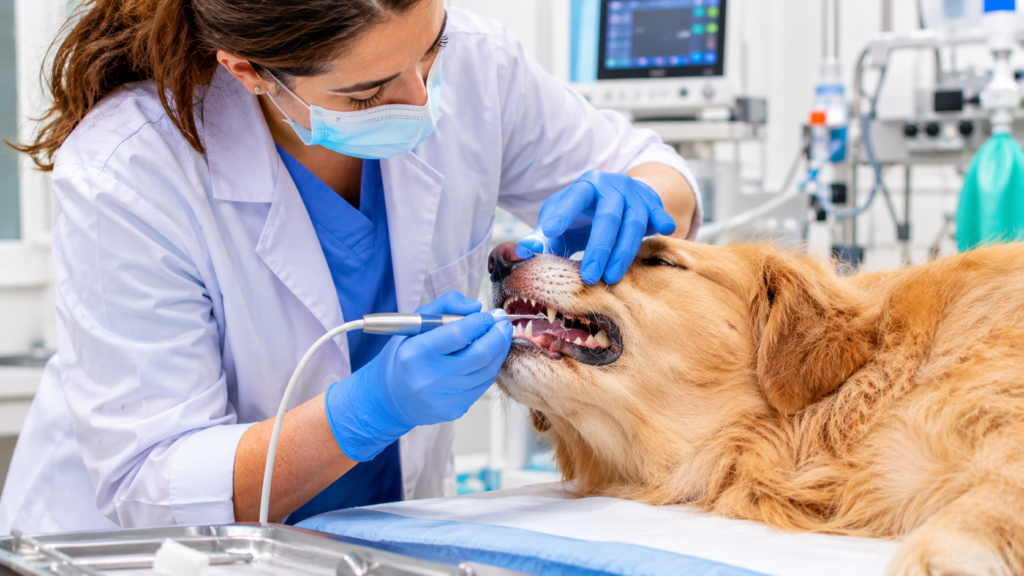
Unlike simple brushing at home, professional cleaning can address deposits below the gumline, where much of the damage associated with periodontal disease occurs.
Why Is General Anesthesia Needed?
A proper veterinary dental cleaning is generally performed under general anesthesia with appropriate monitoring.
Anesthesia allows the veterinary team to:
- Examine the entire mouth safely.
- Clean above and below the gumline.
- Perform periodontal probing.
- Take dental X-rays.
- Remove painful or damaged teeth when necessary.
- Prevent the dog from moving during treatment.
- Protect the airway during the procedure.
Cleaning only the visible surfaces of the teeth while a dog is awake does not provide a complete dental examination or treatment.
Is Anesthesia Safe for Dogs?
General anesthesia has risks, as it does with any medical procedure. However, veterinary teams use patient assessments and monitoring to reduce those risks.
Before the procedure, the veterinarian may recommend:
- A physical examination.
- Blood tests when appropriate.
- Review of existing medical conditions.
- Assessment of heart and respiratory health.
- An individualized anesthesia plan.
- Monitoring throughout the procedure and recovery.
Age alone does not automatically make a dog unsuitable for anesthesia. The dog’s overall health and individual risk factors are more important.
Owners should discuss any concerns with the veterinarian before scheduling dental treatment.
Step-by-Step: How Professional Dog Teeth Cleaning Works
The exact procedure depends on the dog’s dental condition, but a complete veterinary dog dental cleaning commonly includes several stages.
Initial Oral Examination
The veterinarian examines the dog’s mouth before anesthesia.
The examination may identify:
- Visible tartar.
- Gum inflammation.
- Broken teeth.
- Loose teeth.
- Oral growths.
- Abnormal tooth positioning.
- Signs of pain or infection.
This initial assessment helps the veterinarian plan the procedure.
Pre-Anesthetic Assessment
Before anesthesia, the veterinary team evaluates the dog’s health.
Depending on the patient’s age and medical history, this may include blood tests and other investigations.
The veterinarian explains the procedure and discusses possible risks and treatment options.
Anesthesia and Monitoring
Once the dog is ready, general anesthesia is administered.
An endotracheal tube is generally used to protect the airway and help prevent water, debris, and bacteria from entering the lungs.
The veterinary team monitors important measurements such as:
- Heart rate.
- Breathing.
- Blood oxygen levels.
- Blood pressure.
- Body temperature.
- Anesthetic depth.
Dental X-Rays
Dental X-rays allow the veterinarian to examine structures that cannot be seen by looking at the teeth.
They may reveal:
- Tooth-root infections.
- Bone loss.
- Hidden fractures.
- Retained tooth roots.
- Problems below the gumline.
- Abnormal or unerupted teeth.
A dog can have significant dental disease even when the visible tooth surfaces appear relatively normal.
Scaling and Tartar Removal
The veterinary team uses specialized instruments to remove plaque and hardened tartar.
Cleaning includes the visible surfaces and areas below the gumline where periodontal disease develops.
Both manual and powered instruments may be used.
Polishing
After scaling, the teeth are polished to smooth the enamel surface.
Polishing helps reduce microscopic irregularities that can contribute to plaque accumulation.
Periodontal Examination
The veterinarian evaluates the gums and supporting structures around individual teeth.
This may include measuring periodontal pockets and recording the condition of each tooth.
Additional Dental Treatment
If the examination reveals damaged or severely diseased teeth, further treatment may be necessary.
Possible procedures include:
- Tooth extraction.
- Treatment of infected teeth.
- Periodontal therapy.
- Treatment of oral injuries.
- Biopsy of suspicious oral growths.
The veterinarian should explain any additional treatment and its expected benefits.
Recovery and Home Instructions
After the procedure, the dog is monitored while recovering from anesthesia.
The veterinary team provides instructions about feeding, medication, activity, and follow-up care.
Some dogs return home the same day, depending on their condition and the treatment performed.
How Long Does Professional Dog Dental Cleaning Take?
The duration depends on the dog’s size, oral health, and the complexity of the procedure.
A routine cleaning may take less time than a procedure involving multiple extractions or treatment of advanced periodontal disease.
The overall appointment can take several hours because the dog needs preparation, anesthesia, dental examination, treatment, and recovery monitoring.
Your veterinary clinic can provide a more accurate estimate after assessing your dog’s mouth.
How Much Does Dog Dental Cleaning Cost?
The cost of professional dog dental cleaning varies depending on the country, clinic, dog’s size, and condition of the teeth.
A basic cleaning may cost less than a procedure involving dental X-rays, extractions, or treatment of severe periodontal disease.
Factors That Affect Dental Cleaning Costs
Dog size: Larger dogs may require different quantities of medication and longer procedures.
Dental condition: Heavy tartar buildup and advanced gum disease may require additional treatment.
Anesthesia: Pre-anesthetic assessment, anesthesia, and monitoring contribute to the total cost.
Dental X-rays: Imaging may be needed to identify problems below the gumline.
Tooth extractions: Removing damaged or infected teeth increases treatment costs.
Veterinary clinic: Prices vary according to location, facilities, equipment, and professional expertise.
How to Prepare for Dental Cleaning Expenses
Before scheduling the procedure:
- Ask for an estimate covering the expected treatment.
- Confirm whether dental X-rays are included.
- Ask about anesthesia and monitoring.
- Discuss possible additional costs if extractions are needed.
- Ask how follow-up appointments are handled.
- Request an explanation of the recommended treatment plan.
A very low price should not be the only factor when choosing a dental service. Proper veterinary care, anesthesia monitoring, and a complete examination are essential.
How to Clean Your Dog’s Teeth at Home
Home dental care is one of the best ways to reduce plaque accumulation between professional veterinary examinations.
Daily brushing is generally the most effective method for controlling plaque.
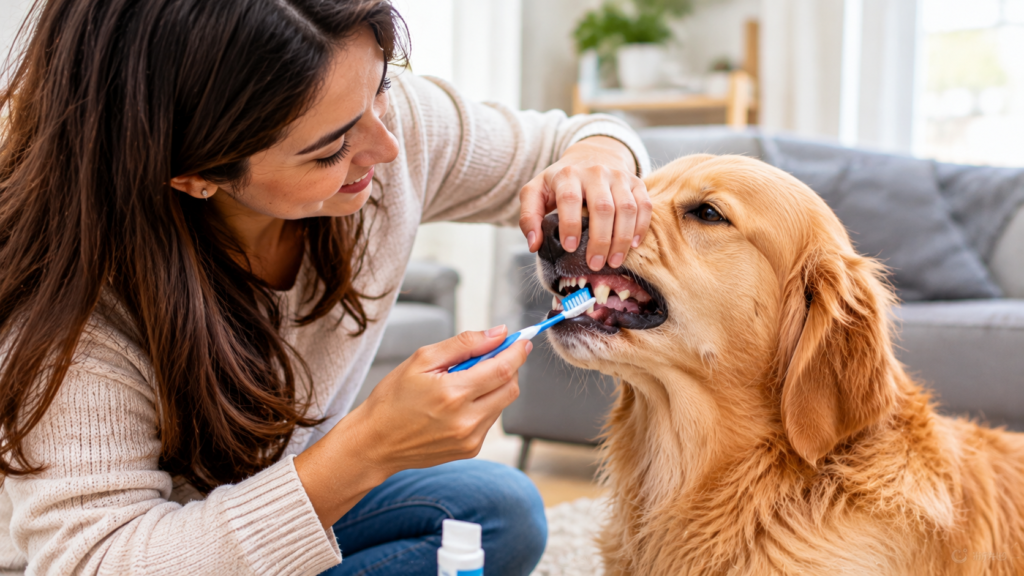
The earlier you introduce tooth brushing, the easier it may become for your dog to accept it as part of its routine.
Choose a Dog-Specific Toothbrush
Use a toothbrush designed for dogs.
Suitable options include:
- Soft-bristled dog toothbrushes.
- Small toothbrushes for small breeds.
- Finger brushes for dogs that tolerate them.
- Brushes with angled heads for easier access.
Choose a brush that comfortably reaches the teeth without irritating the gums.
Use Dog-Specific Toothpaste
Always use toothpaste made specifically for dogs.
Human toothpaste may contain ingredients that are unsafe for pets, including fluoride in unsuitable amounts and other additives. Some products may also contain xylitol, which is toxic to dogs.
Dog toothpaste is often available in flavors such as chicken, beef, and other pet-friendly varieties.
Never use ordinary human toothpaste for your dog.
Brush Your Dog’s Teeth Daily
Daily brushing is ideal because plaque begins accumulating again soon after it is removed.
Follow these steps:
- Choose a quiet time when your dog is relaxed.
- Let your dog smell and inspect the toothbrush.
- Introduce a small amount of dog toothpaste.
- Gently lift the lips to expose the teeth.
- Begin with a few easy-to-reach teeth.
- Use small, gentle movements along the gumline.
- Gradually brush more teeth as your dog becomes comfortable.
- Reward your dog with praise after each session.
Do not force your dog to tolerate brushing if it becomes frightened or painful.
If the gums are already inflamed or the dog reacts with pain, arrange a veterinary examination before continuing.
How Often Should You Brush Your Dog’s Teeth?
| Brushing Frequency | Recommendation |
|---|---|
| Daily | Best routine for plaque control |
| Several times per week | Helpful when daily brushing is not possible |
| Once a week | Less effective for controlling plaque |
| Occasionally | Usually insufficient as the main dental care routine |
Consistency is more important than performing occasional long brushing sessions.
Dental Chews and Toys: Do They Help Clean Dog Teeth?
Dental chews and suitable toys can support oral hygiene by helping reduce plaque accumulation on some tooth surfaces.
However, they should not replace brushing or veterinary dental treatment.
Dental Chews
Some dental chews are designed to reduce plaque and tartar through mechanical action during chewing.
When selecting a dental chew:
- Choose an appropriate size for your dog.
- Follow the manufacturer’s feeding instructions.
- Supervise chewing.
- Avoid products that are too hard.
- Consider the dog’s age and chewing habits.
- Ask your veterinarian for recommendations.
Products with the Veterinary Oral Health Council (VOHC) seal have met defined standards for reducing plaque or tartar when used as directed.
Dental Toys
Some toys are designed with textures that help clean tooth surfaces during chewing.
Choose toys that are durable but not excessively hard.
Avoid objects that can damage teeth, including:
- Very hard bones.
- Antlers.
- Hard nylon objects that cannot bend.
- Hooves.
- Stones.
- Extremely hard plastic toys.
A simple safety guideline is to avoid chew objects that are so hard that they could damage a tooth.
Dental Water Additives
Certain water additives are designed to help control plaque or improve oral hygiene.
Their effectiveness varies by product.
Use only products specifically formulated for dogs and ask your veterinarian whether they are appropriate for your pet.
Best Dental Care Routine for Dogs
A consistent routine makes it easier to maintain your dog’s oral health.
| Dental Care Activity | Suggested Frequency | Main Benefit |
|---|---|---|
| Tooth brushing | Daily | Removes plaque |
| Dental chew, if suitable | According to product instructions | Helps reduce plaque or tartar |
| Oral inspection at home | Regularly | Helps identify visible changes |
| Veterinary dental examination | At least once a year | Detects early dental problems |
| Professional dog dental cleaning | When recommended by a veterinarian | Removes hardened deposits and treats dental disease |
| Dental X-rays | When clinically indicated | Identifies hidden dental problems |
Do Small Dogs Need More Frequent Dental Cleaning?
Small-breed dogs often require more attention to dental health than larger dogs.
Their mouths may have less space for the teeth, increasing the likelihood of crowding and plaque accumulation.
Why Are Small Dogs More Prone to Dental Problems?
Possible contributing factors include:
- Crowded teeth.
- Retained baby teeth.
- Smaller jaw structures.
- Misaligned teeth.
- Difficulty reaching certain teeth during brushing.
- Increased susceptibility to periodontal disease.
Small breeds such as Yorkshire Terriers, Chihuahuas, Dachshunds, and some toy breeds may need particularly careful dental monitoring.
However, dental disease can affect dogs of every size.
Dental Care for Small-Breed Dogs
Owners of small dogs should:
- Arrange regular veterinary oral examinations.
- Introduce brushing early.
- Use appropriately sized toothbrushes.
- Check for retained baby teeth in puppies.
- Watch for tartar near the back teeth.
- Follow the veterinarian’s professional cleaning recommendations.
Dog Dental Cleaning for Puppies
Puppies need dental monitoring as their baby teeth develop and eventually fall out.
Most puppies begin losing their deciduous teeth at approximately 3–4 months of age, with permanent teeth generally developing by around 6–7 months.
Do Puppies Need Professional Dental Cleaning?
Healthy puppies do not normally need routine professional scaling simply because they are young.
However, a veterinarian should check their teeth during regular puppy examinations.
Professional dental attention may be needed if a puppy has:
- Retained baby teeth.
- Broken teeth.
- Abnormal tooth positioning.
- Gum inflammation.
- Oral injuries.
- Other developmental dental problems.
Why Are Retained Baby Teeth a Concern?
Sometimes a permanent tooth begins growing while the corresponding baby tooth remains in place.
This can cause crowding, trapped food, abnormal tooth positioning, and increased plaque accumulation.
A veterinarian should examine retained baby teeth and recommend appropriate treatment.
Dog Dental Cleaning for Senior Dogs
Older dogs may have a higher risk of periodontal disease because plaque and tartar can accumulate over many years.
However, senior dogs should not automatically be denied dental treatment because of their age.
Common Dental Problems in Senior Dogs
Older dogs may develop:
- Advanced periodontal disease.
- Loose or missing teeth.
- Gum recession.
- Tooth-root infections.
- Broken teeth.
- Oral growths.
- Difficulty chewing.
Is Dental Cleaning Safe for Older Dogs?
The safety of anesthesia depends on the dog’s overall health rather than age alone.
A veterinarian may recommend additional testing or adjustments to the anesthesia plan for dogs with existing medical conditions.
Dental treatment may improve comfort and quality of life when an older dog has painful or infected teeth.
The benefits and risks should be discussed individually with the veterinarian.
Can You Clean Your Dog’s Teeth Without Anesthesia?
Some services advertise dental scaling without anesthesia, often describing it as an easier or less expensive alternative.
However, non-anesthetic dental cleaning is not considered a substitute for proper veterinary dental treatment.
Why Is Anesthesia-Free Cleaning Not Recommended?
A conscious dog cannot reliably remain still for a complete dental examination and treatment.
Non-anesthetic cleaning has important limitations:
- It cannot properly clean below the gumline.
- It cannot provide a complete periodontal examination.
- It does not allow reliable dental X-rays.
- It may miss infections beneath the gums.
- It may cause fear, stress, or injury.
- It can make teeth look cleaner without treating underlying disease.
Most importantly, removing visible tartar does not mean the dog’s mouth is healthy.
A complete professional dog dental cleaning should be performed by a veterinary team using appropriate anesthesia, monitoring, and dental equipment.
Common Mistakes Dog Owners Make About Dental Cleaning
Even caring owners can make mistakes when managing their dog’s dental hygiene.
Waiting Until Bad Breath Becomes Severe
Persistent bad breath can indicate dental disease.
Waiting until the odor becomes strong may allow the problem to progress.
Regular examinations help identify disease earlier.
Brushing Only the Front Teeth
Plaque can accumulate on the back teeth and along the gumline.
Although brushing the front teeth may be easier, try to gradually clean all accessible tooth surfaces.
Using Human Toothpaste
Human toothpaste is not formulated for dogs and may contain ingredients that are unsafe for them.
Always use dog-specific toothpaste.
Giving Extremely Hard Chews
Very hard bones, antlers, and other objects can fracture teeth.
Choose suitable dental products and avoid items that are excessively hard.
Assuming Dental Treats Replace Brushing
Dental chews may provide additional support, but they do not clean every tooth surface or treat existing periodontal disease.
Regular brushing remains the most effective home care method.
Ignoring Changes in Eating Behavior
A dog that suddenly refuses hard food, drops food, or chews on one side may be experiencing dental pain.
These changes should not be dismissed as ordinary aging or picky eating.
When Should You Take Your Dog to a Veterinarian?
Some dental problems can wait for a scheduled examination, while others require prompt attention.
Arrange a veterinary dental examination if you notice:
- Persistent bad breath.
- Visible tartar buildup.
- Red or swollen gums.
- Bleeding around the teeth.
- Changes in chewing behavior.
- Loose teeth.
- Excessive drooling.
- Repeatedly dropping food.
- Sensitivity around the mouth.
Seek prompt veterinary attention if your dog has facial swelling, significant oral bleeding, a broken tooth, severe pain, or difficulty eating.
If your dog cannot breathe normally, collapses, or has another serious emergency sign, seek emergency veterinary care.
Avoid attempting to remove tartar with sharp tools or pulling loose teeth at home.
Frequently Asked Questions About Dog Dental Cleaning
How often should I get my dog’s teeth professionally cleaned?
The frequency depends on your dog’s oral health, age, breed, and tartar accumulation. Many dogs may need professional cleaning every 1–2 years, but some need it more frequently. A veterinarian should examine your dog’s teeth at least once a year and recommend cleaning when necessary.
Should I brush my dog’s teeth every day?
Yes. Daily brushing is the preferred routine for reducing plaque buildup. If daily brushing is not possible, brushing several times a week is still beneficial.
At what age should a dog get its first dental cleaning?
There is no universal age for a first professional cleaning. Dental examinations should begin during puppyhood. Some small and medium-sized dogs may benefit from a complete professional dental assessment around one year of age, while larger dogs may have their first routine assessment later, depending on their oral health and veterinary recommendations.
Can I remove tartar from my dog’s teeth at home?
Soft plaque can be removed through regular brushing, but hardened tartar generally requires professional scaling. Do not scrape your dog’s teeth with household tools because this can damage the gums and teeth.
Is professional dog dental cleaning painful?
The cleaning itself is performed under general anesthesia, so the dog does not experience the procedure in the same way it would while awake. If extractions or other treatments are needed, the veterinarian provides appropriate pain management.
How long does a dog dental cleaning take?
The procedure may take from around an hour to several hours, depending on the dog’s dental condition and the amount of treatment required. Preparation and recovery also add to the overall appointment time.
Can bad breath mean my dog needs dental cleaning?
Persistent bad breath can be a sign of plaque accumulation, gingivitis, periodontal disease, or oral infection. It should be evaluated by a veterinarian rather than treated only with dental sprays or treats.
Are dental chews enough to keep a dog’s teeth clean?
No. Dental chews can help reduce plaque or tartar on certain surfaces, but they do not replace daily brushing or professional veterinary dental care.
Is anesthesia necessary for dog dental cleaning?
General anesthesia is generally necessary for a complete professional dog dental cleaning because it allows safe cleaning below the gumline, periodontal examination, and dental X-rays. Non-anesthetic scaling is not a substitute for comprehensive veterinary dentistry.
Do senior dogs need dental cleaning?
Yes, senior dogs may need professional dental care if they have tartar buildup, gum disease, damaged teeth, or oral pain. A veterinarian should assess their overall health and individual anesthesia risks before treatment.
Can dental disease cause a dog to stop eating?
Yes. Gum inflammation, infected teeth, broken teeth, and advanced periodontal disease can make chewing painful. A dog that suddenly refuses food or struggles to eat should receive veterinary attention.
Does dry dog food clean teeth?
Ordinary dry kibble does not reliably clean a dog’s teeth. Some specially formulated dental diets are designed to help reduce plaque or tartar, but they should be selected with veterinary guidance.
Conclusion
Regular dog dental cleaning is essential for maintaining healthy teeth, preventing gum disease, and protecting your pet from unnecessary oral pain. Most dogs should receive a veterinary dental examination at least once a year, while the need for professional cleaning depends on their individual dental condition.
Small breeds, senior dogs, and pets with crowded teeth or existing periodontal disease may need more frequent dental attention. Professional cleaning allows veterinarians to remove hardened tartar, examine the structures below the gumline, take dental X-rays when needed, and treat problems that cannot be managed through brushing alone.
At home, daily brushing with a dog-specific toothbrush and toothpaste is the most effective way to control plaque. Suitable dental chews and specially designed dental products can provide additional support, but they cannot replace professional treatment.
The best approach is to combine consistent home dental care with regular veterinary examinations. By paying attention to bad breath, gum changes, difficulty chewing, and other warning signs, you can help your dog maintain a healthier mouth and a more comfortable life.