
Dog Heatstroke: Symptoms, First Aid and Prevention Tips
Dog heatstroke is a serious medical emergency that occurs when a dog’s body temperature rises to a dangerous level and its natural cooling system cannot remove enough heat. It can happen during hot weather, strenuous exercise, exposure to direct sunlight, or when a dog is left inside a poorly ventilated or overheated environment.
Unlike humans, dogs cannot cool themselves effectively through sweating. They mainly regulate body temperature by panting, with limited sweating through their paw pads. When the surrounding temperature and humidity become too high, panting may no longer be enough to keep the body cool.
Dog Heatstroke can develop quickly and may cause damage to the brain, kidneys, liver, digestive system, heart, and other organs. Without immediate cooling and veterinary treatment, it can become fatal.
Recognizing the early warning signs of dog heatstroke is essential for every dog owner. Excessive panting, heavy drooling, restlessness, weakness, vomiting, diarrhea, confusion, and collapse can indicate that a dog is overheating.
This guide explains the causes, symptoms, risk factors, emergency first aid, veterinary treatment, recovery, and prevention of heatstroke in dogs.
What Is Heatstroke in Dogs?
Heatstroke, also called heat injury or severe heat-related illness, occurs when a dog’s body temperature increases beyond its ability to regulate and cool itself.
A dog’s normal body temperature is generally around 100.5°F to 102.5°F (38.1°C to 39.2°C). Heatstroke is commonly associated with a body temperature around or above 105°F (40.6°C), although serious heat injury can occur at different temperatures depending on the circumstances and duration of overheating.
Heatstroke is not simply feeling warm after exercise. It is a dangerous condition in which excessive body heat can interfere with normal organ function.
How Do Dogs Control Their Body Temperature?
Dogs rely mainly on panting to release excess body heat.
When a dog pants, moisture evaporates from the tongue and respiratory surfaces, helping cool the body.
Dogs also have sweat glands in their paw pads, but sweating through the paws plays a limited role in overall temperature regulation.
Several factors can interfere with this cooling process:
- High outdoor temperatures.
- High humidity.
- Poor ventilation.
- Excessive physical activity.
- Restricted access to shade.
- Respiratory problems.
- Dehydration.
When the dog cannot release enough heat, its internal temperature rises and heatstroke may develop.
Difference Between Heat Stress, Heat Exhaustion, and Heatstroke
Heat-related illness can range from mild overheating to severe heat injury.
| Condition | Description | Common Signs |
|---|---|---|
| Heat stress | The dog becomes too warm but may still regulate its temperature | Increased panting, seeking shade, restlessness |
| Heat exhaustion | The dog’s cooling system is struggling | Heavy panting, drooling, weakness, discomfort |
| Heatstroke | Severe overheating that can damage organs | Confusion, vomiting, diarrhea, collapse, seizures |
These stages are not always clearly separated. A dog can deteriorate quickly, so owners should not wait for symptoms to become severe before seeking veterinary advice.
Symptoms of Dog Heatstroke
Dog Heatstroke symptoms can appear suddenly and may worsen rapidly. Some dogs initially show only signs of overheating, while others develop serious neurological and physical complications.
Recognizing the warning signs early can help prevent severe organ damage.
Early Signs of Heatstroke
Early symptoms often indicate that the dog is struggling to cool itself.
Excessive Panting
Heavy, rapid, or continuous panting is one of the most recognizable signs of overheating.
A dog may continue panting even after stopping exercise or moving into the shade.
If the panting becomes unusually intense or does not improve after cooling, heatstroke may be developing.
Excessive Drooling
Some dogs produce large amounts of saliva when their body temperature rises.
The saliva may become thick, sticky, or unusually heavy around the mouth.
Restlessness and Agitation
An overheated dog may appear uncomfortable or anxious.
It may repeatedly change positions, pace around, search for shade, or try to find a cool surface.
Red Gums and Tongue
The gums and tongue may appear unusually bright red during the early stages of heat-related illness.
As the condition becomes more severe, the gums may become pale, gray, or bluish.
Increased Heart Rate
The dog’s heart may beat faster as the body attempts to manage heat and maintain circulation.
An unusually rapid heartbeat combined with excessive panting requires attention.
Seeking Cool Places
A dog that suddenly moves toward shaded areas, cool floors, water, or air-conditioned rooms may be trying to escape excessive heat.
This behavior can be an early warning sign.
Advanced Symptoms of Heatstroke
As heatstroke progresses, the dog may develop serious complications affecting the nervous system, digestive system, and circulation.
Weakness and Difficulty Walking
The dog may appear tired, unstable, or unable to walk normally.
Some dogs stumble, lose coordination, or struggle to stand.
Vomiting
Heatstroke can affect the digestive system and cause vomiting.
Repeated vomiting may contribute to dehydration and further weaken the dog.
Diarrhea
An overheated dog may develop diarrhea. In severe cases, the stool may contain blood.
Bloody diarrhea is a serious warning sign that requires emergency veterinary care.
Confusion and Disorientation
Heat-related injury can affect the brain.
The dog may appear confused, respond unusually to familiar people, or have difficulty recognizing its surroundings.
Difficulty Breathing
Breathing may become rapid, noisy, or labored.
This can indicate severe overheating and requires immediate veterinary attention.
Collapse
A dog experiencing severe heatstroke may suddenly fall down or become unable to stand.
Collapse can indicate shock or serious organ dysfunction.
Seizures
Severe overheating can damage the nervous system and trigger seizures.
This is an extremely serious emergency.
Symptoms at a Glance
| Symptom | What Owners May Notice |
|---|---|
| Heavy panting | Rapid and continuous breathing |
| Excessive drooling | Thick or unusually heavy saliva |
| Restlessness | Pacing and searching for shade |
| Red gums | Unusually bright red tongue or gums |
| Rapid heartbeat | Faster-than-normal heart rate |
| Weakness | Difficulty walking or standing |
| Vomiting | Repeated vomiting |
| Diarrhea | Loose stool, sometimes bloody |
| Confusion | Disorientation or unusual behavior |
| Collapse | Sudden inability to stand |
| Seizures | Uncontrolled body movements |
Important: If your dog shows signs of heatstroke, begin safe cooling immediately and contact an emergency veterinarian. Do not wait for the symptoms to disappear on their own.
What Causes Dog Heatstroke?
Heatstroke occurs when a dog gains more heat than its body can remove.
Several environmental and physical factors can contribute to this condition.
Hot Weather
High outdoor temperatures increase the amount of heat a dog absorbs from its surroundings.
Direct sunlight, hot surfaces, and a lack of shade can make overheating more likely.
Even dogs that normally enjoy outdoor activities may struggle during periods of extreme heat.
High Humidity
Humidity makes it more difficult for moisture to evaporate.
Because dogs depend heavily on evaporative cooling through panting, high humidity can interfere with their ability to release excess heat.
A warm, humid environment can therefore be dangerous even when the temperature does not seem extremely high.
Strenuous Exercise
Running, playing, cycling alongside an owner, and other intense physical activities generate body heat.
When these activities take place during hot or humid weather, the dog’s temperature may rise faster than its cooling system can manage.
Being Left Inside a Parked Car
A parked vehicle can become dangerously hot, even when the outside weather seems relatively mild.
The temperature inside a vehicle can rise rapidly because sunlight heats the enclosed space.
Leaving the windows slightly open does not make a parked car safe for a dog.
Never leave a dog unattended inside a parked vehicle.
Poor Ventilation
Dogs kept in enclosed spaces without sufficient airflow may struggle to release heat.
Examples include:
- Closed rooms without cooling.
- Poorly ventilated garages.
- Enclosed balconies.
- Small outdoor shelters.
- Vehicles without proper ventilation.
Lack of Drinking Water
Dogs need regular access to fresh water, especially during warm weather.
Insufficient water can contribute to dehydration and make it harder for the body to maintain normal functions.
Excessive Sun Exposure
Dogs that remain in direct sunlight for long periods may absorb too much heat.
This is particularly concerning when they cannot move to a shaded area.
Inadequate Acclimatization
Dogs that are not accustomed to hot weather may be more vulnerable when temperatures rise suddenly.
Increasing activity gradually and allowing time to adjust to warmer conditions can help reduce risk.
Which Dogs Are at Higher Risk of Heatstroke?
Any dog can develop heatstroke, but some dogs are more vulnerable because of their physical characteristics, age, body condition, or medical history.
Short-Nosed Dog Breeds
Short-muzzled dogs, also called brachycephalic breeds, often have difficulty breathing and cooling themselves through panting.
Examples include:
- Pugs.
- English Bulldogs.
- French Bulldogs.
- Boston Terriers.
- Shih Tzus.
- Pekingese.
- Boxers.
These dogs need additional protection during hot weather.
Senior Dogs
Older dogs may have reduced physical tolerance and may also suffer from heart, lung, or other age-related health conditions.
They may need more careful temperature management and shorter outdoor activities.
Puppies
Young puppies may not regulate body temperature as effectively as healthy adult dogs.
They can also become dehydrated more quickly when exposed to excessive heat.
Overweight Dogs
Excess body weight can make it harder for dogs to manage physical activity and release body heat.
Overweight dogs may therefore have a higher risk of heat-related illness.
Thick-Coated and Dark-Coated Dogs
Dogs with dense or heavy coats may retain more heat, particularly when exposed to direct sunlight or high temperatures.
Dark coats can absorb more solar radiation than lighter coats.
However, coat color alone does not determine whether a dog will develop heatstroke.
Dogs With Heart or Respiratory Conditions
Dogs with heart disease, airway disorders, or other breathing problems may have difficulty coping with heat.
Their ability to deliver oxygen and regulate body temperature may already be affected.
Dogs With Previous Heatstroke
A dog that has previously experienced heatstroke may be at increased risk of another episode.
Owners should take extra precautions and discuss an appropriate hot-weather management plan with their veterinarian.
High-Risk Dogs Overview
| Dog Type | Why Risk May Be Higher |
|---|---|
| Pugs and Bulldogs | Difficulty cooling through panting |
| Senior dogs | Reduced physical tolerance and possible medical conditions |
| Puppies | Developing temperature regulation |
| Overweight dogs | Greater physical strain |
| Thick-coated dogs | Increased heat retention |
| Dogs with heart disease | Reduced ability to cope with physical stress |
| Dogs with respiratory problems | Difficulty breathing and panting |
| Previously affected dogs | Greater concern about repeat heat injury |
First Aid for Heatstroke in Dogs
Heatstroke requires immediate action. The first priority is to stop further heat exposure, begin safe cooling, and arrange emergency veterinary care.
A dog should be assessed by a veterinarian even if it appears to improve after initial cooling. Internal complications may not be immediately visible.
Step 1: Move Your Dog to a Cool Place
Immediately remove your dog from direct sunlight or the hot environment.
Move it to:
- An air-conditioned room.
- A shaded outdoor area.
- A cool, well-ventilated space.
- A vehicle with working air conditioning during transport.
Stop all exercise and keep the dog as calm as possible.
Step 2: Begin Cooling With Cool Water
Use cool or room-temperature tap water to wet your dog’s body.
Focus on areas such as:
- The chest.
- The abdomen.
- The neck.
- The inner thighs.
- The legs.
For dogs with thick coats, make sure the water reaches the skin.
Avoid delaying cooling while searching for special equipment.
Step 3: Improve Airflow
Place your dog in front of a fan or use air conditioning.
Air movement helps water evaporate from the coat and skin, supporting the cooling process.
Step 4: Offer Small Amounts of Drinking Water
If your dog is alert and able to swallow normally, offer small amounts of fresh, cool water.
Do not force water into the dog’s mouth.
Do not attempt to make an unconscious, confused, or severely weak dog drink.
Step 5: Contact an Emergency Veterinarian
Call the nearest veterinary hospital as soon as possible.
Explain the symptoms and tell the veterinary team that you suspect heatstroke.
Follow their instructions and arrange immediate transport.
Continue safe cooling during transport when possible, without delaying the journey.
Step 6: Monitor Your Dog
Watch your dog’s breathing, alertness, and general condition.
If you can safely measure rectal temperature using an appropriate thermometer, share the reading with the veterinarian.
Veterinary first-aid guidance commonly recommends stopping active cooling when the temperature reaches approximately 103°F (39.4°C), because continued aggressive cooling can cause the body temperature to fall too far.
Do not delay cooling or veterinary care because you cannot measure the temperature.
What You Should Not Do
Some common first-aid mistakes can make the situation more difficult.
Avoid the following:
- Do not leave the dog in the hot environment.
- Do not force water into its mouth.
- Do not give human medication.
- Do not use alcohol on the dog’s skin.
- Do not wrap the dog in wet towels or blankets, as they can trap heat.
- Do not delay veterinary care to see whether the dog improves.
- Do not assume that normal behavior after cooling means the danger has passed.
- Do not use extreme cooling methods without appropriate veterinary guidance.
Emergency First Aid Summary
| Action | What to Do |
|---|---|
| Remove heat exposure | Move the dog to shade or air conditioning |
| Stop activity | Prevent further exercise |
| Start cooling | Wet the body with cool water |
| Improve airflow | Use a fan or air conditioning |
| Offer water | Allow small drinks if the dog is alert |
| Contact a veterinarian | Arrange emergency assessment |
| Continue safe cooling | Maintain cooling during transport when possible |
Remember: Heatstroke is not a condition that should be managed at home alone. First aid is only the initial step before professional veterinary treatment.
Veterinary Treatment for Heatstroke in Dogs
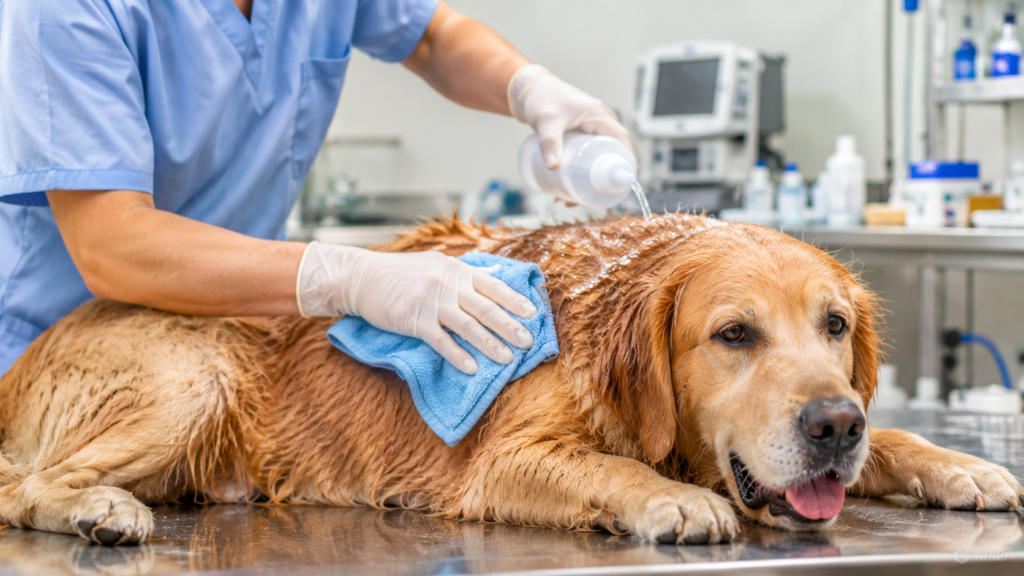
A dog suffering from heatstroke may require intensive medical care, even if its body temperature begins returning to normal.
The veterinarian will evaluate the severity of the condition and look for damage to important organs.
Physical Examination
The veterinarian may assess:
- Body temperature.
- Heart rate.
- Breathing rate.
- Gum color.
- Blood pressure.
- Hydration.
- Neurological function.
- Signs of shock.
The medical team also asks about the dog’s exposure to heat and the symptoms observed before arrival.
Blood Tests
Blood tests help identify internal complications.
They may include:
Complete Blood Count
This test evaluates red blood cells, white blood cells, and platelets.
It can help identify changes associated with inflammation, dehydration, or blood-related complications.
Blood Chemistry
Blood chemistry tests help assess kidney and liver function.
They may also reveal electrolyte imbalances and other abnormalities.
Blood Clotting Tests
Severe heatstroke can interfere with normal blood clotting.
Clotting tests may be used to identify bleeding or clotting abnormalities.
Urine Testing
Urinalysis can help evaluate kidney function and identify changes associated with dehydration or muscle damage.
Intravenous Fluids
Dogs with heatstroke may require intravenous fluids to support circulation and hydration.
The type and amount of fluid depend on the dog’s condition and must be managed by the veterinary team.
Oxygen Therapy
If a dog has difficulty breathing or inadequate oxygen delivery, the veterinarian may provide supplemental oxygen.
Medication and Supportive Care
Treatment depends on the complications identified during examination.
Veterinarians may use:
- Medication to manage seizures.
- Treatment for abnormal heart rhythms.
- Supportive medication for gastrointestinal complications.
- Pain management when appropriate.
- Blood products in selected severe cases.
- Additional treatments for kidney or liver complications.
There is no single medication that reverses all heatstroke-related damage.
Hospital Monitoring
Severe heatstroke may require hospitalization and continuous monitoring.
The veterinary team may repeatedly check body temperature, blood pressure, urine production, blood results, and organ function.
This is important because complications can appear or worsen after the initial overheating has been corrected.
Possible Complications of Heatstroke in Dogs
Heatstroke can affect multiple organs and body systems.
The severity of complications depends on how high the temperature rises, how long the dog remains overheated, and how quickly treatment begins.
Kidney Damage
Severe heat injury can reduce blood flow to the kidneys and cause acute kidney injury.
A dog may produce less urine or develop abnormal kidney blood test results.
Liver Damage
The liver may be affected by severe overheating and reduced circulation.
Liver dysfunction can contribute to additional complications.
Brain and Nervous System Damage
High body temperature can damage brain tissue and affect normal neurological function.
Possible signs include:
- Confusion.
- Disorientation.
- Seizures.
- Reduced consciousness.
- Abnormal movement.
Blood Clotting Problems
Heatstroke can damage the lining of blood vessels and interfere with normal clotting.
Some dogs may develop excessive clotting, while others may experience abnormal bleeding.
Gastrointestinal Damage
The digestive system may become inflamed or damaged.
Possible complications include vomiting, diarrhea, intestinal bleeding, and reduced digestive function.
Shock
Severe overheating can affect circulation and blood pressure.
A dog experiencing shock may become extremely weak, develop pale gums, or collapse.
Death
Without prompt treatment, severe heatstroke can lead to multiple organ failure and death.
Early recognition, immediate cooling, and intensive veterinary care improve the chances of survival.
Recovery After Heatstroke
Recovery depends on the severity of the heat injury and whether internal organs have been affected.
Some dogs recover after treatment and monitoring, while others may need prolonged hospitalization and follow-up care.
Follow the Veterinarian’s Instructions
Follow all treatment instructions, including medication schedules, activity restrictions, feeding recommendations, and follow-up appointments.
Do not stop prescribed medication without veterinary advice.
Keep Your Dog in a Cool Environment
Provide a comfortable indoor resting area with adequate ventilation.
Avoid unnecessary outdoor exposure while the dog is recovering.
Monitor Drinking and Urination
Pay attention to changes in water intake and urination.
Reduced urine production or unusual changes may indicate complications that require veterinary assessment.
Monitor Appetite and Behavior
Watch for:
- Reduced appetite.
- Repeated vomiting.
- Diarrhea.
- Unusual tiredness.
- Confusion.
- Changes in breathing.
Report concerning changes to the veterinarian.
Limit Physical Activity
Do not return immediately to normal walks or exercise.
Allow the veterinarian to decide when your dog can safely resume physical activity.
Attend Follow-Up Examinations
Follow-up examinations and blood tests may be needed to check kidney function, liver function, blood clotting, and other possible complications.
A dog that appears normal after initial treatment may still need monitoring.
How to Prevent Heatstroke in Dogs
Most heatstroke cases can be reduced through careful management of heat exposure, exercise, water access, and outdoor activities.
Prevention is especially important for dogs with short muzzles, thick coats, excess body weight, or existing health conditions.
Never Leave Your Dog in a Parked Car
A parked vehicle can become dangerously hot within a short period.
Even a brief stop can put a dog at risk.
Never leave your dog alone inside a parked car, even when the windows are slightly open.
Walk Your Dog During Cooler Hours
Schedule outdoor walks early in the morning or later in the evening when temperatures are generally lower.
Avoid midday exercise and other periods of extreme heat.
Provide Fresh Drinking Water
Make sure your dog always has access to clean, fresh water.
When going outside, carry a portable water bottle and bowl.
Offer regular opportunities to drink, especially during warm weather.
Provide Shade Outdoors
If your dog spends time outside, make sure a shaded and well-ventilated resting area is available.
Remember that shade can move during the day, so check that the area remains protected from direct sunlight.
Avoid Strenuous Exercise
Reduce running, jumping, and intense play during hot weather.
Adjust exercise according to your dog’s age, breed, health, and fitness level.
Keep Your Dog Indoors During Extreme Heat
During very hot or humid weather, indoor activities are often safer.
Use air conditioning or fans when available, and make sure the dog has access to a cool resting area.
Never Leave a Dog Without Water
Water should be available throughout the day.
Dogs kept outdoors need particular attention because water containers can become warm, spill, or run empty.
Check Pavement Temperature
Hot pavement, asphalt, and concrete can burn a dog’s paw pads.
Before walking, check the surface with your hand. If it is too hot for your hand to remain comfortably on it, it may be too hot for your dog’s paws.
Choose grassy or shaded walking routes when possible.
Be Extra Careful With High-Risk Breeds
Short-nosed breeds and dogs with breathing problems need additional protection.
Avoid unnecessary outdoor activity during hot weather and discuss individual precautions with your veterinarian.
Never Leave Dogs in Poorly Ventilated Spaces
Avoid leaving your dog in enclosed areas such as hot garages, small sheds, or closed balconies.
Make sure your dog has access to fresh air and a cool environment.
How to Keep Your Dog Cool During Summer
A few practical changes can help make warm-weather conditions more comfortable for dogs.
Use Cooling Mats
Cooling mats may provide a comfortable surface for dogs to rest on.
Choose a suitable product and supervise your dog when introducing it.
Provide a Shallow Water Area
Some dogs enjoy playing in a shallow paddling pool or supervised water area.
Make sure the water is clean, safe, and easy for your dog to enter and leave.
Use Fans and Air Conditioning
Fans and air conditioning can improve indoor comfort.
Ensure that the dog can move away from direct airflow if it becomes uncomfortable.
Offer Indoor Activities
Instead of outdoor running and exercise, try gentle indoor activities.
Examples include:
- Simple obedience practice.
- Food puzzles.
- Sniffing games.
- Interactive toys.
- Short training sessions.
Avoid activities that cause excessive excitement or heavy panting.
Groom According to Coat Type
Regular brushing can help remove loose hair and prevent matting.
However, do not shave a dog’s coat without considering its breed and coat type. Some double-coated breeds rely on their coat for insulation and protection from sunlight.
Ask a professional groomer or veterinarian for advice before making major changes to your dog’s coat.
Heatstroke vs. Dehydration in Dogs
Heatstroke and dehydration are different conditions, although they can occur together.
Dehydration develops when the body loses more fluid than it takes in. Heatstroke occurs when the body becomes dangerously overheated and cannot cool itself effectively.
| Feature | Heatstroke | Dehydration |
|---|---|---|
| Main problem | Dangerous increase in body temperature | Loss of body fluids |
| Common cause | Excessive heat exposure or strenuous activity | Insufficient water intake or excessive fluid loss |
| Common symptoms | Heavy panting, weakness, confusion, collapse | Dry or sticky gums, reduced urination, weakness |
| Possible complications | Organ damage, seizures, shock | Circulatory problems and organ dysfunction |
| Emergency level | Can become life-threatening rapidly | Depends on severity and underlying cause |
A dog with heatstroke may also become dehydrated. Both conditions require appropriate veterinary assessment.
Common Myths About Dog Heatstroke
Misunderstandings about heatstroke can put dogs at unnecessary risk.
Myth: Dogs Only Get Heatstroke in Summer
Fact: Heatstroke can happen whenever a dog is exposed to excessive heat. Hot indoor spaces, enclosed vehicles, and strenuous exercise can cause overheating in different seasons.
Myth: Indoor Dogs Cannot Get Heatstroke
Fact: Indoor dogs can overheat in rooms without adequate ventilation or cooling, particularly during hot weather.
Myth: A Dog Will Always Stop Exercising When It Gets Too Hot
Fact: Some dogs continue running or playing even when they are becoming dangerously overheated. Owners must monitor activity and stop exercise when necessary.
Myth: Giving Water Immediately Cures Heatstroke
Fact: Water supports hydration but does not correct the dangerous rise in body temperature or treat internal organ damage.
Myth: A Dog Is Safe Once Its Panting Stops
Fact: Reduced panting does not guarantee recovery. A dog may still have serious internal complications and needs veterinary assessment after suspected heatstroke.
Myth: Long-Haired Dogs Are the Only Dogs at Risk
Fact: All dogs can develop heatstroke. Short-nosed breeds, overweight dogs, puppies, senior dogs, and animals with heart or respiratory conditions may be particularly vulnerable.
When Should You Take Your Dog to a Veterinarian?
Contact a veterinarian immediately if your dog develops signs of significant overheating.
Seek emergency veterinary care if you notice:
- Heavy or continuous panting.
- Excessive drooling.
- Vomiting or diarrhea.
- Unusual weakness.
- Difficulty walking.
- Confusion or disorientation.
- Difficulty breathing.
- Collapse.
- Seizures.
- Pale, gray, or bluish gums.
- Bloody diarrhea.
Do not wait for the dog to collapse before seeking help.
Even if your dog appears to improve after cooling, veterinary examination is important because internal damage may not be immediately visible.
Frequently Asked Questions About Dog Heatstroke
What are the first signs of heatstroke in dogs?
The early signs commonly include excessive panting, heavy drooling, restlessness, increased heart rate, red gums, and seeking shade or cool surfaces. These signs indicate that the dog may be struggling to regulate its body temperature.
How do I know if my dog has heatstroke?
Look for heavy panting, excessive drooling, weakness, vomiting, diarrhea, confusion, difficulty breathing, or collapse, especially after heat exposure or exercise. A veterinarian must assess the dog to determine the severity of the condition.
What should I do immediately if my dog has heatstroke?
Move your dog to a cool area, wet its body with cool water, improve airflow with a fan or air conditioning, and contact an emergency veterinarian immediately. Do not force water into its mouth or delay transport.
Can dogs recover from heatstroke?
Yes. Many dogs can recover with prompt cooling and appropriate veterinary treatment. However, severe cases may cause permanent organ damage or death.
How long does it take for a dog to recover from heatstroke?
Recovery time varies. Mild cases may improve relatively quickly, while severe heatstroke can require several days of hospitalization and a longer recovery period. Organ damage may require ongoing monitoring.
Which dog breeds are most at risk of heatstroke?
Short-nosed breeds such as Pugs, Bulldogs, French Bulldogs, Boston Terriers, and Pekingese are particularly vulnerable. Overweight dogs, senior dogs, puppies, and dogs with heart or breathing problems also have increased risk.
Can a dog get heatstroke indoors?
Yes. Poorly ventilated rooms, hot garages, enclosed balconies, and spaces without adequate cooling can cause dangerous overheating.
Can heatstroke cause permanent damage in dogs?
Yes. Severe heatstroke can damage the kidneys, liver, brain, digestive system, and blood-clotting system. Some dogs may experience lasting complications.
Should I give my overheated dog cold water?
You can offer small amounts of cool drinking water if your dog is alert and able to swallow. Do not force it to drink. For external cooling, use cool or room-temperature water rather than relying on ice baths or extreme cooling methods.
Can I use a wet towel to cool my dog?
You can use cool water to wet your dog’s body, but avoid wrapping it in a wet towel or blanket. Covering the body can trap heat and interfere with effective cooling.
Is panting normal in dogs?
Yes. Panting is a normal way for dogs to regulate body temperature, particularly after exercise or during warm weather. However, excessive, continuous, or distressed panting can indicate overheating or another medical problem.
What temperature is dangerous for dogs?
A dog’s normal body temperature is generally around 100.5°F to 102.5°F. A temperature around or above 105°F is commonly associated with heatstroke, but symptoms and heat exposure matter too. Do not wait for a specific temperature before seeking help.
Can puppies get heatstroke?
Yes. Puppies can overheat, particularly when exposed to direct sunlight, hot environments, or excessive exercise. They should have access to fresh water, shade, and a comfortable indoor environment.
Can heatstroke happen on cloudy days?
Yes. High humidity, poor ventilation, and physical activity can cause overheating even when the sun is not directly visible.
How can I prevent heatstroke in my dog?
Provide fresh water, shade, and ventilation. Avoid strenuous exercise during hot hours, never leave your dog in a parked car, and keep it indoors during extreme heat. Take extra precautions for high-risk breeds and older dogs.
Conclusion
Dog heatstroke is a dangerous condition that can develop when a dog’s body temperature rises beyond its ability to cool itself. Hot weather, high humidity, strenuous exercise, poor ventilation, and exposure to overheated vehicles are common contributing factors.
Recognizing early symptoms such as excessive panting, drooling, restlessness, and red gums can help owners respond before the condition becomes more severe. Advanced warning signs, including vomiting, diarrhea, confusion, weakness, collapse, and seizures, require immediate emergency veterinary care.
If you suspect heatstroke, move your dog to a cool environment, begin safe cooling with cool water and airflow, and contact a veterinarian immediately. Never rely on home treatment alone.
Prevention is the best way to protect dogs from heat-related illness. Provide fresh water, avoid intense exercise during hot weather, arrange walks during cooler hours, and never leave a dog unattended inside a parked vehicle.
With careful monitoring and appropriate precautions, dog owners can help their pets stay comfortable, healthy, and safe during warm weather.