
Separation Anxiety in Dogs: Signs, Causes and Training Tips
Separation anxiety in dogs affects social dogs that often form strong emotional bonds with their owners. They enjoy spending time with their families and may become excited when someone returns home. However, some dogs experience intense fear, stress, or distress when they are separated from their owners or left alone.
This condition is known as separation anxiety in dogs. It can cause behaviors such as excessive barking, destructive chewing, scratching doors, house soiling, pacing, and attempts to escape. In severe cases, affected dogs may injure themselves while trying to reach their owners.
Separation anxiety is more than ordinary misbehavior. Dogs experiencing this condition are not deliberately trying to damage furniture or create problems. Their behavior is usually a response to fear and emotional distress.
The good news is that separation anxiety can often be managed with patience, structured training, environmental changes, and veterinary support when needed. Understanding the signs and causes is the first step toward helping your dog feel safer and more comfortable when alone.
What Is Separation Anxiety in Dogs?
Separation anxiety is a behavioral condition in which a dog experiences significant distress when separated from a person or people to whom it is strongly attached.
A dog with separation anxiety may become anxious when its owner prepares to leave, while the owner is away, or sometimes even when the dog cannot access a particular family member.
Some dogs show signs of distress immediately after their owner leaves. Others may remain calm for a short period before becoming anxious.
Separation Anxiety vs. Normal Attachment
Not every dog that follows its owner around the house has separation anxiety. Many dogs enjoy human company but can still relax when left alone.
The main difference is the dog’s emotional response to separation.
| Normal Attachment | Separation Anxiety |
|---|---|
| Follows the owner around occasionally | May become extremely distressed when separated |
| Can relax when left alone | Struggles to settle when alone |
| May bark briefly after departure | May bark, howl, or whine continuously |
| Usually accepts being alone for reasonable periods | May panic even after short separations |
| Can recover quickly after the owner leaves | May show prolonged stress behaviors |
A dog that prefers company does not necessarily have a behavioral disorder. Separation anxiety involves a more intense and persistent response.
Types of Separation-Related Problems
Dogs can experience different forms of separation-related distress.
True separation anxiety: The dog becomes distressed when separated from its owner or primary attachment figure.
Isolation distress: The dog struggles whenever it is left completely alone, even if another familiar person is not present.
Barrier frustration: The dog becomes upset when prevented from reaching its owner, such as when separated by a closed door, gate, or crate.
Confinement-related distress: The dog becomes anxious specifically when placed in a crate, room, or restricted area.
Identifying the type of problem is important because different dogs may need different training approaches.
Signs and Symptoms of Separation Anxiety in Dogs
Separation anxiety can affect a dog’s behavior, physical condition, and daily routine. Some symptoms appear before the owner leaves, while others occur during the absence.
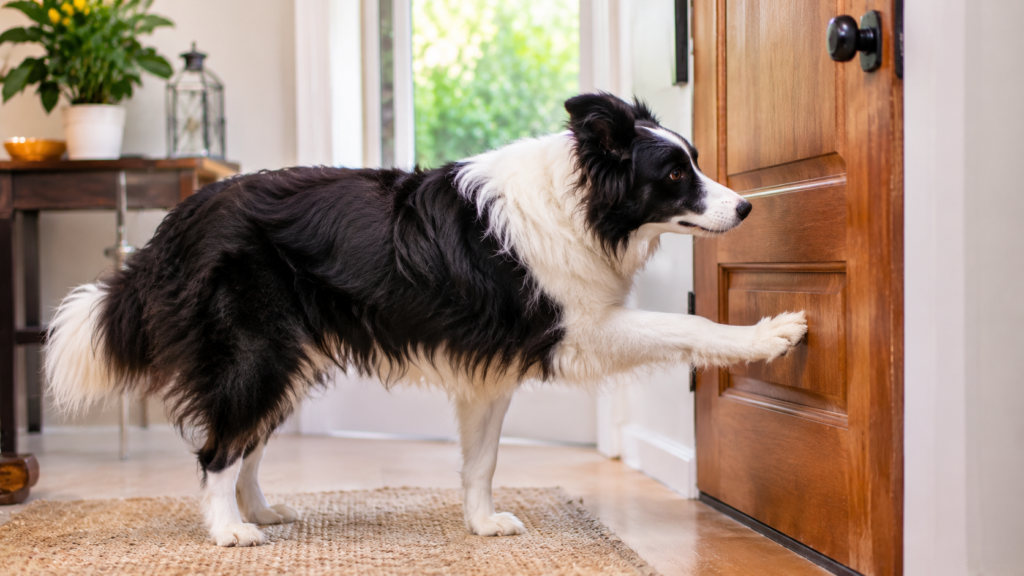
Recognizing these warning signs can help owners take action before the problem becomes more severe.
Excessive Barking, Whining, and Howling
One of the most common signs of separation anxiety is excessive vocalization.
A dog may:
- Bark repeatedly after the owner leaves.
- Whine or cry near doors and windows.
- Howl for extended periods.
- Make distressed noises when it cannot reach its owner.
- Become vocal when it notices departure-related activities.
The barking may stop when the owner returns or when another familiar person arrives.
Destructive Chewing and Scratching
Dogs experiencing separation anxiety may damage household objects while alone.
Common behaviors include:
- Chewing furniture, shoes, or household items.
- Scratching doors and door frames.
- Digging at carpets or flooring.
- Damaging window coverings.
- Attempting to break through barriers.
This destruction often occurs around exit points because the dog is trying to reach its owner.
Urinating or Defecating Indoors
A previously house-trained dog may begin urinating or defecating inside the home when left alone.
This can happen even if the dog has already been taken outside before the owner leaves.
However, house soiling can also be caused by medical problems, incomplete house training, age-related changes, or other behavioral conditions. A veterinarian should help rule out these possibilities.
Pacing and Restlessness
Some anxious dogs cannot settle when their owners are away.
They may:
- Walk repeatedly between rooms.
- Circle near doors.
- Move from windows to entrances.
- Repeatedly change resting places.
- Remain alert instead of sleeping.
Continuous pacing can indicate that the dog is struggling to relax.
Escape Attempts
A dog may try to escape from a room, crate, or house to find its owner.
Possible signs include:
- Scratched doors and windows.
- Damaged gates or crates.
- Broken nails.
- Injuries to paws or teeth.
- Attempts to squeeze through small openings.
Escape attempts can be dangerous because dogs may injure themselves or reach unsafe areas.
Excessive Drooling and Panting
Anxiety can trigger physical stress responses.
Some dogs may experience:
- Heavy panting without exercise.
- Excessive drooling.
- Shaking or trembling.
- Increased heart rate.
- Restlessness and difficulty settling.
These symptoms should not automatically be attributed to anxiety. Heat, pain, respiratory conditions, and other medical problems can cause similar signs.
Refusing Food When Alone
Some dogs lose interest in food when their owners are away.
A dog may ignore treats, food puzzles, or meals that it normally enjoys. This can be a sign that its anxiety is too intense for it to engage with the activity.
Excessive Greeting When the Owner Returns
Dogs naturally become excited when their owners come home. However, some dogs show unusually intense reactions.
They may:
- Jump repeatedly.
- Bark or whine excessively.
- Follow the owner constantly.
- Struggle to calm down.
- Remain highly excited for an extended period.
An enthusiastic greeting alone does not confirm separation anxiety. It becomes more concerning when combined with distress during the owner’s absence.
Common Symptoms at a Glance
| Symptom | Possible Behavior |
|---|---|
| Vocalization | Continuous barking, whining, or howling |
| Destructive behavior | Chewing furniture and scratching doors |
| House soiling | Urinating or defecating indoors |
| Restlessness | Pacing and inability to settle |
| Physical stress | Panting, drooling, or trembling |
| Escape behavior | Trying to break through doors or barriers |
| Appetite changes | Refusing food when alone |
| Intense greetings | Difficulty calming down after the owner returns |
What Causes Separation Anxiety in Dogs?
There is no single cause of separation anxiety. It can develop due to a combination of genetics, previous experiences, environmental changes, and individual temperament.
Understanding possible triggers can help owners develop a more effective treatment plan.
Changes in the Household Routine
Dogs often depend on predictable daily routines. Sudden changes can make them feel uncertain.
Possible triggers include:
- An owner starting a new job.
- Changes in working hours.
- A family member moving out.
- A child leaving for school or college.
- A change in daily walking schedules.
- Longer periods of being left alone.
A dog that was previously accustomed to constant company may struggle when its routine changes.
Moving to a New Home
Moving can be stressful for dogs because familiar smells, sounds, and surroundings disappear.
A dog may experience anxiety after moving to a new house or apartment, especially if it is suddenly expected to spend time alone in an unfamiliar environment.
Adoption and Previous Experiences
Dogs adopted from shelters or rescue organizations may have experienced changes in caregivers, unfamiliar environments, or inconsistent routines.
Some may have a history of abandonment or repeated rehoming.
However, being adopted does not automatically mean a dog will develop separation anxiety. Many adopted dogs adjust successfully with time, stability, and appropriate training.
Lack of Gradual Alone-Time Training
Puppies and newly adopted dogs need opportunities to learn that being alone is safe.
If a dog has never practiced short periods of separation, suddenly leaving it alone for several hours may be overwhelming.
Gradual independence training can help reduce this risk.
Changes in Family Structure
Dogs may become distressed when someone they are strongly attached to is no longer part of their daily routine.
Examples include:
- A family member moving away.
- A household member passing away.
- A change in custody or living arrangements.
- A regular caregiver becoming unavailable.
These changes can affect a dog’s sense of security.
Genetics and Individual Temperament
Some dogs may be more sensitive to environmental changes or separation than others.
Individual temperament, early development, social experiences, and inherited behavioral tendencies may all influence how a dog responds to being alone.
Medical Problems or Aging
Pain, illness, hearing changes, vision loss, and cognitive decline can affect a dog’s ability to feel secure.
Older dogs may become more confused or distressed when separated from familiar people.
A veterinarian should assess new anxiety behaviors, particularly when they develop suddenly in an adult or senior dog.
Which Dogs Are More Likely to Develop Separation Anxiety?
Separation anxiety can affect dogs of any breed, age, or size. It is not limited to dogs that have been rescued or those that are especially attached to their owners.
However, certain circumstances may increase the risk.
Puppies
Puppies are still learning how to feel comfortable in their environment.
They may become distressed when separated from their mother, littermates, or new family. Early, positive experiences with short periods of independence can help them develop confidence.
Newly Adopted Dogs
A newly adopted dog may need time to adjust to unfamiliar people, surroundings, and routines.
Owners should avoid expecting immediate comfort with long periods alone.
Dogs With Major Routine Changes
Dogs whose owners suddenly change their schedules may struggle to adapt.
A gradual transition is generally easier than an abrupt change from constant companionship to extended isolation.
Senior Dogs
Older dogs may develop separation-related behaviors because of physical discomfort, sensory changes, or cognitive decline.
A veterinary examination is particularly important when an older dog suddenly becomes anxious.
Breed and Personality Considerations
No breed is guaranteed to develop or avoid separation anxiety. Individual temperament and life experiences matter more than breed alone.
Some dogs are naturally more independent, while others prefer frequent social interaction.
How to Diagnose Separation Anxiety in Dogs
There is no single test that confirms separation anxiety. Diagnosis usually involves reviewing the dog’s behavior, medical history, and response to being left alone.
A veterinarian or qualified veterinary behavior professional can help identify the underlying problem.
Observe Your Dog Before and After Leaving
Pay attention to your dog’s behavior when you prepare to leave.
Possible warning signs include:
- Following you constantly.
- Becoming restless when you pick up your keys.
- Whining when you put on shoes.
- Refusing to settle near the exit.
- Becoming distressed as soon as the door closes.
Also observe what happens after you leave and when you return.
Use a Pet Camera to Monitor Behavior
A pet camera can help owners understand what happens when they are not home.
It may reveal:
- How quickly the dog becomes anxious.
- Whether the dog barks continuously.
- Whether it paces or scratches doors.
- Whether it can relax after some time.
- Whether another person helps it remain calm.
A recording can also help a veterinarian or behavior professional understand the severity and pattern of the problem.
Veterinary Examination
A veterinarian may recommend a physical examination to rule out medical causes of the behavior.
Depending on the dog’s symptoms, the assessment may include:
- Reviewing medical history.
- Checking for pain or discomfort.
- Evaluating urinary or digestive problems.
- Assessing age-related changes.
- Considering other behavioral conditions.
This is important because some medical conditions can look similar to anxiety.
Behavioral Assessment
A professional may ask about the dog’s daily routine, early experiences, household environment, and behavior during separation.
The goal is to identify the specific triggers and determine how much time the dog can comfortably spend alone.
How to Treat Separation Anxiety in Dogs
Treatment depends on the severity of the anxiety, the dog’s history, and the factors triggering the behavior.
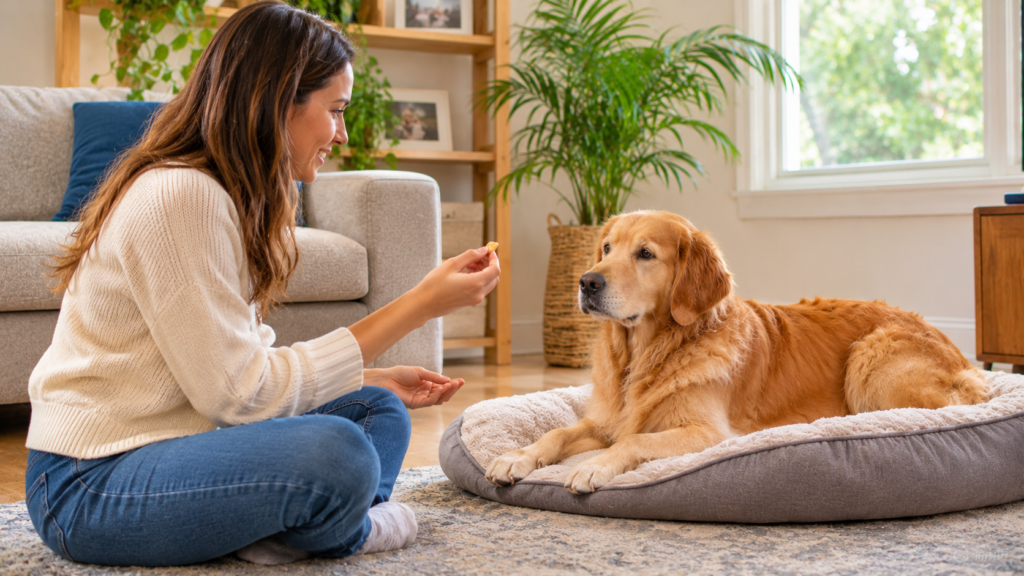
Most successful treatment plans combine gradual training, environmental management, and professional guidance when necessary.
The objective is not simply to stop barking or prevent furniture damage. It is to help the dog feel safe and relaxed when separated from its owner.
Gradual Desensitization Training
Gradual desensitization is one of the most important approaches for separation anxiety.
It involves exposing the dog to very short periods of separation that do not trigger significant distress. The duration is increased slowly as the dog becomes more comfortable.
For example:
- Ask your dog to remain in a comfortable place while you take one step away.
- Return before the dog becomes anxious.
- Repeat the exercise until the dog remains relaxed.
- Gradually increase the distance.
- Practice briefly stepping out of sight.
- Progress to touching the door handle and opening the door.
- Introduce very short departures.
- Increase the duration only when the dog remains comfortable.
The starting point should be based on the individual dog. Some dogs may manage a few minutes, while others may initially struggle with a separation lasting only a few seconds.
Important: If your dog starts barking, pacing, scratching, or showing signs of panic, the exercise may be progressing too quickly. Reduce the difficulty and work at a more comfortable level.
Counterconditioning
Counterconditioning helps a dog develop a more positive emotional response to situations that previously caused anxiety.
For example, owners can introduce a special food toy or treat during a very short, manageable separation.
The goal is to help the dog associate being alone with a calm and rewarding experience.
However, some highly anxious dogs will not eat when separated. In these cases, the training may need to begin with easier steps.
Practice Independence Inside the Home
Dogs can learn to spend time comfortably away from their owners even when everyone is home.
Useful activities include:
- Encouraging the dog to rest on its own bed.
- Offering a safe chew or food puzzle.
- Practicing short periods in another room.
- Rewarding calm behavior when the owner moves away.
- Avoiding constant attention every time the dog follows.
Independence should be developed gradually. Owners should not force a frightened dog to remain isolated.
Make Departure Cues Less Stressful
Some dogs become anxious when they notice signs that their owner is preparing to leave.
Common departure cues include picking up keys, putting on shoes, carrying a bag, or opening the front door.
To reduce sensitivity to these cues, practice performing them without actually leaving.
For example:
- Pick up your keys and sit down again.
- Put on your shoes while staying at home.
- Carry your bag from one room to another.
- Open and close the front door without departing.
Repeat these activities calmly and avoid increasing the difficulty too quickly.
Create a Comfortable Safe Space
A comfortable resting area can help some dogs feel more secure.
Consider providing:
- A familiar bed or blanket.
- Fresh drinking water.
- Safe toys.
- A quiet resting area.
- Comfortable room temperature.
- Limited access to potentially dangerous objects.
Some dogs prefer a crate, while others become more anxious when confined. Never assume that crate training is suitable for every dog with separation anxiety.
If a dog shows panic or attempts to escape from a crate, stop using it as a separation solution and seek professional advice.
Use Food Puzzles and Enrichment Activities
Mental stimulation can help dogs stay engaged and provide opportunities for positive experiences.
Suitable options may include:
- Food-dispensing toys.
- Puzzle feeders.
- Safe chew toys.
- Snuffle mats.
- Treat-search games.
- Short training sessions.
Introduce these activities while you are present to make sure the dog can use them safely.
Food toys and enrichment can support a treatment plan, but they do not replace gradual separation training.
Maintain a Predictable Daily Routine
A consistent routine can help dogs feel more secure.
Try to maintain regular times for:
- Feeding.
- Walking.
- Playtime.
- Training.
- Rest.
- Bathroom breaks.
Predictability does not eliminate separation anxiety in dogs, but it can reduce uncertainty and support a calmer environment.
Step-by-Step Separation Anxiety Training Plan
A structured training plan can make progress easier to monitor. However, the timeline should be adjusted to the dog’s comfort level rather than following a strict schedule.
| Training Stage | What to Practice | Main Goal |
|---|---|---|
| Stage 1 | Calm resting and independent activities | Build confidence at home |
| Stage 2 | Brief distance from the owner | Accept small separations |
| Stage 3 | Short periods out of sight | Remain relaxed without visual contact |
| Stage 4 | Departure cues without leaving | Reduce sensitivity to keys, shoes, and bags |
| Stage 5 | Very short exits | Learn that the owner returns |
| Stage 6 | Gradually longer absences | Increase comfortable alone time |
| Stage 7 | Practice different departure routines | Maintain progress in everyday situations |
How Long Does Training Take?
There is no fixed recovery period for separation anxiety in dogs.
Some dogs improve with consistent training over several weeks, while others need several months or longer.
Progress depends on:
- The severity of the anxiety.
- How quickly the dog becomes distressed.
- The dog’s previous experiences.
- Consistency of training.
- Whether the dog has other behavioral or medical problems.
- Availability of professional support.
Small improvements are meaningful. A dog that can remain relaxed for one additional minute may be making important progress.
What Should You Do When Leaving Your Dog Alone?
Owners can take several practical steps to make departures easier while following a training plan.
Before Leaving
- Give your dog an appropriate walk or gentle exercise session.
- Allow time for bathroom needs.
- Provide fresh drinking water.
- Make sure the environment is comfortable.
- Remove dangerous objects.
- Offer a familiar safe activity if the dog can enjoy it.
- Keep departure routines calm and predictable.
Avoid intense exercise or excitement immediately before leaving if it makes your dog more unsettled.
While You Are Away
If possible, use a pet camera to monitor your dog’s behavior.
For dogs that cannot yet tolerate being alone, consider temporary arrangements such as:
- A trusted family member staying with the dog.
- A familiar pet sitter.
- A suitable dog care service.
- Adjusting work or travel schedules.
- Having a trusted person provide company during necessary absences.
These arrangements help prevent repeated episodes of severe distress while training continues.
When You Return Home
Greet your dog calmly and allow it to settle.
There is no need to punish the dog for behavior that occurred while you were away. Avoid creating additional stress around departures and returns.
Once your dog is relaxed, continue with its normal routine.
Can Medication Help Dogs With Separation Anxiety?
In moderate or severe cases, a veterinarian may recommend medication as part of a treatment plan.
Medication can help reduce anxiety enough for a dog to participate in behavior training.
When Medication May Be Considered
A veterinarian may discuss medication when:
- The dog experiences severe distress.
- Training alone is not producing sufficient improvement.
- The dog is at risk of injuring itself.
- Anxiety prevents the dog from eating or resting.
- The dog cannot tolerate even very short separations.
- The problem significantly affects the dog’s quality of life.
Types of Veterinary Medication
Depending on the dog’s condition, a veterinarian may consider:
Long-term anxiety medication: Certain prescription medications can help manage ongoing anxiety and may take time to produce their full effect.
Situational medication: Some medications may be prescribed for specific circumstances or to support particular treatment plans.
Additional supportive treatments: In selected cases, a veterinarian may discuss other interventions based on the dog’s medical history and behavioral needs.
Important Medication Safety
Never give your dog human anxiety medication, sleeping pills, or other prescription drugs without veterinary instructions.
Medication choice and dosage depend on the dog’s weight, age, health, other medications, and symptoms.
Medication should generally support a broader behavior plan rather than replace training. Never stop or change a prescribed medication without consulting the veterinarian.
Natural Ways to Support a Dog With Separation Anxiety
Some environmental and lifestyle changes can support a dog’s emotional well-being.
They may be useful alongside structured training, but they are not guaranteed treatments.
Regular Exercise
Appropriate physical activity can help maintain a healthy routine and support relaxation.
Depending on age, breed, and health, activities may include:
- Daily walks.
- Gentle play.
- Short training games.
- Supervised outdoor exploration.
- Suitable indoor activities.
Exercise should be appropriate for the individual dog. It cannot cure separation anxiety in dogs by itself.
Mental Stimulation
Mental activities give dogs opportunities to explore, learn, and solve problems.
Try:
- Puzzle toys.
- Scent games.
- Basic obedience training.
- Treat searches.
- Safe interactive toys.
Start with activities the dog enjoys and can complete without frustration.
Calming Environment
A quiet and comfortable environment may help reduce unnecessary stimulation.
Consider:
- Closing curtains if outdoor activity causes distress.
- Providing a familiar sleeping area.
- Using gentle background sounds if they help the dog relax.
- Maintaining a comfortable temperature.
- Keeping the resting area free from excessive noise.
Pheromone Products and Other Supportive Options
Some owners consider dog-appeasing pheromone products or other calming aids.
Evidence and effectiveness vary, and these products do not work for every dog. Discuss their suitability with a veterinarian before relying on them, especially if the dog has severe symptoms or takes medication.
Avoid giving herbal products, essential oils, or supplements without checking their safety with a veterinarian.
Common Mistakes Owners Should Avoid With Separation Anxiety in Dogs
Some well-intentioned actions can make separation anxiety harder to manage.
Punishing the Dog
Punishing a dog for barking, chewing, or house soiling after an absence does not address the underlying fear.
Dogs generally cannot connect punishment delivered after the owner’s return with behavior that occurred earlier.
Punishment may increase stress and damage trust.
Leaving the Dog Alone for Too Long Too Soon
A dog that becomes distressed after five minutes should not suddenly be expected to remain alone for several hours.
Training should begin below the dog’s anxiety threshold and progress gradually.
Forcing Crate Confinement
A crate may be helpful for some dogs, but it can make others panic.
If your dog tries to escape, bites the crate, or becomes increasingly distressed, do not force confinement as a solution.
Ignoring Early Warning Signs
Whining, pacing, excessive following, and distress around departure cues may indicate that a dog is struggling.
Addressing these behaviors early can help prevent the problem from becoming more severe.
Expecting Exercise to Solve Everything
Physical activity is valuable, but separation anxiety in dogs is an emotional and behavioral problem.
A long walk may help some dogs settle, but it does not replace gradual training or veterinary support when needed.
Increasing Training Time Too Quickly
Progressing too quickly can trigger another episode of intense anxiety.
If a dog becomes distressed during training, return to an easier step and allow it to regain confidence.
How to Prevent Separation Anxiety in Puppies
Prevention begins by teaching puppies that short periods of independence are safe and normal.
Introduce Short Periods of Alone Time
Allow your puppy to spend brief periods in a comfortable area while you remain nearby.
Gradually increase the distance and duration as the puppy becomes comfortable.
Encourage Independent Play
Provide suitable toys and safe activities that the puppy can enjoy without constant attention.
Reward calm independent behavior rather than expecting the puppy to remain attached to you throughout the day.
Avoid Sudden Long Separations
Young puppies need frequent bathroom breaks, supervision, and social interaction.
Do not leave a young puppy alone for extended periods before it is developmentally and behaviorally ready.
Arrange suitable care when you need to be away.
Build Positive Experiences
Introduce new environments, sounds, people, and routines gradually.
Positive experiences can help puppies develop confidence and adaptability.
Maintain a Balanced Routine
A healthy puppy routine should include:
- Appropriate meals.
- Regular bathroom breaks.
- Age-appropriate exercise.
- Play and social interaction.
- Short training sessions.
- Sufficient sleep.
- Gradual independence practice.
How to Manage Separation Anxiety in Adult and Senior Dogs
Adult and senior dogs may need a slightly different approach depending on their health and previous experiences.
Adult Dogs
For adult dogs, first identify when the anxiety started and whether a major routine change occurred.
Build a training plan around the dog’s current tolerance level rather than assuming it can immediately manage a normal workday alone.
Senior Dogs
In senior dogs, sudden separation-related behavior should be assessed by a veterinarian.
Possible contributing factors include:
- Arthritis or other painful conditions.
- Hearing or vision loss.
- Cognitive changes.
- Increased need for bathroom breaks.
- Other age-related medical problems.
Provide easy access to resting areas, water, and bathroom opportunities. Keep the environment predictable and avoid unnecessary changes.
How Long Can a Dog With Separation Anxiety Be Left Alone?
There is no universal safe duration for every dog with separation anxiety.
A dog with mild symptoms may tolerate a short absence, while a severely anxious dog may become distressed almost immediately.
The most important factor is the dog’s actual response, not a general rule about how many hours dogs can stay alone.
During treatment, owners should try to avoid absences that trigger severe distress whenever practical.
If regular work or personal commitments make this difficult, temporary support from a trusted caregiver may be necessary.
When Should You Consult a Veterinarian or Behavior Specialist for Separation Anxiety in Dogs?
Professional help is important when separation-related behavior is persistent, severe, or worsening.
Contact a veterinarian if your dog:
- Shows repeated panic when left alone.
- Injures itself while trying to escape.
- Refuses food or water during separation.
- Develops sudden house-soiling behavior.
- Pants, drools, or trembles excessively.
- Has a sudden change in behavior, especially as a senior dog.
- Cannot tolerate even brief separations.
- Shows no meaningful improvement with careful training.
A veterinarian can rule out medical problems and discuss treatment options.
A qualified veterinary behaviorist or appropriately credentialed behavior professional can help develop a structured training program for more complicated cases.
Seek urgent veterinary care if your dog has serious injuries, difficulty breathing, collapse, severe weakness, or other signs of a medical emergency.
Frequently Asked Questions About Separation Anxiety in Dogs
Can separation anxiety in dogs be cured?
Many dogs can improve significantly with appropriate treatment and consistent training. Some may become comfortable spending time alone, while others may continue to need management and support. Outcomes depend on the dog’s individual condition and the severity of the anxiety.
What are the first signs of separation anxiety in dogs?
Early signs may include following the owner constantly, becoming restless when departure cues appear, whining near the door, excessive barking after departure, and difficulty settling when alone.
Can a dog develop separation anxiety suddenly?
Yes. Separation-related problems can appear after changes in household routines, moving, changes in family structure, illness, or other stressful experiences. Sudden behavior changes should also be checked by a veterinarian to rule out medical causes.
Should I ignore my dog when it cries after I leave?
Ignoring severe distress is not an appropriate treatment strategy. The goal is to prevent the dog from reaching a level of panic and gradually teach it to feel comfortable during separation. Training should be adjusted to the dog’s tolerance.
Does getting another dog help with separation anxiety?
Not necessarily. Separation anxiety is often related to separation from a particular person, so another dog may not solve the problem. Introducing another pet also brings additional responsibilities and should not be treated as a guaranteed solution.
Do dogs grow out of separation anxiety?
Some dogs may become more comfortable with maturity and positive experiences, but separation anxiety should not be assumed to disappear on its own. Appropriate training and professional guidance may be needed.
Is crate training good for dogs with separation anxiety?
Crate training helps some dogs feel secure, but others become more anxious when confined. If a dog shows panic, excessive scratching, biting, or escape attempts inside a crate, it may not be an appropriate option.
Can separation anxiety cause health problems in dogs?
Severe or repeated anxiety can affect a dog’s well-being. It may lead to injuries from escape attempts, poor rest, appetite changes, and ongoing stress. Veterinary support can help identify and manage these risks.
Should I get a pet camera for a dog with separation anxiety?
A pet camera can be useful because it allows owners to observe what happens after leaving. It can help identify early distress signs, estimate how long the dog remains comfortable, and provide useful information for a veterinarian or behavior professional.
How can I help my dog stay calm when I leave for work?
Begin with gradual separation training, maintain a predictable routine, provide a comfortable environment, and arrange suitable care if your dog cannot yet tolerate the required absence. Avoid suddenly leaving the dog alone for a full workday if it becomes distressed within minutes.
Conclusion
Separation anxiety in dogs is a genuine behavioral problem that can cause emotional distress and affect a dog’s daily life. Common signs include excessive barking, destructive behavior, house soiling, pacing, drooling, and attempts to escape when the owner is away.
The condition may develop because of household changes, previous experiences, limited independence training, individual temperament, or age-related factors. Identifying the underlying cause is important for choosing the right treatment.
Gradual desensitization, counterconditioning, independence training, environmental improvements, and a predictable daily routine can help many dogs become more comfortable when alone. Some dogs also need veterinary assessment and medication as part of a broader treatment plan.
Most importantly, owners should approach separation anxiety with patience and understanding. Avoid punishment, do not force long periods of isolation, and progress at a pace the dog can manage. With consistent support and an appropriate treatment strategy, many dogs can develop greater confidence and feel safer when their owners are away.