
Bloat in Dogs: Symptoms, Causes and Emergency Treatment
Bloat in dogs is a serious medical condition that can become life-threatening within a short period. It occurs when a dog’s stomach fills with gas, food, or fluid and becomes abnormally enlarged. In some cases, the stomach also twists, preventing gas and stomach contents from moving normally. This dangerous complication is known as Gastric Dilatation-Volvulus (GDV).
Dog bloat is a veterinary emergency because it can interfere with blood circulation, affect breathing, and cause severe damage to internal organs. Without immediate treatment, GDV can lead to shock, organ failure, and death.
Recognizing the early warning signs is essential for every dog owner. A swollen abdomen, repeated attempts to vomit without producing anything, excessive drooling, restlessness, and sudden weakness may indicate bloat.
This guide explains what bloat in dogs is, its symptoms, possible causes, risk factors, emergency treatment, recovery, and prevention methods.
What Is Bloat in Dogs?
Bloat is the common term used to describe abnormal swelling of a dog’s stomach due to the accumulation of gas, food, or fluid. The medical term for simple stomach expansion is gastric dilatation.
In more severe cases, the stomach rotates or twists around itself. This condition is called Gastric Dilatation-Volvulus, or GDV.
When the stomach twists, it can trap gas and stomach contents inside. The twisting may also block blood flow and put pressure on nearby organs and major blood vessels.
Difference Between Simple Bloat and GDV
Although simple gastric dilatation and GDV are related, they are not exactly the same condition.
| Condition | Description | Level of Concern |
|---|---|---|
| Gastric dilatation | The stomach expands because of gas, food, or fluid | Requires prompt veterinary assessment |
| Gastric dilatation-volvulus (GDV) | The stomach expands and twists, trapping its contents | Life-threatening emergency |
Not every dog with an enlarged stomach has GDV. However, owners cannot safely determine the difference at home. Any suspected bloat requires immediate veterinary attention.
Symptoms of Bloat in Dogs
The symptoms of bloat can develop suddenly. Some dogs become visibly uncomfortable before their abdomen becomes noticeably enlarged.
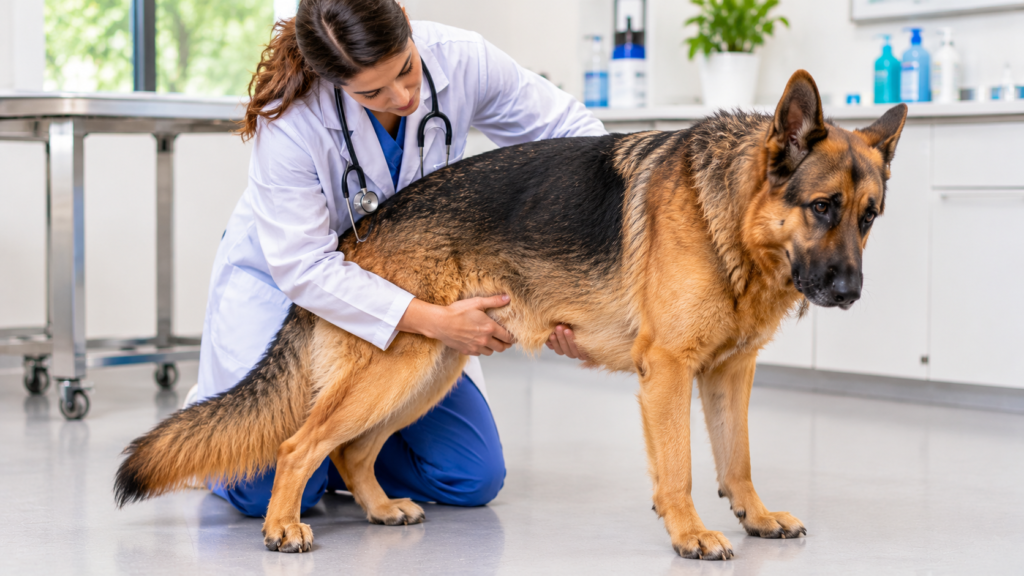
Recognizing these warning signs early can help owners seek emergency treatment before the condition becomes more severe.
Early Warning Signs
The following symptoms may appear during the early stages of bloat:
Restlessness and Pacing
A dog experiencing stomach discomfort may repeatedly walk around, change positions, or struggle to settle down.
The dog may appear anxious or uncomfortable without an obvious reason.
Swollen or Enlarged Abdomen
One of the most recognizable signs is an enlarged, tight, or distended abdomen.
The swelling may be particularly noticeable behind the dog’s rib cage. However, it may be less obvious in dogs with deep chests or heavier body structures.
Repeated Attempts to Vomit Without Producing Anything
A dog with GDV may repeatedly try to vomit but produce little or no stomach contents.
This is called unproductive retching or dry heaving. It is one of the most important warning signs of gastric dilatation-volvulus.
Excessive Drooling
Some affected dogs produce more saliva than usual. You may notice thick saliva, frequent swallowing, or continuous drooling.
This can happen because of nausea and severe stomach discomfort.
Signs of Abdominal Pain
A dog may show discomfort when its stomach is touched. It might stretch repeatedly, look toward its abdomen, or avoid lying down.
Do not press or squeeze the abdomen to check for pain.
Advanced Symptoms of Bloat
As the condition progresses, symptoms may become more severe.
Rapid or Difficult Breathing
An enlarged stomach can put pressure on the diaphragm, making normal breathing difficult.
The dog may breathe rapidly, take shallow breaths, or appear to struggle for air.
Weakness and Difficulty Standing
Poor circulation and developing shock can cause sudden weakness. The dog may become unable to stand normally or may collapse.
Pale or Abnormal Gums
Healthy dog gums are generally pink. Pale, white, gray, or bluish gums may indicate poor circulation or inadequate oxygen delivery.
Rapid Heart Rate
A dog’s heart may beat faster as the body attempts to compensate for changes in circulation and developing shock.
Collapse or Loss of Consciousness
Collapse is an extremely serious warning sign. It may indicate advanced shock and requires immediate emergency veterinary care.
Common Symptoms at a Glance
| Symptom | What Owners May Notice |
|---|---|
| Enlarged abdomen | Swollen or tight-looking stomach |
| Dry heaving | Repeated vomiting attempts without producing anything |
| Restlessness | Pacing and inability to settle |
| Drooling | Unusual or excessive saliva |
| Abdominal discomfort | Signs of pain or repeated stretching |
| Rapid breathing | Faster or difficult breathing |
| Pale gums | Gums appear lighter than normal |
| Weakness | Difficulty standing or walking |
| Collapse | Sudden inability to remain upright |
Important: If your dog shows signs of suspected bloat, especially a swollen abdomen combined with unproductive retching, do not wait for additional symptoms. Seek emergency veterinary care immediately.
What Causes Bloat in Dogs?
The exact cause of bloat and GDV is not fully understood. However, several factors may contribute to stomach expansion and increase the risk of stomach twisting.
Swallowing Excessive Air
Dogs may swallow air while eating or drinking, particularly when they eat rapidly. This can contribute to gas accumulation in the stomach.
However, swallowing air alone does not explain every case of GDV.
Eating Large Meals
Consuming a very large meal at once may increase stomach expansion.
Some veterinarians recommend dividing a dog’s daily food into smaller meals rather than providing one unusually large meal.
Eating Too Quickly
Dogs that eat very quickly may swallow more air and consume food rapidly.
Fast eating is considered a possible contributing factor, although it does not mean every dog that eats quickly will develop bloat.
Exercising Around Mealtime
Intense physical activity immediately before or after eating has traditionally been considered a possible risk factor.
Allowing a dog to rest around mealtimes is a sensible precaution, particularly for dogs already at increased risk.
Stress and Anxiety
Stressful situations may affect a dog’s eating and digestive behavior. Some research has also identified anxious or fearful temperament as a possible risk factor for GDV.
However, stress should not be considered the only cause.
Family History
Dogs with close relatives that have experienced GDV may have a higher risk.
Genetic factors and inherited body characteristics may contribute to susceptibility.
Which Dogs Are at Higher Risk of Bloat?
Although any dog can develop bloat, certain breeds and physical characteristics are associated with a higher risk.
Large and Giant Dog Breeds
Large and giant breeds with deep, narrow chests are particularly vulnerable.
Examples include:
- Great Danes
- German Shepherds
- Standard Poodles
- Weimaraners
- Doberman Pinschers
- Saint Bernards
- Irish Setters
- Gordon Setters
- Boxers
- Akitas
Great Danes are especially well known for their increased risk of GDV.
Older Dogs
The risk of GDV generally increases as dogs get older. However, younger dogs can also develop the condition.
Dogs With a Family History of GDV
A dog with a parent, sibling, or other close relative affected by GDV may have a greater risk.
Dogs With a Deep-Chested Body Shape
A deep and narrow chest is one of the most recognized physical risk factors.
However, having a deep chest does not mean a dog will definitely develop bloat.
Risk Factors Overview
| Risk Factor | Why It Matters |
|---|---|
| Large or giant breed | Associated with increased GDV risk |
| Deep chest | A recognized physical risk factor |
| Older age | Risk generally increases with age |
| Family history | May indicate inherited susceptibility |
| Rapid eating | May contribute to air swallowing |
| Large meals | Can contribute to stomach expansion |
| Stress or anxiety | May be associated with increased risk |
Is Bloat in Dogs a Medical Emergency?
Yes. Suspected GDV is a life-threatening veterinary emergency.
When the stomach twists, it can block normal movement of stomach contents and interfere with blood circulation. The enlarged stomach may compress major blood vessels, reducing the amount of blood returning to the heart.
This can cause:
- Reduced blood circulation
- Severe abdominal pain
- Shock
- Breathing difficulties
- Damage to the stomach wall
- Heart rhythm abnormalities
- Organ failure
- Death
The condition can progress rapidly, and waiting at home can significantly reduce the chances of survival.
Even if the abdomen does not look extremely swollen, other symptoms may still indicate GDV.
Emergency Treatment for Bloat in Dogs
Treatment depends on whether the dog has simple gastric dilatation or GDV. However, suspected GDV requires immediate assessment and stabilization by a veterinarian.
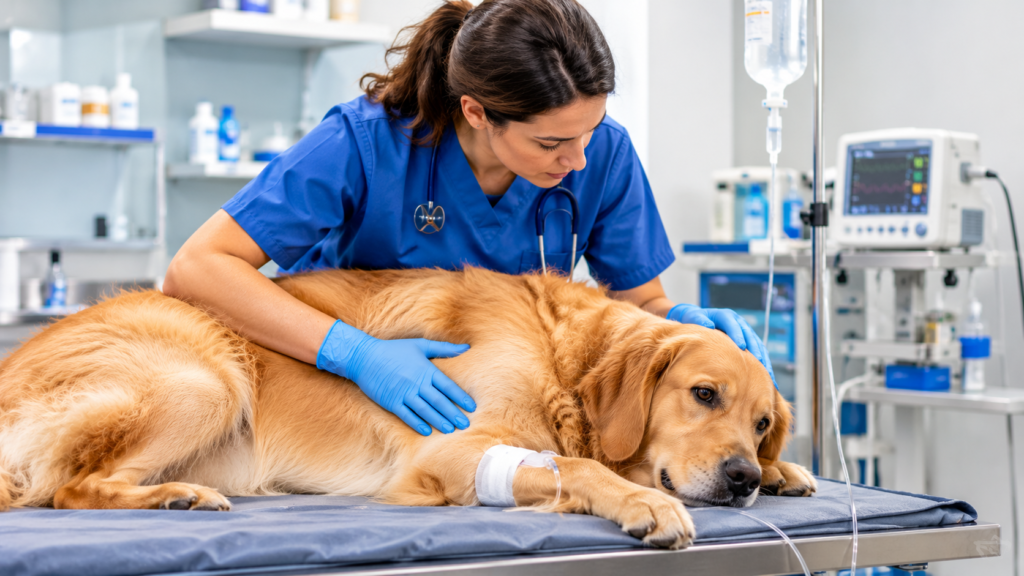
There is no reliable home treatment for a twisted stomach.
Immediate Steps for Dog Owners
If you suspect bloat, take the following steps:
- Contact an emergency veterinarian immediately. Explain the symptoms and tell the clinic that you suspect bloat or GDV.
- Transport your dog to a veterinary hospital without delay. Do not wait to see whether the symptoms improve.
- Keep your dog as calm as possible. Avoid unnecessary movement and excitement.
- Do not offer food or force water. Your veterinarian can advise you about anything your dog may safely consume.
- Do not attempt to induce vomiting. This can cause additional problems and will not correct a twisted stomach.
- Do not massage or press the abdomen. This cannot safely release trapped gas or correct GDV.
- Do not give human medications or home remedies. These may delay proper treatment or cause additional harm.
If possible, call the veterinary hospital while traveling so the medical team can prepare for your dog’s arrival.
Veterinary Examination and Diagnosis
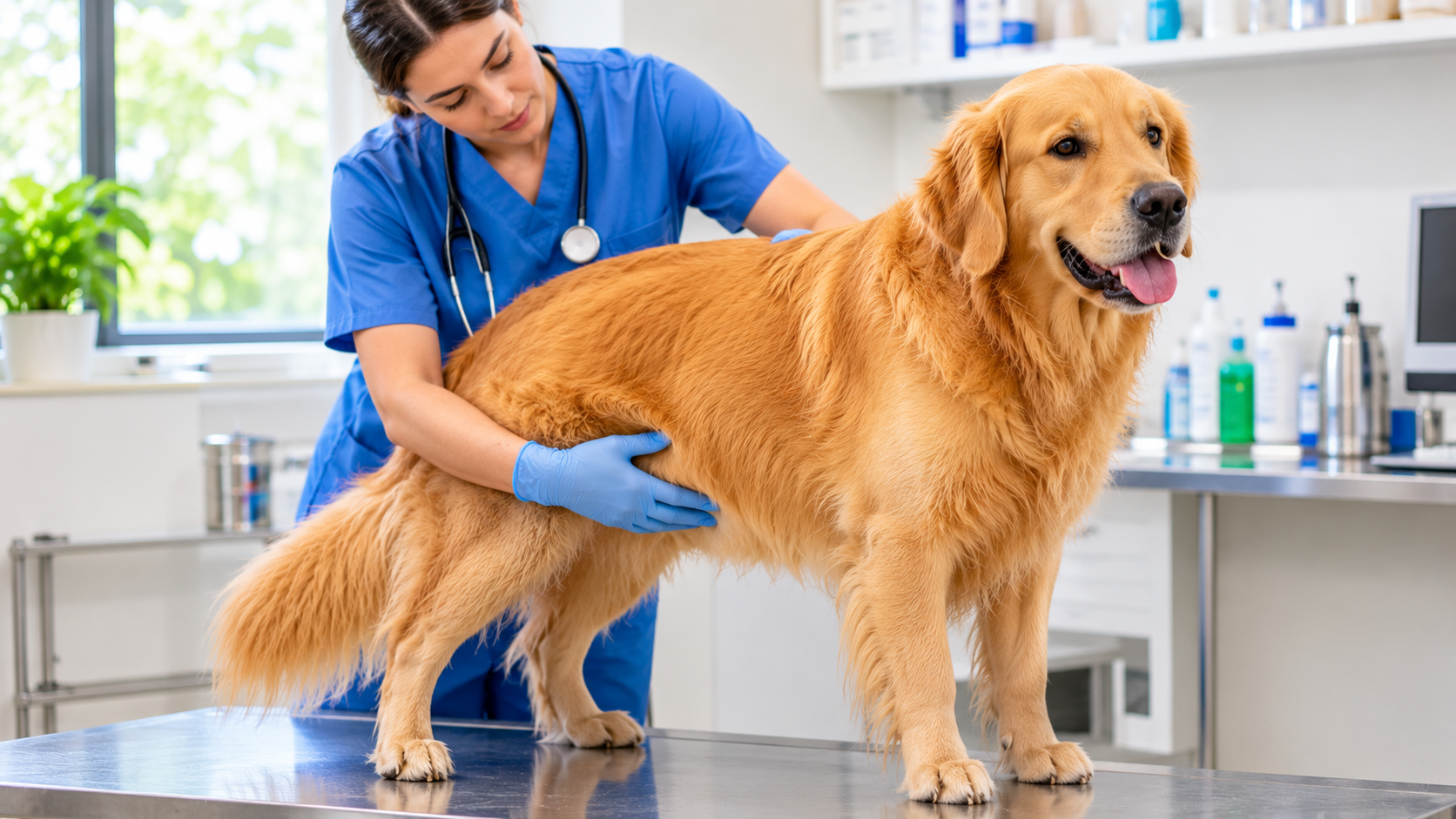
The veterinarian will evaluate the dog’s physical condition and determine whether the stomach is enlarged or twisted.
Diagnostic procedures may include:
Physical Examination
The veterinarian checks the dog’s abdomen, heart rate, breathing, gum color, pulse, and signs of shock.
Abdominal X-Rays
X-rays are commonly used to identify stomach enlargement and determine whether the stomach has twisted.
A characteristic gas pattern may help the veterinarian diagnose GDV.
Blood Tests
Blood tests help evaluate the dog’s overall condition and identify problems such as dehydration, electrolyte disturbances, and organ dysfunction.
Heart Monitoring
Electrocardiogram monitoring may be used to identify abnormal heart rhythms, which can occur with GDV.
Emergency Stabilization
Before surgery, veterinarians usually begin stabilizing the dog.
Treatment may include:
- Intravenous fluids to support circulation and blood pressure
- Pain medication
- Oxygen therapy when needed
- Monitoring of heart rate and rhythm
- Emergency decompression of the stomach
The veterinary team may use a stomach tube or another medical procedure to release trapped gas when appropriate.
These procedures must be performed by trained veterinary professionals.
Surgery for Gastric Dilatation-Volvulus
If the stomach has twisted, emergency surgery is usually necessary.
The operation is called a gastropexy procedure, combined with correction of the stomach’s position.
The main surgical steps may include:
Correcting the Stomach Position
The veterinarian carefully rotates the stomach back into its normal position.
Evaluating Stomach Tissue
The surgical team examines the stomach wall and nearby organs to determine whether any tissue has been damaged by poor blood circulation.
In severe cases, damaged portions of the stomach may need to be removed.
Performing a Gastropexy
During gastropexy, the veterinarian attaches the stomach to the abdominal wall.
This helps prevent the stomach from twisting again.
Gastropexy significantly reduces the risk of recurrent GDV, although it does not completely eliminate the possibility of future stomach dilation.
Recovery After Bloat Surgery
Recovery depends on the severity of GDV, the amount of damage to the stomach, and the dog’s overall health.
Some dogs recover well after prompt treatment, while others may require intensive monitoring.
Hospital Monitoring
After surgery, the dog may remain hospitalized for several days.
Veterinary staff monitor:
- Heart rate and rhythm
- Blood pressure
- Breathing
- Hydration
- Abdominal discomfort
- Blood test results
- Signs of infection or complications
Feeding After Surgery
Food is usually reintroduced gradually according to the veterinarian’s instructions.
The dog may initially receive small amounts of food before returning to a regular feeding routine.
Owners should not independently change the feeding schedule without veterinary advice.
Activity Restrictions
Physical activity may need to be limited during recovery.
Avoid running, jumping, rough play, and strenuous exercise until the veterinarian confirms that normal activity can safely resume.
Follow-Up Appointments
Follow-up examinations help the veterinarian evaluate healing and identify possible complications.
Always attend the recommended appointments, even if your dog appears to be recovering normally.
Possible Complications of GDV
GDV can cause serious complications even after successful emergency treatment.
Shock
Reduced blood circulation can prevent organs from receiving enough oxygen and nutrients.
Heart Rhythm Problems
Abnormal heart rhythms may develop during or after GDV. These can require medication and continuous monitoring.
Stomach Tissue Damage
If blood flow to part of the stomach is severely reduced, the tissue may become damaged or die.
Peritonitis
Damage to the stomach wall can allow stomach contents to leak into the abdominal cavity, causing severe inflammation and infection.
Organ Dysfunction
Severe shock and poor circulation can affect the kidneys and other organs.
Recurrence
Dogs that undergo gastropexy have a much lower risk of another stomach twist, but stomach dilation can still occur.
How to Prevent Bloat in Dogs
Although GDV cannot always be prevented, several practical steps may help reduce risk.
Prevention is especially important for large and giant breeds, deep-chested dogs, and animals with a family history of GDV.
Feed Smaller Meals
Instead of feeding one very large meal, consider dividing your dog’s daily food into two or more smaller meals.
This can help avoid excessive stomach filling at one time.
Use a Slow Feeder if Your Dog Eats Quickly
A slow-feeder bowl can help dogs that swallow food rapidly.
It encourages slower eating and may reduce excessive air swallowing.
Avoid Intense Exercise Around Mealtimes
Allow your dog to rest around meals.
Avoid vigorous running, jumping, or strenuous play immediately before and after eating.
Ask your veterinarian how long your dog should rest based on its breed, age, health, and activity level.
Maintain a Healthy Body Weight
A healthy weight supports general health and makes it easier to recognize changes in your dog’s abdominal shape.
Follow a suitable feeding and exercise routine.
Provide a Calm Feeding Environment
Feed your dog in a quiet place where it can eat without competition or unnecessary excitement.
If you have multiple dogs, separate feeding areas may help reduce competition.
Monitor Eating and Drinking Habits
Pay attention to sudden changes in appetite, eating speed, and drinking behavior.
Although these changes do not necessarily indicate bloat, unusual symptoms should be discussed with a veterinarian.
Discuss Preventive Gastropexy
For dogs at particularly high risk, veterinarians may recommend preventive gastropexy.
This procedure attaches the stomach to the abdominal wall to reduce the risk of twisting.
It may be performed at the same time as spaying or neutering in some large and giant breeds.
Discuss the benefits, risks, timing, and suitability of this procedure with your veterinarian.
Can Bloat in Dogs Be Prevented Completely?
No. There is no guaranteed way to prevent every case of bloat or GDV.
Even dogs that eat slowly, follow a regular feeding schedule, and have a healthy lifestyle can develop the condition.
Preventive steps can help manage certain risk factors, but they cannot eliminate all possibilities.
For high-risk dogs, preventive gastropexy may offer important protection against stomach twisting.
The most important preventive measure is knowing the warning signs and seeking emergency veterinary care immediately when symptoms appear.
Bloat vs. Other Digestive Problems in Dogs
Several digestive conditions can cause abdominal discomfort, vomiting, or changes in appetite. However, their severity and treatment requirements can be very different.
| Condition | Common Signs | Level of Concern |
|---|---|---|
| Bloat or GDV | Enlarged abdomen, dry heaving, restlessness, weakness | Emergency |
| Simple gas | Passing gas, mild abdominal discomfort | Depends on severity |
| Gastritis | Vomiting, nausea, reduced appetite | Requires veterinary assessment |
| Constipation | Difficulty passing stool, reduced bowel movements | Requires assessment if persistent or severe |
| Intestinal obstruction | Vomiting, abdominal pain, reduced appetite | Potential emergency |
These conditions can have overlapping symptoms. Owners should never assume that a swollen abdomen or repeated vomiting is simply gas or an ordinary digestive problem.
Common Myths About Bloat in Dogs
Misunderstandings about GDV can delay emergency treatment. Understanding the facts helps owners respond appropriately.
Myth: Only Large Dogs Get Bloat
Fact: Large and giant breeds have a higher risk, but smaller dogs can also develop bloat and GDV.
Myth: A Dog Must Have a Very Swollen Stomach to Have GDV
Fact: Visible swelling is common, but it may not always be obvious, especially in deep-chested dogs.
Myth: A Dog That Has Passed Gas Cannot Have GDV
Fact: Passing gas does not reliably rule out GDV. Other warning signs still require urgent veterinary assessment.
Myth: Drinking Water Causes Bloat
Fact: Drinking water is not, by itself, an established cause of GDV. Dogs need access to fresh water. Owners should discuss any feeding or drinking concerns with their veterinarian.
Myth: Home Remedies Can Fix a Twisted Stomach
Fact: A twisted stomach requires emergency veterinary treatment. Home remedies cannot safely correct GDV.
When Should You Take Your Dog to a Veterinarian?
You should seek immediate emergency veterinary care if your dog shows any of the following signs:
- A suddenly swollen or tight abdomen
- Repeated attempts to vomit without producing anything
- Severe restlessness or obvious abdominal pain
- Excessive drooling combined with abdominal discomfort
- Rapid or difficult breathing
- Pale, white, gray, or bluish gums
- Sudden weakness or collapse
Do not wait for all symptoms to appear.
If you suspect GDV, treat the situation as an emergency even if your dog is still walking or behaving relatively normally.
Frequently Asked Questions About Bloat in Dogs
What are the first signs of bloat in dogs?
Early signs may include restlessness, excessive drooling, abdominal discomfort, a swollen stomach, and repeated attempts to vomit without producing anything. These symptoms require immediate veterinary assessment.
How quickly can bloat become dangerous in dogs?
GDV can progress rapidly and become life-threatening within hours, sometimes sooner. The speed of progression varies, so owners should never wait to see whether symptoms improve.
Can a dog survive bloat?
Yes. Many dogs can survive GDV with rapid emergency treatment and appropriate surgery. Survival depends on how quickly treatment begins, the severity of the condition, and whether the stomach or other organs have been damaged.
What is the difference between bloat and GDV?
Bloat generally describes abnormal stomach expansion caused by gas, food, or fluid. GDV occurs when the stomach expands and twists, trapping its contents and potentially disrupting blood circulation. GDV is a life-threatening emergency.
Which dog breeds are most at risk of GDV?
Great Danes, German Shepherds, Standard Poodles, Weimaraners, Doberman Pinschers, Saint Bernards, and Irish Setters are among the breeds associated with increased risk. Deep-chested dogs are generally more vulnerable.
Can puppies get bloat?
Yes, puppies can develop stomach-related problems, and GDV is possible, although it is more commonly associated with adult and older dogs, particularly large and giant breeds.
Can bloat in dogs go away on its own?
Simple gas may sometimes resolve, but suspected bloat or GDV should never be left untreated. A veterinarian must determine whether the stomach is simply enlarged or has twisted.
Does gastropexy prevent bloat completely?
No. Gastropexy greatly reduces the risk of stomach twisting, but it does not completely prevent stomach enlargement or every possible digestive problem.
Should I give my dog water if I suspect bloat?
Do not force your dog to drink or offer food while arranging emergency care. Contact the veterinary hospital and follow its instructions during transport.
Is bloat painful for dogs?
Yes. Bloat and GDV can cause significant abdominal pain and discomfort. Affected dogs may pace, drool, repeatedly change positions, or show signs of distress.
How can I reduce my dog’s risk of bloat?
You can discuss smaller meals, slower eating, a calm feeding environment, rest around mealtimes, and preventive gastropexy with your veterinarian. These measures may help manage risk but cannot guarantee prevention.
Conclusion
Bloat in dogs is a serious condition that every dog owner should understand. Although simple stomach dilation and Gastric Dilatation-Volvulus are not exactly the same, both require careful attention, and suspected GDV is a life-threatening emergency.
Recognizing symptoms such as a swollen abdomen, unproductive retching, excessive drooling, restlessness, rapid breathing, and sudden weakness can help owners act quickly.
Large and giant breeds, deep-chested dogs, older animals, and dogs with a family history of GDV may have a higher risk. Feeding smaller meals, encouraging slower eating, maintaining a calm feeding environment, and discussing preventive gastropexy with a veterinarian can help manage some risk factors.
Most importantly, never try to treat suspected GDV at home. Immediate veterinary care offers the best chance of survival and recovery.