


Lyme Disease in Dogs: Symptoms, Diagnosis and Prevention
Lyme disease in dogs is a tick-borne bacterial infection that can affect dogs and, in some cases, cause serious health complications. It is caused by a bacterium called Borrelia burgdorferi, which is transmitted through the bite of infected ticks. Dogs that spend time in wooded areas, tall grass, gardens, and other tick-prone environments may be exposed to these parasites.
Many dogs exposed to the bacteria never develop noticeable symptoms. However, some may experience fever, joint pain, lameness, swollen joints, tiredness, and loss of appetite. In uncommon but serious cases, Lyme disease can affect the kidneys and cause potentially life-threatening complications.
Recognizing the signs of Lyme disease in dogs is important because early veterinary assessment can help identify infection and determine whether treatment is necessary. Prevention is equally important and involves regular tick control, checking your dog after outdoor activities, removing attached ticks promptly, and considering vaccination when appropriate.
This guide explains how dogs get Lyme disease, the symptoms owners should recognize, how veterinarians diagnose and treat the infection, and practical ways to reduce the risk of tick bites.
What Is Lyme Disease in Dogs?
Lyme disease, also known as Lyme borreliosis, is an infectious disease caused by the bacterium Borrelia burgdorferi.
The bacteria are carried by certain infected ticks, commonly known as black-legged ticks or deer ticks in North America. Other tick species can transmit related Borrelia bacteria in different parts of the world.
When an infected tick attaches to a dog and feeds, bacteria may enter the dog’s body through the tick’s bite.
The infection can affect different parts of the body, particularly:
- Joints.
- Connective tissues.
- Kidneys in uncommon but serious cases.
- Other tissues during infection.
Not every dog exposed to the bacteria becomes sick. Many infected dogs remain apparently healthy, while others develop symptoms that require veterinary treatment.
Is Lyme Disease Common in Dogs?
The risk of Lyme disease in dogs depends heavily on geography.
In North America, the disease is particularly important in parts of the northeastern United States, mid-Atlantic region, upper Midwest, and certain areas of the West Coast. It is also present in parts of Europe and Asia.
The risk can vary significantly between nearby regions because different tick species and environmental conditions influence transmission.
Dogs living in areas with infected ticks or traveling to those regions may have a higher risk of exposure.
Can Lyme Disease Affect Dogs of Any Age?
Yes. Dogs of different breeds, sizes, and ages can become infected.
However, the likelihood of exposure depends more on tick contact, geographic location, outdoor activities, and preventive care than on age alone.
Dogs that frequently explore wooded trails, grassy fields, gardens, and areas with wildlife may have greater opportunities for tick exposure.
How Do Dogs Get Lyme Disease?
Dogs generally develop Lyme disease after being bitten by an infected tick carrying Borrelia burgdorferi.
Ticks do not create the bacteria themselves. They acquire the organism while feeding on infected animals and may later transmit it to another host.
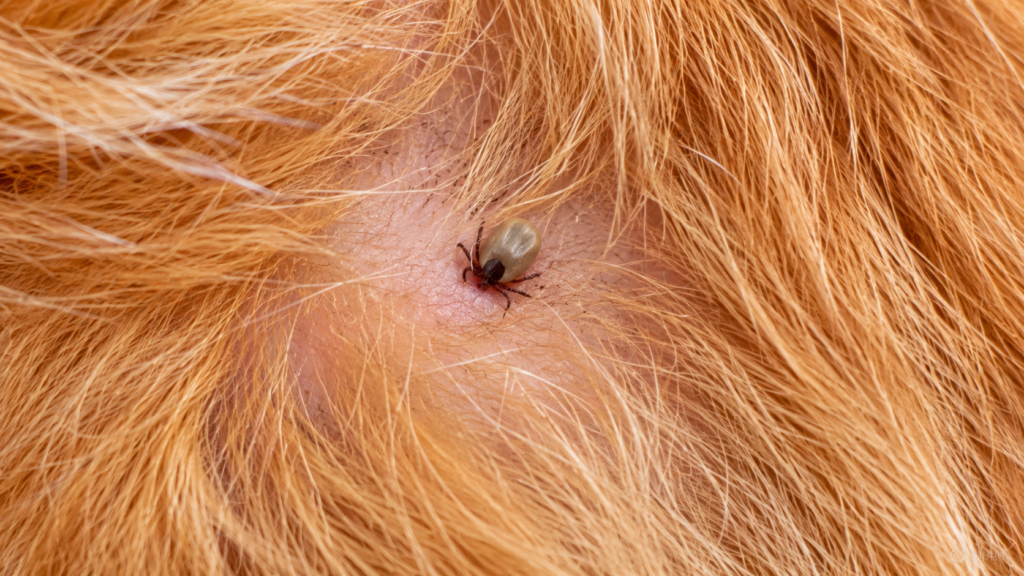
How Tick Transmission Happens
The transmission process generally follows these steps:
- A tick feeds on an infected animal and acquires the bacteria.
- The infected tick attaches to a dog.
- The tick feeds on the dog’s blood.
- Bacteria may move from the tick into the dog’s body.
- The bacteria spread through tissues and may trigger an immune response and inflammation.
Transmission usually requires the tick to remain attached and feed for a period of time. For Lyme disease, this commonly takes approximately 24–48 hours, although timing can vary.
This is why removing attached ticks as soon as possible is important. Never assume that a tick is harmless simply because it has been attached for a short time.
Which Ticks Spread Lyme Disease?
The main tick groups responsible for transmitting Lyme disease include:
- Black-legged ticks in eastern and central North America.
- Western black-legged ticks in parts of the western United States.
- Certain Ixodes species in Europe and Asia.
The exact tick species responsible depends on the region.
Not every tick carries Lyme bacteria, and not every tick bite results in infection.
Can Dogs Get Lyme Disease From Other Dogs?
Lyme disease in dogs is not normally spread directly from one dog to another through ordinary contact.
Dogs generally become infected through bites from infected ticks.
Sharing food bowls, playing together, sleeping near each other, or ordinary household contact does not directly transmit Lyme disease.
However, an infected tick can move from one animal into the home and potentially attach to another pet or person.
Can Humans Get Lyme Disease From Dogs?
People do not normally get Lyme disease directly from an infected dog.
The main concern is that dogs can carry ticks into homes and outdoor living areas. Those ticks may later attach to people or other animals.
For this reason, regular tick prevention protects both pets and the household.
Symptoms of Lyme Disease in Dogs
Many dogs exposed to Lyme bacteria do not develop noticeable illness. Dogs that do become sick may show symptoms several weeks or even months after the original tick bite.
The signs can vary depending on the affected tissues and the severity of the condition.
Fever
Fever is a common possible sign of Lyme disease in dogs.
A dog may feel unusually warm, become less active, or appear uncomfortable.
However, fever is not specific to Lyme disease. Many infections and inflammatory conditions can cause the same symptom.
Limping and Lameness
One of the most recognizable signs of canine Lyme disease is lameness.
A dog may suddenly begin limping or avoid putting weight on one leg.
In some cases, the lameness may shift between different legs over time. This can happen when inflammation affects multiple joints.
Owners may notice that their dog:
- Walks more slowly.
- Avoids running.
- Struggles to climb stairs.
- Has difficulty standing after resting.
- Refuses to jump onto furniture.
- Appears uncomfortable during walks.
Limping should not automatically be assumed to be Lyme disease because injuries, arthritis, and other tick-borne infections can cause similar symptoms.
Joint Pain and Swelling
Lyme disease in dogs can trigger inflammation in the joints.
Possible signs include:
- Swollen joints.
- Joint stiffness.
- Pain when moving.
- Reluctance to walk.
- Reduced interest in playing.
- Difficulty getting up after lying down.
Some dogs may develop inflammation affecting several joints, a condition known as polyarthritis.
Lethargy and Weakness
An affected dog may become unusually tired or less interested in normal activities.
You may notice that your dog:
- Sleeps more than usual.
- Avoids playing.
- Walks less frequently.
- Appears weak.
- Loses interest in outdoor activities.
Persistent tiredness should be evaluated by a veterinarian, especially when accompanied by fever or lameness.
Loss of Appetite
Some dogs with Lyme disease may eat less than usual.
They may refuse meals, show reduced interest in treats, or eat only small amounts.
A reduced appetite can occur with many illnesses, so it should be considered alongside other symptoms.
Swollen Lymph Nodes
Lymph nodes help the immune system respond to infections.
Some dogs with Lyme disease may develop enlarged lymph nodes, which can sometimes be noticed around the neck or behind the knees.
A veterinarian can determine whether the swelling is associated with infection or another condition.
Unusual Behavior
A dog experiencing pain or illness may behave differently.
Possible changes include:
- Becoming less social.
- Avoiding physical activity.
- Showing irritation when touched.
- Spending more time resting.
- Appearing uncomfortable when handled.
Sudden behavioral changes should not be ignored.
Serious Complication: Lyme Nephritis and Kidney Disease
One of the most concerning complications associated with Lyme disease in dogs is a kidney condition known as Lyme nephritis or Lyme-associated protein-losing kidney disease.
It is uncommon, but it can be severe and may progress rapidly.
What Is Lyme Nephritis?
Lyme nephritis is a serious kidney disorder associated with an abnormal immune response following exposure to Lyme bacteria.
The condition can damage the kidney’s filtering structures, allowing protein to leak into the urine.
This may lead to serious kidney dysfunction and other complications.
Warning Signs of Kidney Complications
Possible signs include:
- Vomiting.
- Loss of appetite.
- Increased thirst.
- Increased urination.
- Weight loss.
- Severe tiredness.
- Weakness.
- Swelling caused by fluid accumulation.
- Dehydration.
Not all dogs with Lyme disease develop kidney problems. However, these symptoms require prompt veterinary assessment.
Which Dogs Are at Higher Risk?
The exact risk factors are not fully understood.
Certain breeds, particularly Labrador Retrievers and Golden Retrievers, have been reported more frequently in cases of Lyme-associated kidney disease.
However, the condition can occur in other dogs as well.
A veterinarian may recommend urine testing and blood tests to evaluate kidney health in dogs that test positive for Lyme exposure.
Early Signs vs. Advanced Signs of Lyme Disease in Dogs
Recognizing changes early can help owners seek appropriate veterinary care.
| Early or Common Signs | More Serious Warning Signs |
|---|---|
| Mild fever | Persistent or high fever |
| Occasional limping | Severe or worsening lameness |
| Reduced energy | Extreme weakness |
| Mild joint discomfort | Significant joint swelling and pain |
| Reduced appetite | Refusal to eat |
| Mild behavior changes | Severe lethargy or collapse |
| Occasional digestive upset | Repeated vomiting with other illness signs |
| Increased thirst | Increased thirst and urination with possible kidney involvement |
Important: Kidney complications, severe weakness, repeated vomiting, collapse, or inability to eat require prompt veterinary attention. Do not wait for every symptom to appear.
How Is Lyme Disease Diagnosed in Dogs?
Diagnosing Lyme disease in dogs can be challenging because many dogs exposed to the bacteria remain healthy, while other illnesses can produce similar symptoms.
Veterinarians generally consider a combination of medical history, physical examination, tick exposure, laboratory testing, and the dog’s overall condition.
A positive antibody test alone does not automatically mean that a dog has active clinical Lyme disease in dogs.
Physical Examination
The veterinarian may examine your dog for:
- Fever.
- Joint swelling.
- Lameness.
- Pain during movement.
- Enlarged lymph nodes.
- Dehydration.
- Weight changes.
- General weakness.
The veterinarian will also ask about outdoor activities, travel history, previous tick bites, and tick prevention.
Lyme Disease Blood Tests
Blood tests are commonly used to detect antibodies produced by the dog’s immune system after exposure to Lyme bacteria.
These tests help determine whether the dog has been exposed to the organism.
Some screening tests use specific bacterial proteins, such as the C6 antigen, to help distinguish natural exposure from certain vaccine-related antibody responses.
However, antibody tests have limitations.
A positive result may indicate exposure without proving that the dog is currently sick.
A negative result may occur if testing is performed too soon after exposure, before enough antibodies have developed.
C6 Antibody Testing
C6-based tests are commonly used in veterinary medicine to identify antibodies associated with natural exposure to Borrelia burgdorferi.
These tests can help veterinarians evaluate a dog that may have encountered infected ticks.
However, the result must be interpreted alongside the dog’s symptoms and other medical findings.
Urinalysis
A veterinarian may recommend a urine test to check for signs of kidney problems.
Urinalysis can help identify:
- Protein in the urine.
- Abnormal urine concentration.
- Other changes associated with kidney disease.
This is particularly important when a dog tests positive for Lyme exposure or shows signs of kidney complications.
Blood Chemistry and Other Tests
Additional blood tests may be recommended to evaluate general health and organ function.
These may include:
- Kidney function measurements.
- Liver-related measurements.
- Blood protein levels.
- Electrolytes.
- Complete blood count.
If kidney disease is suspected, additional testing may be necessary.
Can a Tick Bite Test Confirm Lyme Disease?
Finding a tick on your dog does not prove that the dog has Lyme disease.
Similarly, identifying a tick as a species capable of carrying Lyme bacteria does not confirm transmission.
The veterinarian must consider the dog’s exposure history, symptoms, and appropriate laboratory testing.
How Is Lyme Disease Treated in Dogs?
Treatment depends on whether the dog has clinical illness, whether kidney or other complications are present, and what the veterinary examination reveals.
Dogs with symptoms consistent with Lyme disease and supporting test results are commonly treated with antibiotics.
Antibiotic Treatment
Doxycycline is a commonly used antibiotic for treating canine Lyme disease in dogs.
Other antibiotics may be considered when doxycycline is unsuitable.
Treatment commonly lasts approximately four weeks, although the veterinarian may adjust the plan according to the dog’s condition and response.
Never give antibiotics without veterinary instructions. The medication, dose, duration, and suitability depend on the individual dog.
Pain and Inflammation Management
Dogs experiencing joint discomfort may need additional treatment to improve mobility and comfort.
A veterinarian may recommend suitable pain-management medication based on the dog’s health.
Never give human painkillers such as ibuprofen, naproxen, or other medications without veterinary direction. Some human medicines can be dangerous or toxic to dogs.
Treatment for Kidney Complications
Dogs with Lyme-associated kidney disease may need more intensive treatment.
Depending on severity, veterinary care may include:
- Hospitalization.
- Intravenous fluids when appropriate.
- Management of nausea and vomiting.
- Blood pressure monitoring.
- Treatment of abnormal protein loss.
- Nutritional support.
- Kidney monitoring.
- Other medications based on the affected organs.
Kidney complications can have a serious prognosis, so early evaluation is important.
Follow-Up After Treatment
Completing antibiotics does not mean that all follow-up care is unnecessary.
Your veterinarian may recommend:
- Rechecking clinical symptoms.
- Monitoring joint comfort.
- Repeating urine tests.
- Checking kidney function.
- Reviewing tick prevention.
- Evaluating possible exposure to other tick-borne diseases.
A dog may continue to have antibodies after treatment, so a positive antibody result does not necessarily mean that treatment has failed.
Do All Dogs With Positive Lyme Tests Need Antibiotics?
No.
Many dogs test positive because they have been exposed to Lyme bacteria but never develop clinical illness.
Veterinarians generally assess the dog’s symptoms, urine results, kidney health, and other findings before deciding whether antibiotic treatment is appropriate.
Treating every healthy antibody-positive dog automatically can lead to unnecessary medication use.
How to Prevent Lyme Disease in Dogs
Preventing tick bites is the most important way to reduce the risk of Lyme disease in dogs.

A complete prevention plan should combine regular tick control, routine checks, prompt tick removal, and environmental management.
Use Year-Round Tick Prevention
Veterinary-approved tick prevention products can help reduce the risk of tick attachment and tick-borne infections.
Available products may include:
- Oral chewable medications.
- Topical treatments.
- Tick collars.
- Other veterinarian-recommended parasite control products.
The best choice depends on your dog’s age, weight, health, lifestyle, and the tick species found in your area.
Some products kill ticks after they attach, while others may also repel them.
Follow the product label and veterinary instructions carefully.
Check Your Dog for Ticks Every Day
Regular tick checks are particularly important after walks, outdoor play, or visits to areas with tall grass and vegetation.
Ticks can be difficult to see, especially in dogs with thick, long, or dark fur.
Pay special attention to:
- Inside and around the ears.
- Around the eyes and eyelids.
- Under the collar.
- Around the neck.
- Under the front legs.
- Between the toes.
- Around the tail.
- Between the back legs.
- Around the belly.
Use your fingers to gently feel through the fur and check for small bumps or attached parasites.
Remove Attached Ticks Promptly
If you find an attached tick, remove it as soon as possible.
Follow these steps:
- Wear gloves if available.
- Use fine-tipped tweezers or a proper tick-removal tool.
- Grasp the tick close to the skin, near its mouthparts.
- Pull steadily upward without twisting or crushing it.
- Avoid squeezing the tick’s body.
- Clean the bite area and your hands afterward.
- Dispose of the tick safely in a sealed container or according to local guidance.
If part of the tick remains in the skin or you cannot remove it safely, contact your veterinarian.
Do not use petroleum jelly, alcohol, nail polish, heat, or other substances to make the tick detach.
Avoid High-Risk Tick Areas
Ticks are commonly found in environments such as:
- Tall grass.
- Wooded areas.
- Leaf litter.
- Dense shrubs.
- Overgrown gardens.
- Areas frequented by wildlife.
When possible, keep your dog on clear walking paths and avoid unnecessary contact with dense vegetation.
Maintain Your Garden and Outdoor Space
You can reduce tick-friendly areas around your home by:
- Keeping grass trimmed.
- Removing piles of leaves.
- Clearing unnecessary brush.
- Keeping shrubs maintained.
- Removing garden debris.
- Reducing access to areas frequented by wildlife.
These steps may help reduce exposure, although they cannot eliminate all ticks.
Protect Your Dog During Outdoor Activities
Before visiting wooded trails, grassy fields, or other tick-prone areas:
- Apply the recommended tick prevention product.
- Avoid allowing your dog to explore dense vegetation unnecessarily.
- Check the dog’s coat after outdoor activities.
- Inspect collars, harnesses, and bedding.
- Remove any attached ticks promptly.
Continue preventive care even during cooler months if ticks remain active in your region.
Lyme Disease Vaccine for Dogs
A Lyme disease vaccine is available for dogs in some regions.
However, vaccination is not automatically necessary for every dog.
The decision should be based on the dog’s exposure risk, geographic location, lifestyle, health, and the veterinarian’s recommendations.
Which Dogs May Benefit From Lyme Vaccination?
A veterinarian may consider vaccination for dogs that:
- Live in areas where Lyme disease is common.
- Frequently visit wooded or grassy environments.
- Spend time in tick-prone locations.
- Travel to regions where infected ticks are present.
- Have repeated exposure to ticks.
How Does the Lyme Vaccine Work?
Lyme vaccines are designed to help the dog’s immune system recognize and respond to components associated with the Lyme bacteria.
Different vaccine products may work through different mechanisms.
The initial vaccination commonly involves two doses separated by approximately 2–4 weeks, followed by boosters according to the product and veterinarian’s recommendations.
Does the Lyme Vaccine Guarantee Protection?
No vaccine provides complete protection.
Vaccination can reduce the risk of Lyme disease, but it does not replace tick prevention.
A vaccinated dog can still be bitten by ticks and may be exposed to other tick-borne diseases.
Continue using appropriate tick control and checking your dog regularly.
Lyme Disease vs. Other Tick-Borne Diseases in Dogs
Lyme disease in dogs is not the only infection that ticks can transmit.
Other tick-borne diseases may cause similar symptoms, making veterinary diagnosis important.
| Disease | Cause | Common Signs |
|---|---|---|
| Lyme disease | Borrelia burgdorferi bacteria | Fever, lameness, joint swelling, lethargy |
| Ehrlichiosis | Ehrlichia bacteria | Fever, weakness, bleeding problems, reduced appetite |
| Anaplasmosis | Anaplasma bacteria | Fever, joint pain, lethargy, reduced appetite |
| Babesiosis | Babesia parasites | Fever, weakness, anemia, pale gums, dark urine |
| Rocky Mountain spotted fever | Rickettsia rickettsii bacteria | Fever, weakness, joint pain, other systemic signs |
The diseases carried by ticks vary by region.
Some dogs may be exposed to more than one tick-borne organism at the same time.
If your dog has a positive Lyme test or unexplained symptoms, the veterinarian may recommend additional testing for other infections.
Can Lyme Disease in Dogs Return After Treatment?
A dog that has previously had Lyme disease can be exposed again if bitten by another infected tick.
Previous infection does not provide reliable lifelong protection.
In addition, antibodies may remain detectable for months or years after exposure and treatment.
This means a positive antibody test after treatment does not automatically indicate a new infection or ongoing clinical disease.
If symptoms return, your veterinarian should assess whether the cause is reinfection, another tick-borne disease, a separate medical problem, or a complication.
What Should You Do If You Find a Tick on Your Dog?
Finding a tick does not necessarily mean your dog has Lyme disease.
However, it is important to remove the tick promptly and monitor your dog.
Steps to Follow
- Remove the tick carefully.
- Check the rest of your dog’s body for additional ticks.
- Record the approximate date of the bite.
- Monitor your dog for changes in appetite, energy, walking, and behavior.
- Check whether your dog is receiving appropriate tick prevention.
- Contact your veterinarian if you are unsure about the tick species, removal, or exposure risk.
If your dog develops fever, limping, joint swelling, unusual tiredness, or appetite changes, arrange a veterinary examination.
Do not give antibiotics simply because you found a tick. Preventive antibiotic treatment after an uncomplicated tick bite is not routinely recommended for dogs.
When Should You Take Your Dog to a Veterinarian?
A dog with possible Lyme disease should be assessed by a veterinarian, particularly if it has had tick exposure and develops unusual symptoms.
Arrange a veterinary appointment if you notice:
- Fever.
- New or unexplained limping.
- Joint swelling.
- Difficulty walking.
- Reduced appetite.
- Persistent tiredness.
- Enlarged lymph nodes.
- Unusual behavior after a tick bite.
Seek urgent veterinary care if your dog experiences repeated vomiting, severe weakness, collapse, difficulty breathing, inability to stand, or signs of significant kidney problems.
Early veterinary assessment can help identify the cause of the symptoms and determine whether treatment is necessary.
Frequently Asked Questions About Lyme Disease in Dogs
What are the first signs of Lyme disease in dogs?
Common signs include fever, limping, joint pain, swollen joints, lethargy, and reduced appetite. Some dogs may not show any symptoms even after exposure to the bacteria.
How long after a tick bite do Lyme disease symptoms appear in dogs?
Symptoms may take several weeks or even months to develop. Some dogs never show noticeable signs of illness. The timing varies depending on the individual dog and infection.
Can Lyme disease kill a dog?
Most dogs exposed to Lyme bacteria do not develop severe illness. However, uncommon complications such as Lyme-associated kidney disease can be life-threatening. Prompt veterinary evaluation is important when symptoms appear.
Can dogs recover from Lyme disease?
Many dogs with clinical Lyme disease improve with appropriate veterinary treatment. However, some may require additional care for persistent joint problems or kidney complications. Recovery depends on the severity of the condition and the organs affected.
Is Lyme disease contagious between dogs?
No. Lyme disease in dogs is generally transmitted through infected tick bites, not through direct contact between dogs. However, ticks carried by one dog can attach to another animal or person.
Can indoor dogs get Lyme disease?
Yes. Indoor dogs can still encounter ticks in gardens, yards, outdoor areas, or through contact with other animals. Ticks can also enter homes on clothing, shoes, and pets.
Does every tick carry Lyme disease?
No. Only certain tick species can transmit Lyme bacteria, and not every tick of a capable species is infected. However, every attached tick should be taken seriously because it may carry another disease-causing organism.
Can a dog test positive for Lyme disease without being sick?
Yes. A positive antibody test usually indicates exposure to Lyme bacteria, not necessarily active clinical disease. Many dogs with positive results remain healthy and may only need monitoring and appropriate tick prevention.
Is there a vaccine for Lyme disease in dogs?
Yes. Lyme vaccines are available in some regions. They may be recommended for dogs with a higher risk of exposure. Vaccination does not replace regular tick prevention.
Can Lyme disease cause kidney failure in dogs?
In uncommon cases, Lyme-associated kidney disease can cause serious damage to the kidneys. Warning signs may include vomiting, reduced appetite, increased thirst, increased urination, weight loss, and severe lethargy.
Can humans catch Lyme disease from an infected dog?
People do not normally catch Lyme disease directly from dogs. However, infected ticks can travel on a dog’s fur and later bite people. Regular tick prevention and checking pets after outdoor activities can help reduce household exposure.
Should I give my dog antibiotics after finding a tick?
Do not give antibiotics without veterinary advice. Antibiotics are not routinely recommended simply because a tick has attached. Your veterinarian can assess the exposure risk and decide whether testing or treatment is appropriate.
Conclusion
Lyme disease in dogs is a tick-borne bacterial infection that can cause fever, lameness, joint pain, swollen joints, lethargy, and reduced appetite. Many exposed dogs never become visibly sick, but some develop clinical illness that requires veterinary treatment. In uncommon cases, serious kidney complications can occur.
Diagnosis usually involves evaluating symptoms, tick exposure, antibody testing, and additional investigations when necessary. A positive antibody result does not automatically mean that a dog has active disease, so veterinary interpretation is essential.
The best way to protect your dog is to prevent tick bites through appropriate year-round tick control, regular body checks, prompt tick removal, and careful management of outdoor environments. Lyme vaccination may provide additional protection for dogs living in or visiting high-risk areas, but it should never replace tick prevention.
By recognizing warning signs early and maintaining a consistent parasite prevention routine, owners can reduce the risk of Lyme disease and help their dogs enjoy a healthier, more comfortable life.