10 Powerful Sniff Walk Benefits for a Happier, Healthier Dog
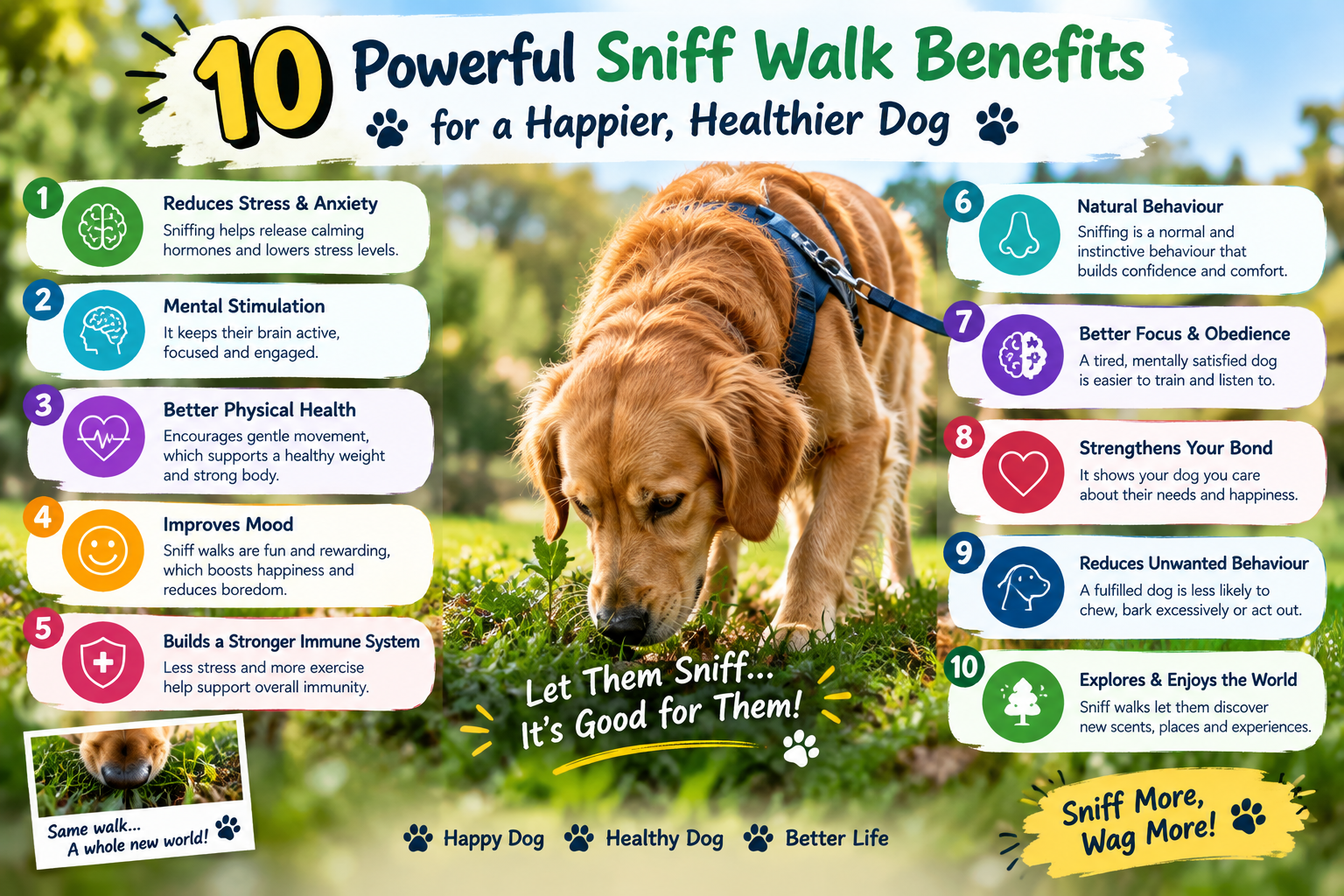
The sniff walk benefits for dogs go far beyond simply allowing a pet to walk around the neighborhood. A sniff walk gives dogs an opportunity to explore the world through their strongest natural sense: smell. Instead of rushing from one place to another, a dog can slow down, investigate different scents, and process information from its surroundings. Research on canine olfaction describes sniffing and searching for odors as natural, species-typical behaviors that are important to canine welfare.
Table of Contents
Sniff Walk Benefits for Natural Exploration
Sniff Walk Benefits for Mental Stimulation
Sniff Walk Benefits for Emotional Well-Being
Sniff Walk Benefits for Confidence
Sniff Walk Benefits for Better Enrichment
Sniff Walk Benefits for Older Dogs
Sniff Walk Benefits for a Stronger Dog-Owner Bond
Sniff Walk Benefits for Everyday Behavior
Sniff Walk Benefits Compared With a Fast Walk
Sniff Walk Benefits for a Healthier Daily Routine
Sniff Walk Benefits for Natural Exploration
One of the most important sniff walk benefits is that they allow dogs to perform a behavior that comes naturally to them. Dogs experience their surroundings very differently from humans. While people mainly depend on sight to understand an environment, dogs rely heavily on their sense of smell to gather information.

During a normal walk, a dog may stop to smell a tree, patch of grass, sidewalk, or another place where an animal has previously passed. These smells provide information about what has happened in the area. Allowing a dog to investigate these scents gives it an opportunity to explore instead of simply following a human’s walking pace.
A 2024 review of canine olfaction explains that sniffing and searching for odors are natural behaviors for dogs and are connected with their cognitive and emotional processes.
Sniff Walk Benefits for Mental Stimulation
Another major sniff walk benefit is mental stimulation. Walking is usually considered a physical activity, but a slow sniffing walk can also require a dog to think, investigate, remember, and make choices.
Every new smell gives the dog information to process. A dog may follow a scent for a short distance, stop to investigate it, and then decide where to move next. This makes the walk more mentally engaging than simply walking quickly along the same route.
Mental enrichment is important because dogs need opportunities to use natural behaviors. Research into environmental enrichment has found that providing dogs with opportunities for different activities can influence their behavior and welfare. In one pilot study, enrichment activities were associated with increased relaxation behavior and reductions in alert and stress-related behaviors.
This does not mean that sniff walks are a treatment for stress or behavioral problems. Instead, they can be one useful form of enrichment within a dog’s normal routine.
Sniff Walk Benefits for Emotional Well-Being
The sniff walk benefits can also extend to a dog’s emotional experience. Allowing a dog to investigate its surroundings gives it some control over what it does during the walk. Instead of being continuously directed by the owner, the dog can choose where to pause and which interesting smells to explore.
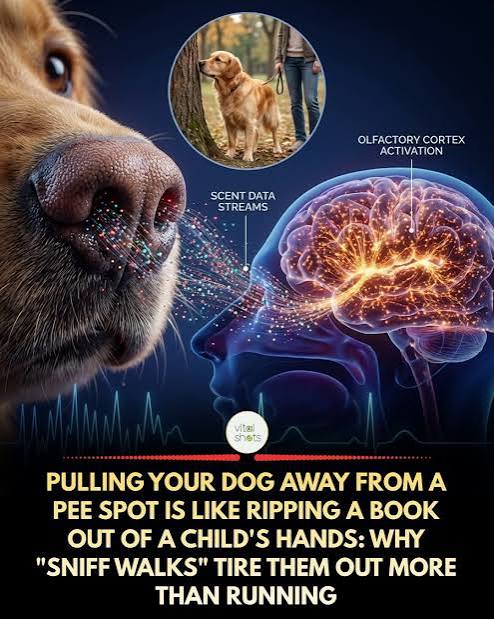
This freedom may be especially valuable for dogs that spend much of their day in environments where their choices are limited. Research on working-dog welfare has discussed the importance of opportunities for dogs to exercise agency and behavioral choice. Studies have also reported positive behavioral responses to nosework activities.
A calm sniffing walk can therefore become more than exercise. It can provide an opportunity for exploration, decision-making, and natural behavior.
Sniff Walk Benefits for Confidence
Another useful sniff walk benefit is the possibility of supporting confidence through controlled exploration. A dog that regularly encounters different smells, surfaces, environments, and surroundings can have opportunities to become familiar with new experiences.
Confidence does not develop simply because a dog walks farther. The quality of the experience matters. A relaxed dog that is allowed to investigate its surroundings at a comfortable pace may have a more positive experience than a dog that is constantly pulled away from every interesting smell.
For nervous or easily overwhelmed dogs, walks should remain appropriate to their individual comfort level. A busy environment may not be suitable for every dog. A quieter route with fewer distractions can sometimes provide a better opportunity for calm exploration.
Sniff Walk Benefits for Better Enrichment
The sniff walk benefits become especially interesting when they are considered as part of environmental enrichment. Enrichment means giving animals opportunities to engage with their surroundings in meaningful ways.
Research involving shelter dogs has shown that sensory enrichment can influence behavior. A study involving 60 shelter dogs found that different forms of sensory enrichment were associated with changes in behaviors related to arousal and activity.
Sniff walks are a simple form of outdoor enrichment because the environment itself provides constantly changing smells. The dog does not need an expensive toy or complicated equipment to investigate the world.
The important difference is that enrichment should be appropriate for the individual dog. A scent-rich environment may be exciting for one dog while another may become overwhelmed by a crowded or unfamiliar location.
Sniff Walk Benefits for Older Dogs
The sniff walk benefits can also be useful when adapting walks for older dogs. Senior dogs may not be able to walk as quickly or as far as they once could, but that does not mean they no longer need stimulation.
A slower walk can allow an older dog to remain engaged with its environment without requiring the same level of physical effort as a fast-paced walk. The dog can spend more time investigating smells while moving at a comfortable speed.
Research into cognitive enrichment in ageing dogs has highlighted the importance of continuing mental and physical stimulation rather than automatically stopping activities as dogs grow older.
However, an older dog’s exercise routine should be appropriate for its health and mobility. Dogs with pain, breathing problems, weakness, or other health concerns should be assessed by a veterinarian before changing their activity level.
Sniff Walk Benefits for a Stronger Dog-Owner Bond
One of the more overlooked sniff walk benefits is the opportunity to improve communication between dogs and their owners. During a relaxed walk, owners can learn more about what their dogs find interesting.
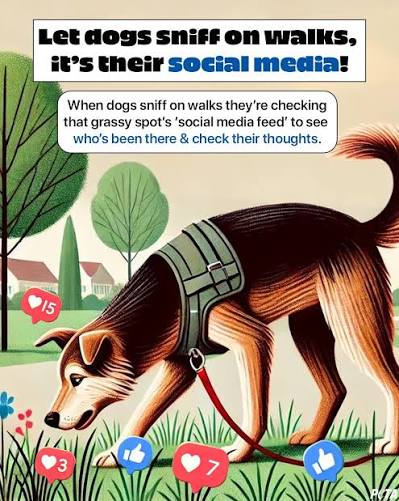
When an owner allows a dog reasonable freedom to sniff instead of constantly rushing it forward, the walk can become a shared experience. The owner observes the dog’s behavior while the dog explores the environment.
This does not mean the dog should control every part of the walk. Good walking still requires safety, awareness, and appropriate boundaries. However, allowing moments of exploration can create a more cooperative relationship between the dog and its owner.
Sniff Walk Benefits for Everyday Behavior
The sniff walk benefits may also contribute to a dog’s overall daily enrichment. Dogs that have regular opportunities to explore and engage with their environment may have more variety in their daily experiences.
Research on canine environmental enrichment has found that different enrichment activities can produce measurable behavioral changes. In one study, enrichment was associated with more relaxation behavior and fewer observed alert and stress behaviors.
It would be too strong to claim that sniff walks alone will fix barking, destructive behavior, pulling, or other training challenges. Behavior is influenced by many factors, including genetics, learning history, environment, health, and the dog’s individual temperament.
Instead, sniffing can be viewed as one useful part of a broader approach that includes training, exercise, social interaction, rest, and appropriate enrichment.
Sniff Walk Benefits Compared With a Fast Walk
The sniff walk benefits become easier to understand when comparing a sniff-focused walk with a fast exercise walk. A fast walk mainly emphasizes movement and physical activity, while a sniff walk gives greater attention to exploration and sensory engagement.
Neither style is automatically better for every dog. A healthy routine can include both physical movement and opportunities for natural exploration. For example, an owner might allow a dog to spend part of the walk investigating scents and then continue with a comfortable period of steady walking.
The ideal balance depends on the dog’s age, breed, fitness, health, personality, and environment. A young energetic dog may require more physical activity, while an older dog may benefit from shorter and slower walks with more opportunities to explore.
Research Snapshot
Research related to canine enrichment includes studies with different sample sizes and different types of activities. These numbers should not be interpreted as a ranking of which activity is better; they simply show the scale of some research discussed in this article.

The 60-dog study examined olfactory and auditory enrichment in shelter dogs, while the 42-dog 2026 study compared two structured training approaches in dogs with canine cognitive dysfunction. The 16-dog study examined exercise and calm interaction in shelter dogs. These studies address related areas of canine welfare rather than directly proving that a particular sniff-walk duration produces a specific health outcome.
Sniff Walk Benefits for a Healthier Daily Routine
The final sniff walk benefit is that sniffing can easily become part of a balanced daily routine. It does not require complicated equipment, expensive toys, or a special training facility. A normal outdoor walk can become more enriching simply by giving the dog reasonable opportunities to investigate its surroundings.
A good sniff walk should still be safe. Owners should consider traffic, aggressive animals, extreme weather, unsafe food or objects on the ground, and local walking conditions. Dogs should also be allowed to move at a comfortable pace rather than being forced to investigate every smell.
The goal is not to make every walk extremely long. A short, relaxed walk with meaningful exploration may provide a different experience from a longer walk where the dog is constantly hurried.
Final Thoughts on Sniff Walk Benefits
The sniff walk benefits show why a dog walk does not always need to be about distance or speed. Dogs experience their environment through their powerful sense of smell, and allowing them time to investigate can provide natural sensory and mental enrichment.
Research supports the importance of olfactory behavior and enrichment in canine welfare, while studies of scent-based and other enrichment activities suggest that opportunities for natural behavior can influence how dogs interact with their environment.
A sniff walk is not a replacement for veterinary care, appropriate exercise, or behavior training. Instead, it can be a simple and enjoyable addition to a dog’s everyday routine. By slowing down occasionally and allowing dogs to explore safely, owners can make ordinary walks more engaging while giving their companions an opportunity to use one of their most important natural abilities.