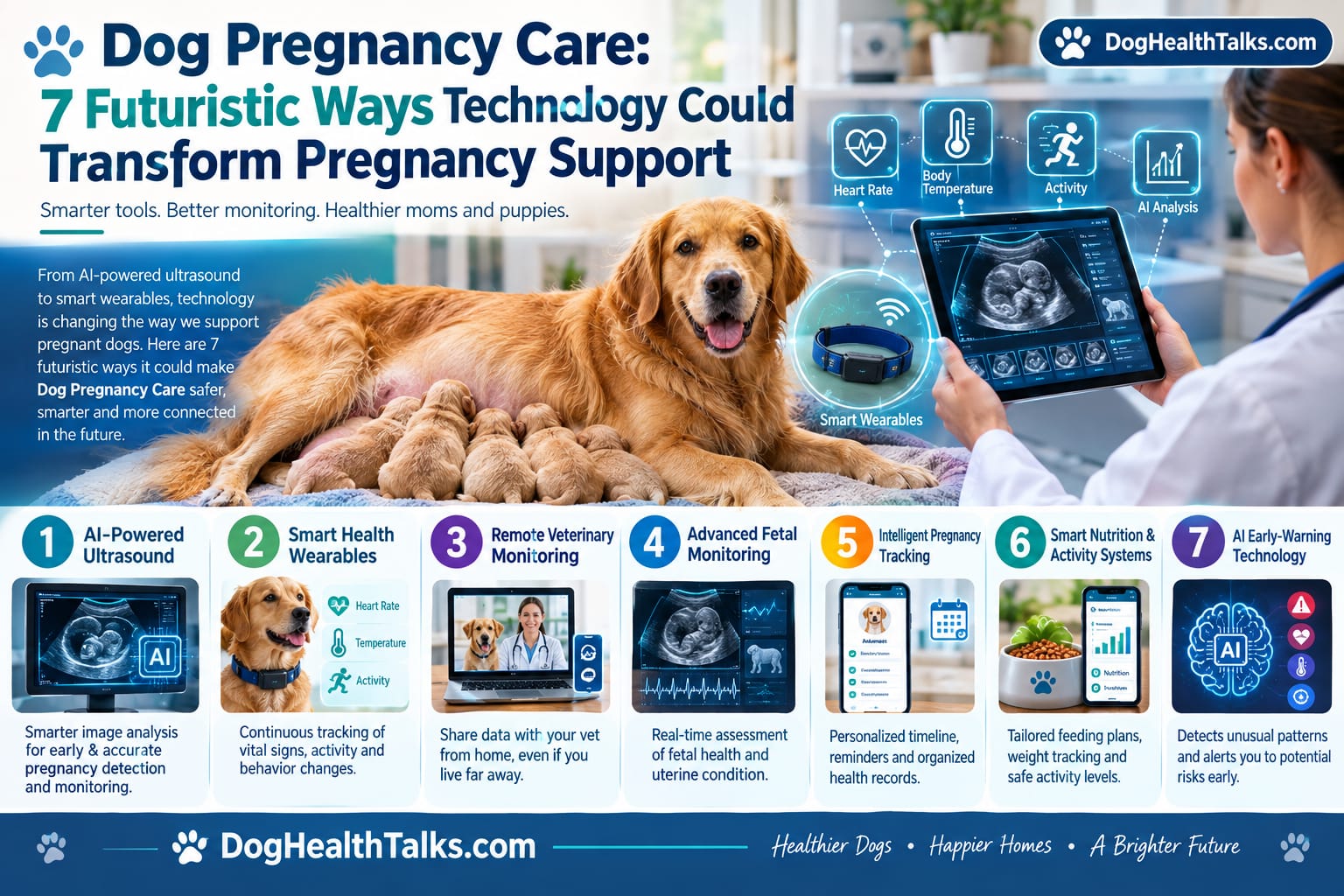
Dog Pregnancy Care: 7 Futuristic Ways Technology Could Transform Pregnancy Support

Pregnancy can be an important and sensitive stage in a dog’s life. During this period, both the mother and developing puppies need proper monitoring, nutrition, rest, and veterinary attention. Traditionally, Dog Pregnancy Care has depended on physical examinations, ultrasound scans, blood tests, X-rays, nutrition plans, and careful observation at home.
However, technology is changing the way animals are monitored. New digital tools, smart sensors, artificial intelligence, remote veterinary systems, and advanced imaging could make pregnancy monitoring more precise in the future.
A normal dog pregnancy usually lasts around 62 to 64 days, although the exact timing can vary. Veterinary professionals can use ultrasound, relaxin testing, and later-stage X-rays to confirm pregnancy and assess the developing litter.
In the future, Dog Pregnancy Care could become more connected and personalized. Instead of relying only on occasional veterinary visits, owners may be able to collect useful information continuously and share it with veterinarians.
Table of Contents
- AI-Powered Pregnancy Ultrasound
- Smart Health Monitoring Wearables
- Remote Veterinary Monitoring
- Advanced Fetal Monitoring
- Intelligent Pregnancy Tracking
- Smart Nutrition and Activity Systems
- AI Early-Warning Technology
- Frequently Asked Questions
- Conclusion
1. AI-Powered Pregnancy Ultrasound
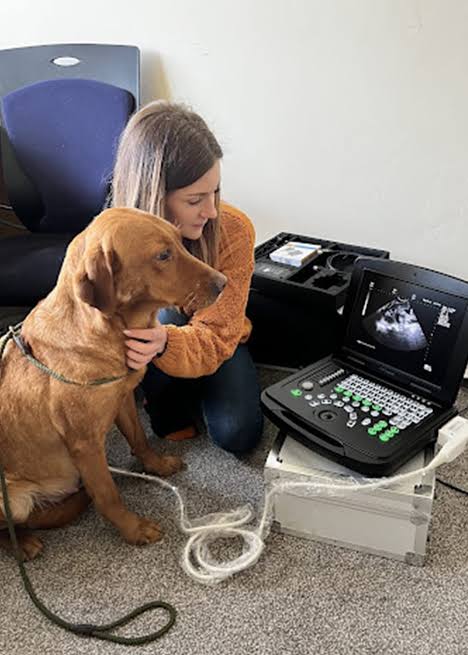
Ultrasound is already an important part of veterinary pregnancy care. It can help confirm pregnancy and assess whether fetuses are alive. VCA notes that abdominal ultrasound can detect pregnancy relatively early and is commonly used for pregnancy diagnosis.
In the future, artificial intelligence could make ultrasound analysis even more advanced.
An AI-supported ultrasound system could potentially examine images and identify developing fetuses, estimate fetal development, and highlight unusual patterns for veterinary review. Instead of replacing a veterinarian, the technology could work as an additional analysis tool.
For example, an ultrasound machine could automatically organize images from different stages of pregnancy. Changes could then be compared over time.
This could make Dog Pregnancy Care more detailed because veterinarians might have access to a larger collection of pregnancy information rather than relying on a single examination.
AI could also help reduce the amount of time required to review large numbers of ultrasound images. However, professional veterinary interpretation would still be important because pregnancy complications can involve many factors that software cannot understand independently.
2. Smart Health Monitoring Wearables
Wearable technology is another area that could influence future Dog Pregnancy Care.
A smart collar or lightweight wearable device could potentially collect information such as activity, resting patterns, heart rate, body temperature, and changes in daily behavior. Some measurements would need carefully designed veterinary-grade devices before they could be considered reliable for pregnancy monitoring.
The biggest advantage could be continuous observation.
Today, an owner may notice that a pregnant dog is less active or behaving differently. A future system could potentially detect these changes automatically.
For example, if activity suddenly decreases, the system could record the change and send information to the owner. If several measurements change together, the veterinarian could be notified for further evaluation.
This does not mean every change would indicate a medical problem. Pregnant dogs naturally experience physical and behavioral changes. Instead, the technology could help create a clearer record that veterinarians can interpret.
This could make Dog Pregnancy Care more data-driven while still keeping the veterinarian responsible for medical decisions.
3. Remote Veterinary Monitoring
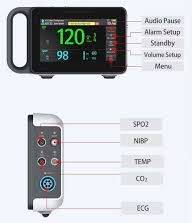
Telemedicine and connected veterinary platforms could also become more useful for Dog Pregnancy Care.
Imagine a pregnant dog wearing a smart monitoring device at home. The device could collect selected health measurements and send them to a secure digital platform.
A veterinarian could review the information remotely and decide whether an examination was needed.
This could be particularly useful for owners who live far from veterinary clinics. Instead of waiting until a problem becomes obvious, unusual changes could potentially be discussed earlier.
A future monitoring platform might include:
- Daily health summaries
- Activity records
- Temperature information
- Pregnancy milestones
- Veterinary appointment reminders
- Medication records
- Feeding information
- Important warning notifications
Remote monitoring would not replace physical examinations, ultrasound, X-rays, or emergency veterinary treatment. Instead, it could help connect home observation with professional care.
Therefore, future Dog Pregnancy Care could combine home monitoring with direct veterinary supervision.
4. Advanced Fetal Monitoring
One of the most important areas of future Dog Pregnancy Care could be fetal monitoring.
Veterinary medicine already has tools for assessing fetal and uterine conditions. Merck Veterinary Manual notes that uterine and fetal monitoring systems can be used to assess the condition of the uterus and fetuses during difficult labor.
Future systems could become smaller, faster, and more precise.
Advanced monitoring equipment might continuously evaluate selected fetal signals during high-risk pregnancies or labor. Information could then be displayed in a simple dashboard for veterinary professionals.
If unusual patterns appeared, the system could alert the veterinary team so that the situation could be assessed.
This technology could be especially valuable when a pregnancy involves complications. However, alerts should always be treated as signals for professional assessment rather than automatic diagnoses.
The goal would be to provide veterinarians with more information at the right time.
5. Intelligent Pregnancy Tracking
Another futuristic development could be an intelligent pregnancy timeline.
A modern Dog Pregnancy Care application could store the breeding date, veterinary test results, ultrasound records, expected delivery period, weight changes, feeding information, and important appointments.
The system could then create a personalized timeline.
For example, the application could remind the owner when a veterinary examination may be appropriate. It could also store ultrasound results and help organize information about the pregnancy.
Pregnancy timing can sometimes be difficult to predict from breeding dates alone. Merck explains that breeding dates and conception dates do not always correspond closely enough to accurately predict whelping.
Future software could therefore combine multiple pieces of information rather than relying on one date.
The system might consider breeding information, hormone testing, ultrasound findings, and veterinary observations to create a more useful pregnancy timeline.
Such technology could make Dog Pregnancy Care easier to organize, especially for owners who are managing their first canine pregnancy.
6. Smart Nutrition and Activity Systems
Nutrition is another important part of pregnancy management.
As pregnancy progresses, a dog’s nutritional needs change. VCA recommends smaller, more frequent meals during the later stages of pregnancy and advises against over-exercising a pregnant dog.
Future Dog Pregnancy Care systems could connect nutrition information with activity tracking.
For example, an application could record:
- Body weight
- Meal frequency
- Food portions
- Daily activity
- Water intake
- Pregnancy stage
- Veterinary recommendations
AI could then organize this information into simple reports.
Instead of providing a generic feeding suggestion, future systems could potentially help owners follow a plan created by their veterinarian.
Smart feeding technology could also remind owners about scheduled meals and record whether food was consumed.
However, automated nutrition recommendations should not replace veterinary advice. Pregnant dogs can have different nutritional needs depending on breed, body condition, litter size, health status, and other factors.
Technology should therefore support professional guidance rather than independently prescribe a diet.
7. AI Early-Warning Technology
Perhaps the most interesting future development in Dog Pregnancy Care could be an AI-based early-warning system.
The system could combine multiple types of information, including activity, temperature, feeding behavior, veterinary records, pregnancy stage, and other available measurements.
Instead of examining each measurement separately, AI could search for unusual combinations.
For example, a sudden change in behavior combined with other abnormal measurements might trigger an alert asking the owner to contact a veterinarian.
This could be useful because some pregnancy complications can become serious if professional attention is delayed. Difficult labor, known as dystocia, can involve weak or infrequent contractions, prolonged labor, fetal problems, or maternal distress.
Future systems might therefore focus on recognizing patterns that deserve professional attention.
Importantly, an AI warning would not mean that a complication has definitely occurred. The veterinarian would still need to examine the dog and determine what is actually happening.
This approach could make Dog Pregnancy Care more proactive while keeping medical decisions in professional hands.
Why Technology Could Make Dog Pregnancy Care More Connected
The future of Dog Pregnancy Care may not depend on one revolutionary machine.
Instead, several smaller technologies could work together.
A smart collar could collect information. A mobile application could organize it. AI could identify unusual patterns. Ultrasound could provide images of developing puppies. A remote veterinary platform could allow professionals to review selected information.
Together, these technologies could create a connected pregnancy monitoring system.
This approach could also create a more complete health history. Instead of remembering when a dog ate less or became less active, owners could have recorded information that could be shared with their veterinarian.
However, technology should always be used carefully. Not every sensor is medically accurate, and not every AI prediction will be correct. Veterinary examination remains essential.
The Role of Veterinarians in Future Dog Pregnancy Care
Even with advanced technology, veterinarians will remain central to Dog Pregnancy Care.
Pregnancy diagnosis can involve relaxin blood testing, ultrasound, physical examination, and later radiography. Ultrasound can help assess fetal viability, while X-rays later in pregnancy can be useful for determining litter size.
Technology can collect and organize information, but a veterinarian is needed to interpret the overall condition of the mother and puppies.
This distinction will become even more important as AI tools become more common.
The best future systems are likely to be those that assist veterinarians instead of attempting to replace them.
Frequently Asked Questions
What is Dog Pregnancy Care?
Dog Pregnancy Care includes the monitoring, nutrition, veterinary examinations, exercise management, preparation for delivery, and postpartum support provided to a pregnant dog.
How long are dogs usually pregnant?
Dog pregnancy commonly lasts around 62 to 64 days, although the exact period can vary depending on how pregnancy timing is measured and individual factors.
Can technology confirm dog pregnancy?
Yes. Veterinary technology already includes ultrasound and relaxin hormone testing for pregnancy diagnosis. Ultrasound can also help assess fetal viability.
Could an AI system replace a veterinarian?
No. AI could potentially assist with data analysis, monitoring, and alerts, but veterinary examination and professional judgment remain essential.
Can a smart collar monitor a pregnant dog?
Future veterinary-grade wearables could potentially monitor selected health and activity measurements. However, consumer devices should not be treated as diagnostic equipment unless their accuracy has been properly validated.
What should owners do if a pregnant dog seems unwell?
A veterinarian should be contacted when concerning symptoms or unusual changes appear. Difficult labor can become an emergency, particularly when prolonged labor, maternal distress, or fetal problems occur.
Conclusion
Technology could make Dog Pregnancy Care more connected, organized, and data-driven in the coming years. AI-assisted ultrasound, smart wearables, remote veterinary monitoring, fetal monitoring systems, intelligent pregnancy calendars, nutrition tracking, and early-warning tools could all support better observation.
The most useful future may not be a single smart device. Instead, different technologies could work together while veterinarians remain responsible for diagnosis and treatment.
As veterinary technology develops, Dog Pregnancy Care could become more personalized and proactive. For owners, the biggest benefit may be having better information at the right time while still relying on professional veterinary guidance for important decisions.