Dog Sleeping Positions 2026: 7 Powerful Meanings & Warning Signs
Dog Sleeping Positions 2026 can tell you a surprising amount about your dog’s comfort, mood, habits, and sense of security. Dogs do not always sleep in the same position, and their favorite posture can change depending on temperature, surroundings, age, activity level, and how safe they feel. While most sleeping positions are completely normal, some changes can sometimes be worth paying attention to.
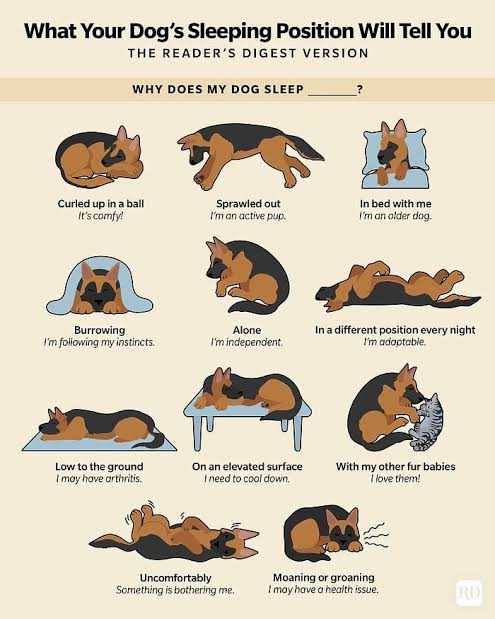
Table of Contents
- Dog Sleeping Positions 2026 and What They Mean
- Dog Sleeping Positions 2026: The Curled-Up Position
- Dog Sleeping Positions 2026: The Side-Sleeping Position
- Dog Sleeping Positions 2026: The Superman Position
- Dog Sleeping Positions 2026: The Belly-Up Position
- Dog Sleeping Positions 2026: The Donut Position
- Dog Sleeping Positions 2026: The Back-to-Back Position
- Dog Sleeping Positions 2026: The Head-Raised Position
- Dog Sleeping Positions 2026 Warning Signs
- Dog Sleeping Positions 2026: Quick Comparison Table
- FAQs About Dog Sleeping Positions 2026
- Conclusion
Dog Sleeping Positions 2026 and What They Mean
Dogs have several natural sleeping styles. Some curl into a tight ball, while others stretch across the entire bed. Your dog’s sleeping position can provide clues about comfort and behavior, but it should not be treated as a diagnosis.
The most important thing is to look at your dog’s normal sleeping habits. If your dog has always slept in a certain position and seems comfortable, there may be nothing to worry about. However, a sudden and persistent change combined with other unusual symptoms deserves more attention.
Temperature also plays a role. Dogs may curl up when they want to conserve body heat and stretch out when they feel warm. Puppies, older dogs, and active dogs may also have different sleeping patterns.
Dog Sleeping Positions 2026: The Curled-Up Position
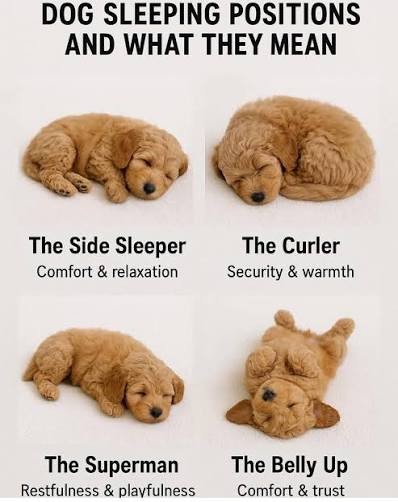
The curled-up position is one of the most common dog sleeping positions. Your dog may tuck its legs underneath the body and place its nose close to its tail.
This posture can help a dog conserve warmth. It may also provide a feeling of security because the body is protected from several directions.
For many dogs, sleeping curled up is simply a comfortable habit. You may notice it more during colder nights or when your dog sleeps in a quiet corner.
Is the Curled-Up Position Normal?
Usually, yes. If your dog wakes normally, eats and drinks as usual, plays normally, and shows no signs of discomfort, curling up is generally not concerning.
However, if your dog suddenly stays tightly curled for long periods and appears reluctant to move, observe the situation more carefully. A change in behavior is more meaningful than the position itself.
Dog Sleeping Positions 2026: The Side-Sleeping Position
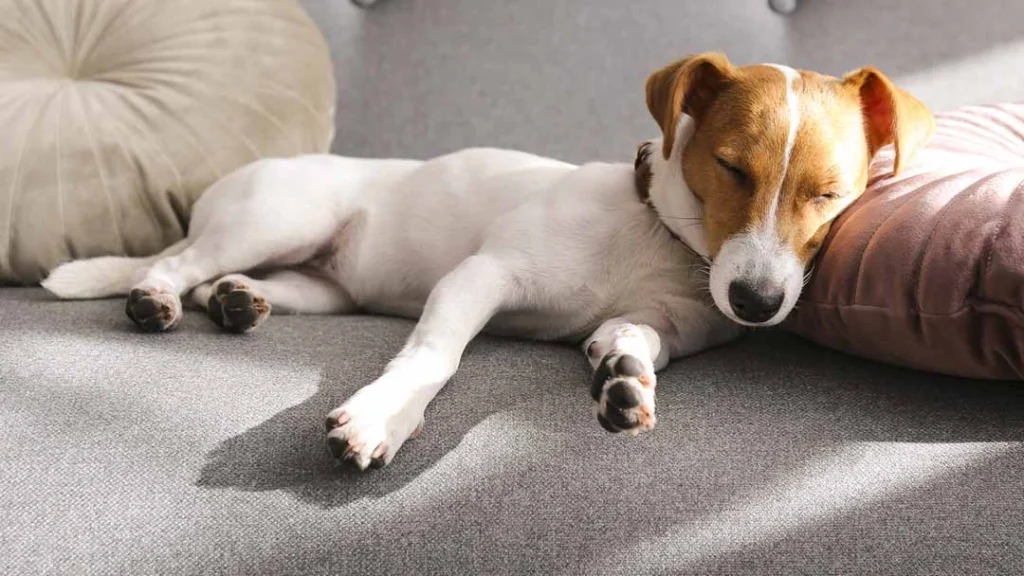
Side sleeping is another relaxed posture. Your dog lies on one side with its legs extended or slightly bent.
This position often occurs when a dog feels comfortable enough to relax deeply. You may see your dog’s paws twitch or its legs move slightly during sleep.
A dog that regularly sleeps on its side may simply prefer the position because it allows the body to relax.
Dog Sleeping Positions 2026 and Deep Rest
Side sleeping can be especially common after exercise or an active day. Dogs need plenty of rest, and a comfortable sleeping environment can help them recover from daily activity.
Give your dog a clean, quiet sleeping area where it can rest without being constantly disturbed.
Dog Sleeping Positions 2026: The Superman Position
The Superman position is one of the cutest sleeping styles. In this posture, the dog lies on its stomach with its front legs stretched forward and back legs extended behind.
It is especially common in puppies and energetic dogs.
This position allows a dog to rest while keeping its body ready to move. Some dogs quickly jump up from this posture when they hear an interesting sound.
Why Do Puppies Use This Position?
Puppies are naturally active and curious. They may sleep deeply after playing and suddenly wake up ready for another adventure.
Therefore, seeing a puppy regularly sleep in the Superman position is usually not a reason for concern.
Dog Sleeping Positions 2026: The Belly-Up Position
When a dog sleeps on its back with its belly exposed, it may look extremely relaxed. The belly is a vulnerable part of the body, so some dogs only use this position when they feel safe in their environment.
It can also help a dog cool down because less fur-covered body surface is pressed against the bed or floor.
Is Belly-Up Sleeping a Positive Sign?
It can be. A relaxed dog may expose its belly because it feels comfortable and secure.
Still, avoid assuming that every belly-up posture has exactly the same meaning. Dogs are individuals, and some simply find this position comfortable.
Dog Sleeping Positions 2026: The Donut Position
The donut position is similar to the curled-up posture, but the dog curls its body very tightly, sometimes almost forming a circle.
This position can help conserve warmth and create a cozy feeling. Dogs may choose it when sleeping in a new environment or when they want to feel protected.
A comfortable blanket or properly sized dog bed can make this sleeping style even easier for your pet.
Dog Sleeping Positions 2026: The Back-to-Back Position
Dogs that sleep close to people or other pets may sometimes rest with their back touching another body.
This can be a sign that the dog enjoys physical closeness and feels comfortable around its sleeping companion.
Some dogs also choose this position because another warm body provides additional comfort.
What If Your Dog Stops Sleeping Near You?
A change in sleeping location is not automatically negative. Your dog may simply prefer a cooler room, a quieter area, or a more comfortable bed.
However, if the change happens suddenly and is accompanied by hiding, whining, reduced activity, appetite changes, limping, or other unusual behavior, it is worth paying closer attention.
Dog Sleeping Positions 2026: The Head-Raised Position
Some dogs prefer sleeping with their head slightly elevated on a pillow, cushion, or the edge of their bed.
Occasionally resting this way can simply be a comfortable preference. However, if your dog repeatedly chooses a head-raised position and seems unable to settle flat, especially if there are breathing difficulties, coughing, unusual restlessness, or other concerning signs, speak with a veterinarian.
The position alone does not tell you what is happening. Other symptoms and changes in behavior matter much more.
Dog Sleeping Positions 2026 Warning Signs
Most dog sleeping positions are harmless. The bigger concern is usually a sudden change in normal sleeping behavior.
Pay attention if your dog suddenly cannot find a comfortable position, repeatedly gets up and lies down, cries while moving, avoids stairs, becomes unusually restless at night, or sleeps much more than usual.
Other warning signs can include reduced appetite, vomiting, diarrhea, unusual breathing, weakness, limping, trembling, or major changes in normal behavior.
These signs do not automatically mean that your dog has a serious problem. They simply mean that the sleeping position should be considered together with the rest of your dog’s condition.
If you are worried about a sudden or persistent change, professional veterinary advice is the safest option.
Dog Sleeping Positions 2026: Quick Comparison Table
| Sleeping Position | Possible Meaning | Usually Normal? | What to Watch |
|---|---|---|---|
| Curled Up | Warmth and security | Yes | Sudden discomfort |
| Side Sleeping | Relaxation and comfort | Yes | Difficulty getting up |
| Superman | Rest while staying ready to move | Yes | Stiffness or pain |
| Belly Up | Relaxation or cooling | Yes | Sudden change |
| Donut | Warmth and feeling protected | Yes | Tight, uncomfortable posture |
| Back-to-Back | Closeness and comfort | Yes | Sudden avoidance |
| Head Raised | Comfortable resting preference | Often | Breathing problems or restlessness |
Dog Sleeping Positions 2026: What Owners Should Remember
There is no single sleeping position that perfectly explains a dog’s emotions. Instead, consider the complete picture.
Look at your dog’s age, normal energy level, environment, temperature, daily exercise, appetite, and behavior. A healthy dog may change positions several times during the night.
For example, your dog might start curled up, move to its side, stretch into the Superman position, and later sleep on its back. This kind of movement can simply be part of normal rest.
The most useful approach is to learn what is normal for your individual dog. Once you know your dog’s usual sleeping habits, unusual changes become much easier to notice.
FAQs About Dog Sleeping Positions 2026
Are Dog Sleeping Positions 2026 a Reliable Way to Understand Dogs?
They can provide clues about comfort and habits, but they are not a reliable way to diagnose a dog’s emotional or physical condition by themselves. Always consider other behaviors and symptoms.
Why Does My Dog Sleep Curled Up?
Dogs may curl up to conserve warmth or feel secure. It is one of the most common sleeping positions and is usually normal.
Why Does My Dog Sleep on Its Back?
Sleeping on the back can happen when a dog feels relaxed or wants to cool down. Some dogs simply prefer the position.
Why Does My Dog Change Sleeping Positions?
Dogs naturally change positions during sleep. Temperature, comfort, age, activity, and the sleeping surface can all influence their choice.
When Should I Worry About a Dog’s Sleeping Position?
A position itself is rarely enough to cause concern. Pay more attention to sudden changes combined with signs such as pain, breathing difficulty, weakness, appetite loss, or unusual behavior.
Conclusion
Dog Sleeping Positions 2026 can be a fun and useful way to understand your pet’s sleeping habits. From the curled-up position to side sleeping, Superman posture, belly-up sleeping, and back-to-back rest, each position can have several possible explanations.
The key is not to judge your dog’s health from one sleeping posture alone. Instead, learn your dog’s normal routine and watch for meaningful changes. A comfortable bed, suitable room temperature, regular exercise, and a peaceful sleeping area can all support better rest.
Most importantly, if a new sleeping pattern continues or appears alongside other worrying symptoms, getting professional veterinary advice is the safest choice.
