 By Bushra Mukhtar
If you’ve ever sat down with a bunch of grapes and noticed your dog’s curious eyes, you may have wondered: Can dogs eat grapes?
The short answer is no — grapes are extremely dangerous to dogs. Even one or two can cause severe health issues, including kidney failure.
As a responsible dog owner, knowing why grapes are toxic, what symptoms to watch for, and what to do if your dog accidentally eats them could save your pet’s life.
This 2025 guide explains everything you need to know — backed by the latest research, expert advice, and veterinary recommendations.
Unlike some human foods that are simply unhealthy for dogs, grapes are on the list of foods that are toxic. What makes them particularly concerning is that scientists still don’t know the exact toxic compound.
- The most recent studies (2021–2024) suggest that tartaric acid and potassium bitartrate may be the primary culprits.
- However, sensitivity varies — some dogs may get sick from a single grape, while others may eat several and show no immediate signs.
- Grapes, raisins, currants, and sultanas are all dangerous.
- Dried versions (raisins, sultanas, currants) are even more toxic because the compounds are more concentrated.
👉 Key takeaway: There is no safe number of grapes for dogs.
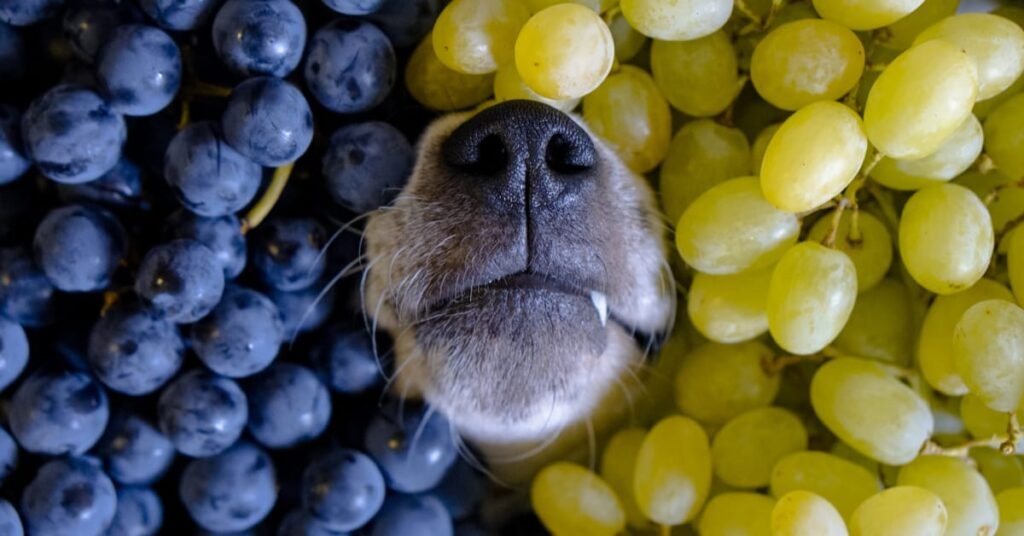
Grapes primarily damage a dog’s kidneys. When a dog ingests grapes or raisins:
- Within hours, their digestive system may react (vomiting, diarrhea).
- Toxins then enter the bloodstream, potentially damaging kidney cells.
- This can lead to acute kidney injury (AKI), which may be life-threatening if not treated quickly.
- Individual tolerance levels vary.
- Factors like size, age, pre-existing health conditions, and even the type of grape may influence the outcome.
- Because of this unpredictability, veterinarians treat every case of grape ingestion as an emergency.
Knowing the warning signs can make the difference between recovery and tragedy. Symptoms often appear within 6–12 hours after ingestion and may worsen over the next 72 hours.
- Vomiting (often repeated)
- Diarrhea
- Lethargy or unusual tiredness
- Loss of appetite
- Dehydration (panting, dry gums, sunken eyes)
- Abdominal pain
- Increased or decreased urination
- Weakness or collapse
- Signs of kidney failure (bad breath, seizures, coma in severe cases)
👉 If your dog shows any of these signs after eating grapes, get veterinary care immediately.
The exact reason grapes are toxic is still unknown. What experts do know is that grapes can cause sudden kidney failure in dogs.
This means:
- The kidneys stop working properly
- Waste builds up in the body
- The condition can become life-threatening very fast
Some dogs get sick after eating just one grape, while others may eat more and show fewer signs. Because reactions are unpredictable, all dogs are at risk.

Time is critical. The sooner you act, the better the chances of saving your dog.
- Call your veterinarian or an emergency animal hospital immediately.
- Tell them how many grapes your dog ate and when.
- Do not wait for symptoms to appear. Kidney damage may begin silently.
- Follow your vet’s instructions.
- If ingestion was recent, the vet may induce vomiting.
- Activated charcoal may be used to absorb toxins.
- IV fluids and bloodwork help support the kidneys and monitor function.
⚠️ Important: Do not try home remedies unless specifically instructed by your vet. Some online “tips” can make things worse.
No. Puppies are even more sensitive than adult dogs.
Because puppies:
- Have smaller bodies
- Have developing organs
A very small amount of grapes can cause serious harm. Never give grapes to puppies, even as a taste.
Because the internet is full of conflicting advice, let’s bust some myths.
No. Both seedless and seeded grapes are toxic. The danger is in the flesh and skin, not just the seeds.
Yes. While not every dog will react to one grape, there’s no safe amount. Why take the risk?
Yes. Raisins are dried grapes, which makes the toxins more concentrated. Even a few raisins can be deadly to small dogs.
Every dog is different. Some show no immediate reaction, but hidden kidney damage may still occur.
Still unsafe. Even processed grape products contain harmful compounds. Sugar, alcohol, and additives add extra risks.
Just because grapes are off-limits doesn’t mean your pup can’t enjoy healthy treats. Here are some safe fruits dogs can eat:
- Apples (remove seeds and core)
- Blueberries (antioxidant-rich)
- Bananas (in moderation)
- Watermelon (seedless)
- Strawberries
- Cucumber (hydrating, low-calorie)
These alternatives give your dog the sweetness they crave without the danger.
Since grapes are common in many households, prevention is key.
- Keep grapes, raisins, and related products out of reach.
- Educate children and guests not to share grapes with dogs.
- Teach your dog the “leave it” command to prevent accidents.
- Store trail mixes, cereals, and baked goods (which may contain raisins) securely.
A few precautions can prevent a life-threatening emergency.
No, dogs should never eat chocolate. Chocolate contains theobromine, which is poisonous for dogs. Even small amounts can cause vomiting, fast heartbeat, shaking, seizures, or death. Always keep chocolate away from dogs completely.
Dogs can eat some fruits safely in small amounts. Safe fruits include apples without seeds, bananas, blueberries, watermelon without seeds, and strawberries. Always wash fruits, remove seeds or pits, and serve small pieces as treats.
No, dogs cannot eat grapes without the skin. Grapes are toxic to dogs in all forms, with or without skin. Even a small amount can cause kidney failure. Never give grapes or raisins to dogs at any time.
Yes, dogs can safely eat strawberries in moderation. They’re sweet, low in calories, and packed with vitamin C, fiber, and antioxidants.
Always wash them, remove the green tops, and cut into small pieces to prevent choking. Too many may upset your dog’s stomach, so offer them as treats.

Even if your dog looks okay after eating grapes, it’s still dangerous. Grapes can cause kidney failure hours or days later, even without early symptoms.
Call your veterinarian immediately and explain what happened. Quick action can prevent serious damage. Never wait for signs to appear before seeking help.
Yes, one grape can potentially kill a dog. Some dogs are extremely sensitive, and even a single grape may lead to kidney failure.
Others might eat several with no immediate reaction. Because there’s no safe amount, veterinarians recommend treating any grape ingestion as a serious medical emergency.
If your dog eats grapes, act fast. Call your veterinarian or an emergency clinic right away. Do not wait for symptoms.
The vet may induce vomiting, give activated charcoal, or start IV fluids to protect the kidneys. Quick treatment offers the best chance for recovery and survival.
Yes, dogs can eat apples, and most love their sweet crunch. Apples are a healthy source of vitamins A and C, plus fiber.
Always remove the core and seeds first, because seeds contain small amounts of cyanide. Cut apples into bite-sized pieces to make them safe and easy.
Yes, blueberries are a safe and healthy treat for dogs. They’re rich in antioxidants, vitamins, and fiber, which support immune health and digestion.
You can feed them fresh or frozen. Give blueberries as small snacks or training rewards, but don’t overdo it since too many may upset digestion.
Two grapes can still be dangerous. Some dogs develop kidney failure from even one or two, while others show no quick symptoms.
Since there’s no safe amount, call your veterinarian immediately. They may want to monitor your dog, run tests, or start treatment to prevent serious health problems.
Dogs can eat ripe red tomatoes in small amounts, but avoid green ones, stems, and leaves. These contain solanine, which is toxic.
Tomatoes provide vitamin C, potassium, and antioxidants, but too much can upset the stomach. Always serve plain, ripe tomato pieces as an occasional healthy snack option.
In conclusion, can dogs eat grapes has a clear answer: grapes are toxic to dogs and should be completely avoided at all times. Dogs should never eat grapes.
- Even small amounts can cause unpredictable and severe reactions.
- Grapes and raisins are linked to acute kidney failure in dogs.
- If your dog ever ingests grapes, treat it as an emergency and seek veterinary care immediately.
Instead of risking your dog’s health, stick to safer fruit options like blueberries, apples, and watermelon.
What happens if my dog eats one grape?
Even one grape can harm your dog, possibly causing kidney problems. Call your vet immediately, even if your dog looks fine.
How many grapes can a 50lb dog eat?
There’s no safe number. Even one grape may cause poisoning. A 50-pound dog still risks kidney failure from just a few.
Are any fruits toxic to dogs?
Yes, grapes, raisins, and cherries are toxic. Other fruits like apples and blueberries are safe when given in small amounts.
Is chocolate or grapes worse for dogs?
Both are very dangerous. Chocolate harms the nervous system, while grapes damage kidneys. Either can be fatal, so always avoid both.
How long until a grape hurts a dog?
Symptoms may appear within 6–12 hours after eating grapes. Sometimes kidney damage happens silently, so quick veterinary help is crucial.
Are bananas good for dogs?
Yes, bananas are safe and healthy in moderation. They provide vitamins and potassium but should be occasional treats, not daily.
Can dogs eat popcorn?
Plain, air-popped popcorn is usually safe in small amounts. Avoid butter, salt, and seasonings, which can upset your dog’s stomach.
Can dogs eat cucumber?
Yes, cucumbers are safe, hydrating, and low in calories. Many dogs enjoy crunchy cucumber slices as a refreshing, healthy treat.
Can dogs eat cheese?
Yes, many dogs can eat small amounts of cheese. Choose plain, low-fat cheese, since too much can cause stomach upset.
How long for grape poisoning symptoms to show?
Signs like vomiting or diarrhea often appear within 6–12 hours, but serious kidney issues may take up to three days.