
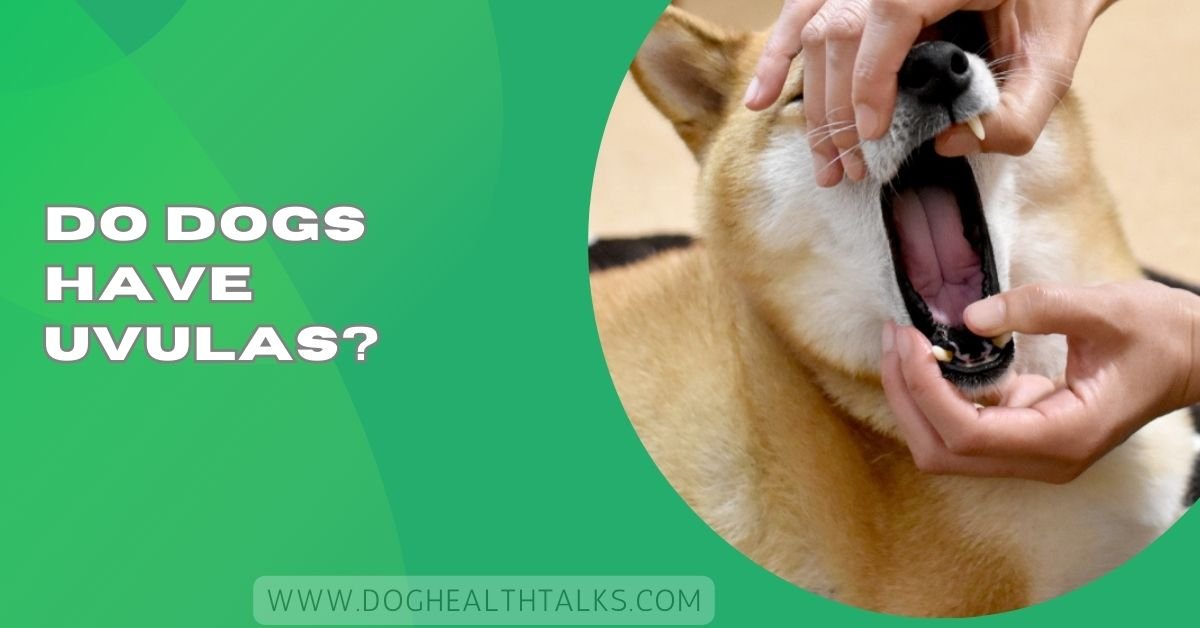
Do Dogs Have Uvulas?:1 Simple Anatomy Facts Explained Clearly
Dogs are full of little surprises, especially when it comes to their bodies. If you’ve ever looked into your dog’s mouth or compared their anatomy to your own, you might have wondered whether dogs have a uvula like humans do. Do Dogs Have Uvulas?:1 Simple Anatomy Facts Explained Clearly.
Dogs do not have uvulas. Unlike humans, dogs, cats, and birds lack this structure and instead use other throat parts to swallow, breathe, and vocalize safely.
Understanding how a dog’s throat works can ease worries, clear confusion, and help you spot real health issues when they matter. Let’s explore this topic in a simple, clear, and trustworthy way.
What Is the Uvula, and What Does It Do?
The uvula is the small, soft piece of tissue that hangs at the back of the human throat. You can see it if you open your mouth wide and look in a mirror. While it looks tiny, it plays several helpful roles in the human body Do Dogs Have Uvulas?:1 Simple Anatomy Facts Explained Clearly.
In people, the uvula helps keep the throat moist by spreading saliva. This moisture makes swallowing easier and keeps the throat comfortable. It also helps guide food and liquid away from the nose and down into the throat, lowering the chance of choking or food entering the nasal passages.
Another key role of the uvula is speech. It helps shape sounds, especially certain tones and vibrations used in clear speaking. The uvula also works with the immune system by helping detect unwanted particles, such as germs, and triggering the gag reflex when something does not belong in the throat Do Dogs Have Uvulas?:1 Simple Anatomy Facts Explained Clearly.
Even with all these jobs, the uvula is not essential for survival. Some people are born without one, and others have it removed for medical reasons. Most live normal, healthy lives. This fact helps explain why dogs can thrive perfectly well without having a uvula at all.
Why Don’t Dogs Have Uvulas?

Dogs do not have uvulas because they simply do not need them. Their bodies evolved in a different way from humans, especially when it comes to eating, breathing, and communicating Do Dogs Have Uvulas?:1 Simple Anatomy Facts Explained Clearly.
Dogs eat faster than humans and swallow larger pieces of food. Their throat and mouth are built to handle this safely without needing a uvula to guide food. Instead of relying on a dangling structure, dogs use strong muscles and precise timing between breathing and swallowing.
Another big difference is how the gag reflex works. In humans, touching the uvula often triggers gagging. In dogs, the gag reflex usually starts lower in the throat, near the larynx. This is why coughing is a common trigger for gagging in dogs, not touching the back of the mouth.
Dogs also cool their bodies by panting, not sweating like humans. Their airflow system is designed to move air quickly in and out. A uvula could actually get in the way of this process. Over time, nature favored a cleaner, more open throat structure for dogs, helping them breathe and cool down more efficiently.
Because of these differences, dogs never developed a uvula. Their anatomy already does everything it needs to do—smoothly, safely, and effectively Do Dogs Have Uvulas?:1 Simple Anatomy Facts Explained Clearly.
Also Read: Can Dogs Eat Taro? – Don’t Miss This Expert Advice!
What Do Dogs Have Instead of Uvulas?
While dogs do not have uvulas, they do have something just as important: the soft palate. This flexible, muscular tissue sits at the back of a dog’s mouth and separates the oral cavity from the nasal cavity.
The soft palate helps guide food into the throat while keeping it out of the nasal passages. It also plays a role in breathing by directing airflow properly. When a dog pants, the soft palate helps manage airflow so the dog can cool down efficiently Do Dogs Have Uvulas?:1 Simple Anatomy Facts Explained Clearly.
The soft palate also helps with vocal sounds. Barking, growling, whining, and even howling rely on airflow control, and the soft palate plays a quiet but important role in shaping those sounds.
In many ways, the dog’s soft palate performs similar jobs to the human uvula—but in a broader, flatter, and more efficient way. Instead of a small hanging structure, dogs use a smooth, strong surface that fits their lifestyle and needs.
This design is one reason dogs can eat quickly, breathe heavily during exercise, and vocalize loudly without problems. Their anatomy is perfectly matched to how they live Do Dogs Have Uvulas?:1 Simple Anatomy Facts Explained Clearly.
Dogs and Elongated Soft Palates
In some dogs, especially short-nosed breeds, the soft palate can be longer than normal. This condition is called an elongated soft palate. When this happens, the soft palate may extend too far back into the throat and partially block the airway.
Dogs with this condition may snore loudly while sleeping or make snorting sounds when awake. You might notice heavy breathing, gagging, coughing, or trouble exercising. In hot weather, these dogs can struggle more than others to cool down, which increases the risk of overheating.
Because the tissue hangs down, it can sometimes look like a uvula to owners who peek into their dog’s mouth. This can be confusing, but it is not a true uvula. It is extra soft palate tissue that should not be that long Do Dogs Have Uvulas?:1 Simple Anatomy Facts Explained Clearly.
Veterinarians take elongated soft palates seriously because breathing problems affect a dog’s quality of life. In mild cases, careful weight control and avoiding heat can help. In more serious cases, surgery may be recommended to shorten the soft palate and improve airflow.
With proper care and guidance from a veterinary professional, dogs with elongated soft palates can live happier, more comfortable lives.
Must Read: Can Cats Eat Hummus? – Side Effects and Safer Alternatives
Do Cats Have Uvulas?
No, cats do not have uvulas. Like dogs, their throat anatomy is different from humans. Cats use other throat parts to swallow food, breathe properly, and make sounds without needing a uvula Do Dogs Have Uvulas?:1 Simple Anatomy Facts Explained Clearly.
What Animals Have Uvulas?
Humans have uvulas, and a few primates may have similar structures. Most animals, including dogs, cats, birds, and reptiles, do not have uvulas because their bodies work differently and do not require one.
Why Do Humans Have Uvulas?
Humans have uvulas to help with speech, swallowing, and keeping the throat moist. The uvula also helps prevent food from going into the nose and plays a role in the gag reflex Do Dogs Have Uvulas?:1 Simple Anatomy Facts Explained Clearly.
Do Dogs Have Tonsils?
Yes, dogs do have tonsils. Their tonsils are located near the back of the throat and help fight germs. They are not easy to see and usually only noticed if swollen or infected.
Do Animals Have Uvulas?
Most animals do not have uvulas. Their mouth and throat structures are designed differently. Animals rely on other tissues to control breathing, swallowing, and sound, so a uvula is not necessary for them Do Dogs Have Uvulas?:1 Simple Anatomy Facts Explained Clearly.
Do Dogs Have A Gag Reflex?
Yes, dogs have a gag reflex, but it works differently from humans. Instead of the uvula, a dog’s gag reflex is usually triggered deeper in the throat, often by coughing or throat irritation.

New Guinea Singing Dog Uvula
The New Guinea singing dog is a rare exception. It has a forked uvula, which helps create its unique, musical sounds. This is unusual and not found in most other dog breeds Do Dogs Have Uvulas?:1 Simple Anatomy Facts Explained Clearly.
Read More: Can Cats Eat Graham Crackers? – Risks, Limits and Tips 2026
Do Dogs Have Belly Buttons?
Yes, dogs have belly buttons, but they are hard to see. A dog’s belly button is a small scar left after the umbilical cord falls off shortly after birth.
Conclusion
Dogs do not have uvulas, and that is a good thing. Their bodies are designed in a smart, efficient way that supports how they eat, breathe, pant, and communicate. Instead of a uvula, dogs rely on a strong soft palate and well-coordinated throat muscles to stay safe and comfortable Do Dogs Have Uvulas?:1 Simple Anatomy Facts Explained Clearly.
Understanding this difference helps pet owners feel more confident and informed. If you ever notice breathing changes, loud snoring, or throat discomfort in your dog, a veterinarian can help guide the next steps. With knowledge and care, you can support your dog’s health and enjoy peace of mind—knowing that their anatomy is working exactly as it should.
FAQs
Why do dogs not have uvulas?
Dogs do not have uvulas because their throat anatomy works differently and does not require one for eating or breathing Do Dogs Have Uvulas?:1 Simple Anatomy Facts Explained Clearly.
Do all dogs lack uvulas?
Yes, almost all dogs do not have uvulas. Their anatomy evolved differently from humans, and they stay healthy without one.
Is it bad that dogs don’t have uvulas?
No, it is completely normal. Dogs have other structures, like the soft palate, that do the same jobs safely Do Dogs Have Uvulas?:1 Simple Anatomy Facts Explained Clearly.
How long does 1 hour feel to a dog?
One hour feels longer to dogs because they live in the moment and notice time through routine, smells, and activity.
What is the purpose of a uvula?
The uvula helps humans swallow, speak clearly, keep the throat moist, and prevent food from entering the nasal passages Do Dogs Have Uvulas?:1 Simple Anatomy Facts Explained Clearly.
Do puppies have uvulas?
No, puppies are born without uvulas, just like adult dogs. Their throat anatomy is normal from birth Do Dogs Have Uvulas?:1 Simple Anatomy Facts Explained Clearly.
What is a silent killer in dogs?
Heatstroke is a silent killer in dogs because symptoms can appear quickly and worsen fast without early warning signs Do Dogs Have Uvulas?:1 Simple Anatomy Facts Explained Clearly.
What’s the most toxic thing for a dog?
Grapes and raisins are extremely toxic to dogs and can cause sudden kidney failure even in very small amounts.